How Does Mold Precision Affect the Dimensional Accuracy of Fasteners?
Mold precision is a fundamental factor that directly impacts the dimensional accuracy of fasteners produced through injection molding. Since the mold essentially serves as the blueprint for the fastener’s shape and size, any imperfections or inaccuracies in the mold will be reflected in the final product. Understanding this relationship is key to achieving high-quality, precise fasteners.
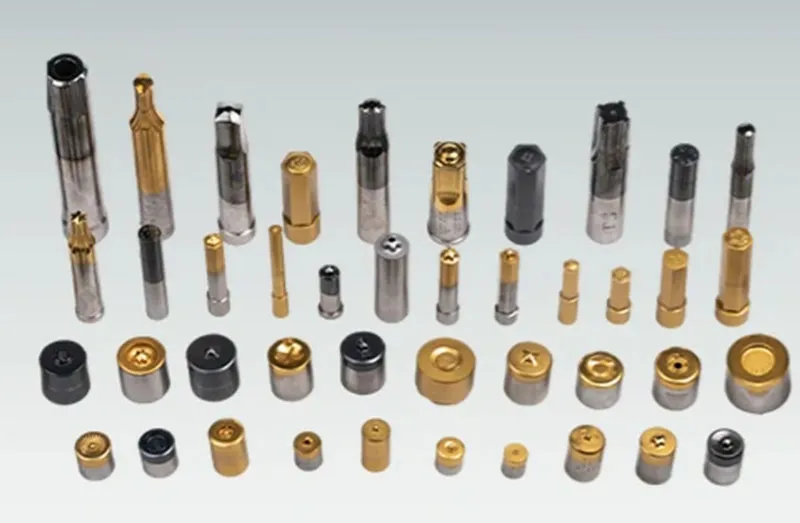
The Role of Mold Cavity and Parting Surface Accuracy
The mold cavity must be crafted with extremely tight tolerances, often much stricter than the fastener’s own dimensional requirements. This ensures that every fastener produced matches the intended specifications consistently. Even minor deviations in the mold cavity or parting surfaces can cause dimensional variations, leading to issues like poor fit or reduced mechanical performance of the fasteners.
Importance of Mold Rigidity and Stability
During the injection molding process, the mold is subjected to significant pressure and clamping forces. If the mold lacks sufficient rigidity, it can deform slightly under these conditions, causing variations in the fastener dimensions. A stable and robust mold structure helps maintain consistent cavity shape throughout production, ensuring each fastener meets the desired precision.
Precision in Mold Clamping and Alignment
Accurate alignment of the mold halves is essential for maintaining dimensional accuracy. Misalignment can result in flash, mismatched parts, or dimensional inconsistencies. High-precision molds feature guide pins and bushings manufactured with tight clearances to guarantee perfect mating of mold halves every cycle. This repeatability is crucial for producing fasteners with uniform dimensions.
Impact of Mold Wear and Maintenance
Over time, wear on critical mold components such as guide pillars and bushings can introduce play or gaps, leading to dimensional drift in fastener production. Regular maintenance and timely refurbishment of molds help preserve their precision and extend their service life, ensuring ongoing dimensional accuracy.
Interaction with Injection Molding Process Parameters
While mold precision sets the foundation, molding parameters like injection pressure, speed, and cooling time also influence the final dimensions. Stable and well-controlled processing conditions reduce issues like shrinkage, warping, or internal stresses that can alter fastener dimensions. Thus, mold precision and process control work hand-in-hand to achieve optimal results.
In essence, mold precision affects fastener dimensional accuracy by providing a highly accurate and stable cavity, ensuring proper alignment and clamping, minimizing wear-induced deviations, and supporting consistent molding conditions. Together, these factors enable manufacturers to produce fasteners that meet tight tolerances and perform reliably in demanding applications.
Comments