Why is Bone Densitometry Done?
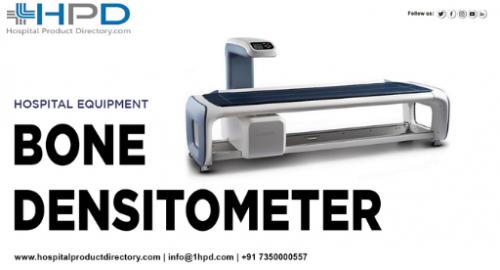
Bone Densitometry also named ‘Dual-Energy X-ray Absorptiometry (DEXA)’, is an examination that creates a picture of the inside of the bone and aids in defining the bone loss, using a small amount of ionizing radioactivity. DEXA is a humble, rapid, and non-invasive standard technique for gauging bone mineral density (BMD), identifying osteoporosis, and also noticing the danger of developing osteoporotic fractures. DEXA is the best-standardized technique and the radiations fashioned are minor and less than a day’s acquaintance to natural radiation. In this examination, the two X-ray beams are targeted at the bones, and the DEXA examination done by equipment made by Bone Densitometer Manufacturers can notice 1 percent bone loss, this makes it more precise and sensitive.
Why is the test done?
· Osteoporosis is a disorder in which the bone becomes delicate and thinner, and operational changes also befall the bone that makes them delicate, and they are most likely to break. DEXA helps to identify osteoporosis, and this disorder typically disturbs women after the age of 30 years, menopause, and it can also happen in children and men.
· DEXA image helps to regulate the reason for bone loss, and track the progress of the effect of therapy for osteoporosis.
· It also reads the danger of evolving fractures. Numerous issues like aging, undernourishment, body weight, family history of osteoporotic fissures, and morbid lifestyle, are also accountable for the loss of bone mass. All these are also taken into deliberation before providing treatment to the patient.
· It is suggested for women above 40 years and older and men over 60 years have a DEXA examination at least once. The bone loss in women is related to the less decrease of estrogen that befalls because of menopause, so women grow low mineral density earlier than men.
· DEXA examination helps to recognize the reduction in bone density. This examination also notices feeble or stiff bone and also helps to notice the odds of future breakage.
The following persons are advised to endure a DEXA examination:
· Organ relocate patients, as anti-rejection medications can reason bone loss.
· Persons agonizing from hyperthyroidism and high bone turnover.
· Persons with a family history of hip breakages.
· Ladies who’ve reached the phase of menopause.
· Persons whose moms smoked during pregnancy period.
· Men who have rheumatoid arthritis and other medical conditions related to bone loss.
· Individuals who take medicines that reason bone loss, including corticosteroids, anti-seizure medications, and thyroid replacement drugs.
Protections to take care of before the DEXA image:
· Wear a loose dress during the test process, and do not wear clothes that have buttons, belts, and zippers.
· Also eliminate the jewelry, metallic objects, coins, and keys from the pocket.
· Eliminate the dental applications, hearing aid, and spectacles before the procedure.
· Dodge smoking and liquor consumption for a few days before the examination.
· Evade taking calcium and certain complements for about 1-2 days before the examination.
· Process timing: 10 to 30 minutes, contingent upon the body part being inspected.
Process:
The bone density examination is painless and fast, and there is almost no preparation compulsory before the test. Share with a doctor if you later have a contrast material inoculated for a CT Examination or X-ray test, as contrast material might inhibit the bone density examination.
Step 1. No anesthesia is obligatory, and the patient has to wear a loose, relaxing gown.
Step 2. The patient is counseled to recline on a cushioned table, and below the table, an imaging machine is present an X-ray generator.
Step 3. The examination is focused on the lower backbone and hips, and in minor children and some adults, the examination is done on the whole body. Hips and backbone are targeted because, in these locations, most breakages because of bone loss occur. (If the hip or backbone cannot be skimmed, then the forearm will be skimmed instead). Bone density differs in diverse parts of the body, so more than one body part will be scanned.
Step 4. The patient is counseled to stay motionless to stop the image from blurring. The hip image is done by placing the foot in the machine made by Bone Densitometer Manufacturers that mildly rotates the hip inward.
Step 5. The radiographer, a specialist in taking X-ray pictures, will send an imperceptible beam of low-dose X-ray comprising two energy peaks through the targeted area of the bone. The X-ray detector helps to gauge the expanse of X-rays passed through the body.
Step 6. The first peak of energy is engrossed by the lenient body tissue and the other by the bones. Total bone mineral density is estimated by deducting the amount of radiation engrossed by the soft tissue from the total radiation emitted or by using the standard deviation (SD) count.
Outcomes:
The outcomes are gotten within a week or two, and the consequences of the bone density examination are gotten in the form of Z-score and T-score.
* T score displays the number of elements (standard deviations) and regulates bone density is higher or lower below the average, likened to the fit young adult of the same sex.
T score (-1 and above): Bone density is usual.
T score (-1 and -2.5): Bone density beneath usual and may lead to osteoporosis.
T score (-2.5 and below): Osteoporosis.
* Z score likens the bone density to a standard score of the same body size, mass, and age. Helps to regulate the rare causal factor for bone loss.
Z score (above 2.0): Usual.
Z score (-1.5): Issues other than aging like undernourishment, medicines, thyroid irregularities, and tobacco contribute to osteoporosis.

Post Your Ad Here
Comments