What should you know about Rock fracture test?
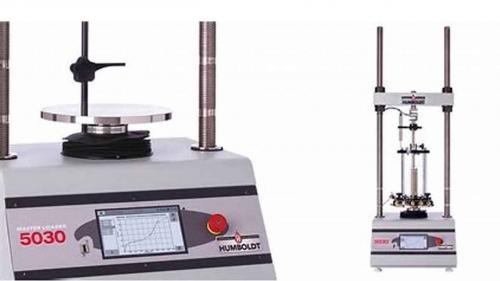
Rock fracture test is a common field of study in geology and mineral engineering. It is used to predict a rock's fracturing potential as well as identify indications of material weakness.
What is a Rock fracture test?
Rock fracture test is a noninvasive testing procedure used to determine the strength, ductility and resistance of rocks. This test is also known as Shear Test, Shear Strength Test or shear toughness test. The test is performed by applying stress to rocks in order to see how they react. The strength of rocks can be determined by measuring the amount of deformation that takes place during the test.
How to perform a Rock fracture test?
Rock fracture testing is the process of determining whether a rock surface is fractured. The test is typically used to identify potential areas of weakness in a rock foundation or structure.
To perform the test, you first need to determine the size and shape of the object you're testing. You can do this by measuring the object's height and width, or by using a scanning electron microscope.
Next, you need to prepare the test area. This involves removing any dirt, dust, or other material that could affect the results. You also need to clean any surface that will come in contact with the broken rock.
Once everything is ready, you can start the test by hitting the rock with a hammer or another heavy object. If you hit it hard enough, you should be able to hear it break.
The next step is to measure how far the crack extends from each side of the target area. If there are multiple cracks close together, they'll all be counted as one crack length measurement.
If there are no cracks visible on the surface of the target area, then it's considered free from fractures and can be used for structural purposes without further investigation. However, if there are cracks present on the surface but they don't go all the way through to the other side, then that means there may be some fractures present under that surface.
If there are any cracks that go all the way through to another side of the target area, then the surface is considered fractured and must be investigated further.
In order to determine the severity of the fracture, you'll need to measure how far the crack extends from each side of the target area. The greater the distance, the more severe the fracture.
You can also use a Rock creep test to determine whether a particular area is vulnerable to earthquakes. by measuring how far cracks extend from each side of a target area, you can determine whether there's an increased risk of an earthquake happening in that location.
What are the benefits of this technique?
The Rock Fracture Test is a technique that can be used to detect signs of stress in rocks. When subjected to a stress, the rock will fracture along certain lines or planes. These fractures can be analyzed to determine the amount and type of stress applied. This information can then be used to evaluate the stability of a structure or mineral deposit. The test is also useful for detecting potential mining sites.
What are the disadvantages of this technique?
Rock fracture test is a technique used to determine the probable cause of failure in a weld. It is also used to determine the load-carrying capacity of a material. The test is performed by fracturing a piece of rock with a hammer or anvil and measuring the distance between the fractures.
The main disadvantage of this technique is that it cannot be used to determine the size or shape of the crack.
How do you do a Rock Fracture Test?
Rock fracture tests can be used to determine the strength, ductility, and toughness of rocks. Fracture mechanics is a branch of engineering that studies the behavior of materials under stress conditions. In fracture mechanics, an analysis is conducted on how energy is transferred during failure within a material. The results of this analysis are then used to create models that can be used to predict the behavior of structures under loading.
A rock fracture test is performed by applying a controlled amount of external force to a sample while monitoring the resulting fractures. A static test involves applying pressure to the rock while it is in its original state, while a dynamic test involves applying pressure as the rock is fractured.
The three main factors that affect fracture toughness are: shear strength, flexural strength, and torsional strength. Shear strength measures how much stress an object can resist before breaking in two; flexural strength measures how much stress an object resists before developing permanent deformities; and torsional strength measures how much torque an object can withstand before breaking.
Conclusion
A rock fracture test is an important tool that geologists and engineers use to identify the potential for faulting in a particular area. During a rock fracture test, two beams are suspended from different points on a pole and then subjected to an applied force. The movement of the beams reveals any faults or fractures present in the ground beneath them. By knowing how to conduct a rock fracture test, geologists can map out areas where there is a high risk of earthquakes happening and take corrective action before it's too late.
Advertise on APSense
This advertising space is available.
Post Your Ad Here
Post Your Ad Here
Comments