What Must One Look For in OT Lights?
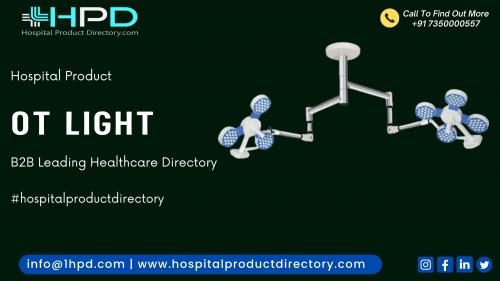
OT lights are one of
the most essential parts of the OR system, as they allow you to have a
faultless and clear field of vision, no matter what time of the day or night
you are carrying out surgery. So, you need to be sure you’re making the right
choice when building your setup. In aid of selecting the right medical light
arrangement, we’re going to deliberate the key facets of surgical lighting
supplied by OT Light Suppliers one
by one. Each one will have a diverse influence on your experience in surgery,
so it’s vital to pay each one their due attention.
Lighting and Quality
You will want to
consider the actual lighting in terms of lumens. Though, opposing popular
belief, this does not mean selecting the lights with the brightest bulbs.
Before electricity
was revealed in 1879, surgeons would use candles or only operate during the day
to offer them enough noticeable light to see by. Though, as one would expect,
errors happened on account of vague days and a slapdash visual field. As the
decades proceeded, surgical illumination changed to the point where there was
far too much light on the surgical field, causing eye stress for the operating
surgeons.
The objective of
modern-day systems is to strike an equilibrium between providing enough
lighting to operate with perfect lucidity, while concurrently evading the trap
of providing too much light and glare that can cause eye strain.
Most modern surgical
lights supplied by OT Light Suppliers use
either glowing or LED bulbs, and surgical headlamps typically differ between
LED and Xenon makes. LED and Xenon lights yield light of a chiller hue and high
brightness, so they are perfect for enlightening the surgical field while
plummeting the chance of eye strain. When you’re searching for a surgical lamp
or headlamp, we would endorse LED or Xenon for their high-lumen output and
helpful hues.
Cast Glooms
Cast glooms are
glooms that arise when the light comes from one direction into the surgical
cavity, thereby confusing the field. To decrease (or, preferably, entirely
remove) the number of cast glooms in the cavity, arrangements with multiple
light rays from different light causes are ideal.
These light rays
cancel the glooms of the others out, so the light cover within the cavity is
fully floodlit without any obstacles. It is, therefore, best to select a setup
with multiple fittings (both ceiling mounted and standing) to couple with a
headlamp.
Heat Organization
One of the primary
motives that medical lights are now completed with Xenon and LED bulbs, aside
from their lighting and hue, is because they produce much less warmth than the
glowing halogen bulbs that were used in older medical apparatus. The response
between the halogen gas in the bulbs and the electricity running through the
tungsten filaments produced heat close to the bulb. This had a noteworthy
influence on the comfort of the surgeons and would produce heat on the surgical
site.
Warmth for hours at
a time at the surgical site is not an adequate side effect of modern illumination,
as it parches the tissue and can influence the outcome of the surgery. Thus,
the chiller Xenon headlamps and even cooler LED light stands are now in normal
use.
Dependable Lighting
Finally, it’s vital
to reflect on what happens to your lights in the event of a “single failure”. A
single catastrophe happens when a wire breaks inside the equipment, or a power
supply cable separates; fundamentally, it means a letdown of the light caused
due to one fault. In the case of a catastrophe, the lights must be able to
linger operating or be alleviated extremely quickly, as surgeons must be able
to see clearly at all times. A few seconds of dimness in the surgical cavity
can make the variance between the success and collapse of an operation.
Most modern lighting
systems have a small tie-up system for this very reason. Though, the ideal
arrangement would have an inner diagnosis system and be able to tell you what
has gone incorrect directly, instead of having you bestow time and energy that
must be used on the patient to identify the failure. An internal analysis
system will save you precious time, so it’s worth it to capitalize on lighting
that has this feature.
Take the time to
look about and select the right setup for your OR from an OT Light Suppliers –
if you feel self-assured that everything else is accounted for in surgery, then
the only thing you have to emphasize is the comfort of your patient and the
suave operation of your theatre.

Post Your Ad Here
Comments