What is an EEG Machine Used For?
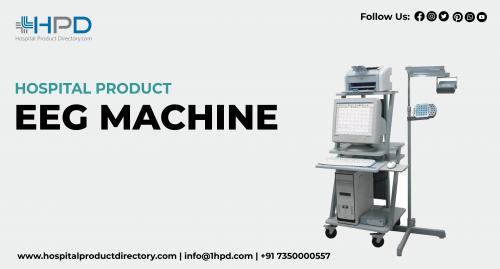
An
electroencephalogram (EEG) appliance is a device used to generate a picture of
the electrical activity of the brain. It has been used for both medical
analysis and neurobiological investigation. The vital constituents of an EEG
machine made by EEG machine
manufacturers comprise electrodes, amplifiers, a computer
control module, and a display device. First established during the early
twentieth century, the EEG machine lingers to be enhanced. It is supposed that
this machine will lead to a wide array of important detections both in
elementary brain function and remedies for various neurological illnesses.
The purpose of an
EEG machine is contingent on the fact that the nerve cells in the brain are
continually constructing tiny electrical signals. Nerve cells, or neurons,
convey information through the body electrically. They generate electrical
impulses by the dispersal of calcium, sodium, and potassium ions across the
cell membranes. When a person is thinking, construing, or viewing television
different parts of the brain are enthused. This generates different electrical
signals that can be observed by an EEG.
The electrodes on
the EEG machine are attached to the scalp so they can pick up the minor
electrical brainwaves shaped by the nerves. As the signals travel through the
appliance, they run through amplifiers that make them large enough to be
exhibited. Contingent on the design, the EEG machine then either issues out the
wave activity on paper (by a galvanometer) or deposits it on a computer hard
drive for the show on a monitor.
It has long been
recognized that different mind states lead to diverse EEG shows. Four mind
states—attentiveness, rest, slumber, and dreaming—have related brain waves
named alpha, beta, theta, and delta. Each of these brain wave designs has
different incidences and amplitudes of waves.
EEG machines made
by EEG manufacturers are
used for a diversity of purposes. In medicine, they are used to identify such
things as convulsion illnesses, head injuries, and brain tumors. A skilled
technician in a specifically designed room performs an EEG examination. The
patient lies on his or her backbone and 16-25 electrodes are smeared on the
scalp. The yield from the electrodes is logged on a computer screen or sketched
on a moving piece of graph paper. The patient is occasionally asked to do
certain errands such as breathing deeply or looking at a bright flickering
light. The information gathered from this machine can be understood by a
computer and delivers a geometrical image of the brain's activity. This can
display to doctors exactly where brain activity glitches are.
The basic schemes of
an EEG machine comprise data compilation, storage, and shows. The constituents
of these systems comprise electrodes, linking wires, amplifiers, a computer
control module, and a display device. In the United States, the FDA (Food and
Drug Administration) has planned production ideas for EEG machine manufacturers.
The electrodes, or
strings, used in an EEG machine can be separated into two kinds including
surface and needle electrodes. Overall, needle electrodes deliver greater
signal lucidity because they are inserted directly into the body. This removes
signal softening caused by the skin. For surface electrodes, there are throwaway
models such as the tag, ring, and bar electrodes. There are also refillable
discs and digit electrodes. The electrodes may also be united into an electrode
cap that is positioned directly on the head.
The EEG amplifiers
adapt the weak signals from the brain into a more apparent signal for the
output device. They are discrepancy amplifiers that are valuable when measuring
relatively low-level signals. In some plans, the amplifiers are set up as
trails. A couple of electrodes notice the electrical signal from the body.
Wires linked to the electrodes hand over the signal to the first unit of the
amplifier, the buffer amplifier. Here the signal is automatically steadied and
amplified by a factor of five to 10. A discrepancy pre-amplifier is next in line
that sieves and intensifies the signal by a factor of 10-100. After going
through these amplifiers, the indications are increased by hundreds or
thousands of times.
This segment of the
amplifiers, which obtain direct signals from the patient, uses optical
isolators to separate the main power circuitry from the patient. The separation
stops the option of unintentional electric shock. Since the brain yields
different signals at diverse points on the skull, multiple electrodes are used.
The number of stations that an EEG machine has is connected to the number of
electrodes used. The more stations, the more thorough the brainwave picture.
For each amplifier on the EEG apparatus, two electrodes are committed. The
amplifier can interpret the dissimilar incoming signals and cancels ones that
are indistinguishable. This means that the yield from the machine is the
difference in electrical activity picked up by the two electrodes. Therefore,
the assignment for each electrode is serious because the nearer they are to each
other, the fewer alterations in the brainwaves that will be recorded.
A diversity of
output printers and screens are obtainable for EEG machines. One shared machine
is a galvanometer or paper-strip recorder. This machine copies a hard copy of
the EEG signals over time. Other kinds of machines are also used including
computer printers, optical discs, recordable compact discs (CDs), and magnetic
tape components. Since the information gathered is analog, it must be
transformed into a digital signal so electronic output devices can be used.
Therefore, the main circuitry of the EEG characteristically has a fitting
analog-to-digital converter section. The software provided with some EEG
machines can be used to generate a plot of the brain.

Post Your Ad Here
Comments