What characteristics mark the different types of OT Table?
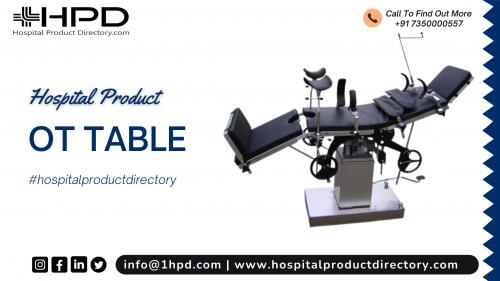
For the surgeon and the surgical team, the OT Table manufactured by the OT Table Manufacturers is the centerpiece of the OT. It is the device that is used by them to recline a patient while they are operating on him. They require a favorable setting for the placement of the patient, so it's no wonder these tables that originate in numerous models and types have their own set of features that make them essential pieces of equipment for any medical setting. For a doctor or a purchase manager of a hospital who is looking to purchase these OT Tables, it is careful planning and consideration before one can decide. Contingent on the type of surgical amenities a hospital provides, it will require choosing an OT table with specific features. For a multi-specialty hospital, they may require to purchase several different kinds of OT Tables to meet their varying requirements. For instance, a general surgery table will not be useful for specialty processes like Neurosurgery or Urology unless they are supported by normal and optional fittings. The Neurosurgical and Urology tables are meant for specific surgical processes. Contingent to the process, OT tables in numerous configurations may have to be selected.
The general surgery table does not have one precise specialty. Instead, OT Table Manufacturers in India make them with incredible flexibility, permitting them to regulate the height, length, position, and other features essential to complete an array of diverse procedures. For certain operating tasks, general operation theatre tables may serve as a multi-purpose apparatus. With the addition of normal accessories like arm rest, shoulder support, anesthetic shade, locks, leg support, futon, etc and optional accessories like hand surgery table, bolster cushion, instrument tray, foot support, laminectomy frame, humerus support, table length extension, split leg unit, width extension, arthroscopy addon, restraint body strap, different operating procedures may be given shape. These fittings complement the equipment, easing successful surgeries, and thus helping ease operating tasks.
But an orthopedic table will be diverse from a gynecology counterpart, so are other variations contingent on the intricacy of the surgery as well as section. In all of these tables today, the stature and inclination of the shells can be easily attuned. The addition of fittings not only offers the patient added support but also eases the surgeon for a smooth operating task. The exclusive features of each dedicated operating table also offer suitable head, arm, or leg rests for more contented and secure patient placement. Another type of specialized OT Table is the imaging table, though general surgery tables offer imaging support, there is a growing necessity for dedicated imaging tables.
For this motive, a noteworthy share of the diverse kinds of operating tables includes imaging tables. This kind of table includes features and accessories that support numerous imaging approaches. While the actions done on these tables are often quicker and more non-invasive than those on other operating tables, patient and staff ease is still key to success. Another important facet for hospitals to consider when they choose an OT Table is whether they want stationary or mobile tables. The former type of tables are stronger than the latter kind and can grip a patient securely. Also, it must be kept in mind the table tops of a mobile table cannot be removed or replaced, they are best used for general surgical purposes. While the mobile tables have one vital feature to be looked at, if the hospital needs a table that requires to be shifted, then this is the table they must buy. These tables are very lightweight and have locking wheels that ensure that the patient does not tip over while reclining on them.

Post Your Ad Here
Comments