What are defibrillators used for-who can use them, their uses, and what risks?
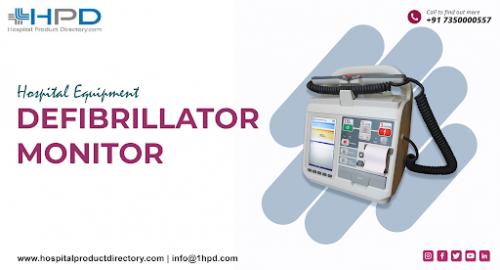
A defibrillator
monitor is a machine used by medical professionals and bystanders to deliver an
electric shock to a person's heart to eradicate a possibly deadly heartbeat or arrhythmia,
— ventricular tachycardia (with no pulse) or ventricular fibrillation — and
revert the heart to a normal beat. Both arrhythmias occur in the heart’s
ventricles or lower chambers.
Who is allowed to
use the defibrillator monitor made by the Defibrillator Monitor Manufacturers?
Patients who are
suffering from the conditions mentioned above can seek help at a hospital or a
site that is equipped with an automated external defibrillator. Though, if a
patient is considered to be at a high risk of a life-threatening heat disorder,
he can carry a defibrillator monitor along with him all the time.
Which type of
defibrillator monitor is available for personal use?
The tremor from a
personal defibrillator is painless, or one might have a feeling that someone
has kicked him in the chest. Patients who are considered at high risk of
life-threatening heart disorders can purchase defibrillator monitors of these
two kinds from Defibrillator Monitor Suppliers
A wearable
cardioverter defibrillator can be worn on the patient’s chest. The sensors
interact with the skin of the machine directing a tremor when it senses an
irregular beat. The other kind of defibrillator is the implantable cardioverter
defibrillator (ICD0 which performs like an inner overseer for arrhythmias. This
machine can send the correct amount of charge to the heart when it is required.
When are
defibrillators used?
Though
cardiopulmonary resuscitation (CPR) delivers brief help, a defibrillator can
help a patient endure sudden cardiac arrest. The defibrillator can be used even
if the patient already has a pacemaker or implantable cardioverter
defibrillator (ICD).
How does the
defibrillator work?
The person attending
to the patient must continue with CPR while he is waiting for the defibrillator
to get ready for use. Once the defibrillator is ready, ensure that no one is in
physical contact with the patient. If the caregiver is using an Automated
external defibrillator (AED), the machine can review the patient’s heartbeat to
resolve if it requires a tremor. An AED charges itself and offers verbal orders
on how to use it.
The doctor or
caregiver will complete the following:
- Put two defibrillator blades or sticky
plugs (coupled to the defibrillator) on the chest. One blade or plug is
positioned underneath the right shoulder and the other underneath the left
nipple of the patient. To stop burns, steering material is already in the
plugs. Though, the provider will require to put steering material on the
chest before using blades.
· For sticky plugs,
the caregiver shall thrust a key on the machine to deliver the tremor.
A defibrillator
makes the heart muscle stop stirring fleetingly so the heart can generate an
electrical urge that starts a normal beat. In spirit, defibrillation resumes
the heartbeat.
What occurs after
using a defibrillator?
The caregiver will
resume giving CPR for another two minutes. Then they shall check the patient's
pulse and heartbeat. If the patient still requires it, they will resume CPR and
give him another shock. If the process was not helpful the first time they will
give the patient medicines (epinephrine or amiodarone) to attempt and correct
the irregular beat. If the blood of the patient is moving, be he is still not
responding, they may require to lower his body temperature down to 89.6 to 96.8
degrees Fahrenheit (32 to 36 degrees Celsius) to help defend and endorse
retrieval of the brain function.
What are the returns of using a
defibrillator?
The defibrillator
monitor can save a patient's life if it is used within 10 minutes of an
irregular heartbeat being uncovered
What are the dangers or
difficulties of using a defibrillator?
A defibrillator
requires to be used for ventricular tachycardia (without a pulse) or
ventricular fibrillation. If you use it for any other type of arrhythmia, it
could give somebody ventricular fibrillation and cardiac arrest.
Post Your Ad Here
Comments