Venezuela Petroleum in the US Market
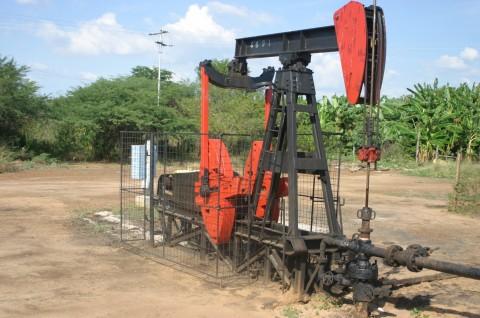
The regime change in Venezuela was peaceful, but the
oil-wealthy nation faces many challenges under its new president. Dependent
almost exclusively on petroleum as the driving industry in his country’s
economy, President Nicolas Maduro has to decide if he will continue the
anti-U.S. policy of the late Hugo Chavez or choose a more pragmatic path. His
decisions in the next few months will determine the future of Venezuela’s
economy and the energy market in the United States.
Despite having been chosen by the dying Venezuelan president
Hugo Chavez as his successor, Nicolas Maduro was elected by a razor-thin
majority in the April 14, 2013 elections, overcoming opposing Henrique Capriles
Radonski (Democratic Unity Roundtable) by barely 1.8% of the vote. Even that
narrow victory has been called into question, most recently by U.S. Secretary
of State John Kerry who, speaking before the House Foreign Affairs Committee on
April 18th, called for a recount, citing irregularities in the vote
count. (Maduro’s response was, predictably, “Get out of here.”)
Maduro ran his campaign almost entirely behind the image of
Chavez – even using the late president’s photograph on his election posters,
instead of his own – while promising to continue to follow the philosophy of chavismo as expounded by his mentor. A
key element of chavismo is hostility
towards the United States, a stance that Chavez could maintain during his
lifetime. The question is: Can Maduro afford to continue along that line?
Venezuela’s economy is balanced almost entirely on a single
industry: Petroleum. As much as the economies of Saudi Arabia and other Persian
Gulf states, Venezuela depends upon oil exports for almost all (95%) of its
exports and, internally, for a dangerously large (18%) portion of its GDP. Equally
lopsided are Venezuela’s petroleum exports. Despite the political philosophy of
chavismo, the United States is the
single largest consumer (41%) of both crude and refined product.
In terms of raw reserves, the numbers look very good for the
country: Proven reserves have risen from 99.4 billion barrels in 2009 to more
than 211 billion, after recent discoveries. Analysis by Oil and Gas Journal estimate that even these large amounts could
increase to 316 billion if the Magna Reserva fields prove out. Even at current
figures, Venezuela is placed as possessing the 8th largest petroleum
reserves in the world and is the largest – by far – in the Western Hemisphere.
While there are huge amounts of oil in the ground, getting
it out and to the worldwide market is becoming more difficult. The national
petroleum monopoly, Petroleos de Venezuela S.A. (PdVSA), has not been investing
enough in drilling and pipeline infrastructure to maintain production. Overall
production is down, partly because of natural decline of mature fields but also
because of poor maintenance of equipment and pipelines. Certainly, given recent
history, corporate investors are not inclined to invest in PdVSA, and the
ideologically sympathetic nations which might be acceptable partners are either
too poor (Cuba), far away (Iran) or out of business themselves (the Gaddafi
regime in Libya). Currently, only Japanese and Russian consortia are showing
interest in partnering in developing future fields.
On the American side of the equation, imports are down.
Petroleum imports from Venezuela have been declining from 13% in 1999 (when
Chavez first took power) to 8.3% in 2011 (the most recent year for which
reliable figures are available). While this still places Venezuela as the 4th
largest source of American petroleum imports, after Canada, Mexico and Saudi
Arabia, it’s a declining 4th place. As domestic U.S. production
increases – despite the Obama Administration’s continued refusal to license
deep-water drilling in the Gulf of Mexico and the completion of the Canada-U.S.
Keystone XL Pipeline – dependence upon imported petroleum declines in general,
and Venezuela specifically. In due time, the United States will no longer be a
captive market for Venezuelan oil.
This leaves Maduro facing an uncertain future. He does
possess the mantle of Chavez – for now. He has control of the government and
the chavista-inspired population – if
he can keep it. The unemployment rate is only 7.6% – so far. But without a stable export market,
investors who are comfortable with the economic climate in the country, a
healthy petroleum industrial infrastructure (upon which the entire economy
depends) and a growing economy to absorb a rapidly growing demand for jobs, the
new president is facing a difficult future.
In an odd way, the best hope for Maduro to achieve Chavez’s
goal of causing mischief to the United States would be to abandon chavismo and liberalize relations. As
long as Venezuela is a difficult trading partner, the U.S. will continue,
despite the Obama policies, to develop strong domestic petroleum production. If
oil were to flow without hindrance to the north, it would keep the North
Americans dependent upon the oil fields of Venezuela.
Bio
Laura Ginn
likes to keep up to date with world affairs and known how the influence on the
economy can be reflected in the nations fuel prices. Which is why when it comes
to getting the best deal on her home energy, she compares energy suppliers
using uSwitch.com
and their incredible online comparison site.
Post Your Ad Here
Comments