Umpire’s Decision Review System: The Latest Hullabaloo On Cricketing Field
Though
the Umpire decision review system or UDRS or popularly known as DRS is not at
all a new concept in the modern cricket, it has gained much of hype in the
recent times. The second test between India and Australia, which the Indians
won by a margin of 75 runs is a prime example of this massive uproar, that
grabbed the interest of veterans from all over the world.
In
this test, Indian skipper Virat Kohli accused the Australian skipper Steven
Smith of looking at the Australian dugout for help, when one of the batsmen was
given out and they had to decide whether to refer the decision or not.
This
heated argument soon turned to be a massive one and rose to become the self-respect
of the cricketing boards of the countries. The International Cricket Board had
to intervene in between to cool the heated heads. ICC gave its verdict against
the Indian accusations and said that Smith had done no wrong with what he did.
However,
the matter has taken so much a height that it would require at least some time
to cool down. No wonder, it could rise up again as there are two more matches
yet to be played between India and Australia in the series.
Let
us take a review of the Umpire Review System of the cricket with the points
that it inculcates.
The
UDRS system was first introduced to be followed in Test Cricket, to take into
account the contentious decisions made on the ground by the on-field umpires
for calling a batsman out or not out. The system was first tested in a match
between India and Sri Lanka in 2008 and on finding it successful, ICC decided to
launch it officially in November 2009.
After
being successfully established in the test matches, the DRS system was also
used in One Day International matches from January 2011. Though at first the
ICC officials made it mandatory to be used in all kinds of international
matches, later, it was agreed to inculcate the system only upon the prior
agreement of the two teams before a series.
The
DRS system has undergone a lot of amendments in the due course of its usage.
The major change that it experienced was the recharge of two reviews of the
teams after 80 overs in an inning of test cricket. Before this, the reviews
ended for the inning if you make two unsuccessful reviews in the same.
The
latest of the decisions on the DRS system is its usage in the T20s. In February
2017, the International Cricket Council had agreed to use the DRS in T20
matches too, with one review per side in each of their innings.
Components Of The DRS
System:
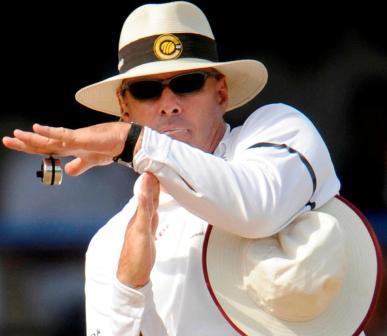
When
the player feels that the decision taken by the umpire could be overturned, he
is allowed to signal to the umpire by a “T” signal made from his arms in 15
seconds. The on-field umpire then turns his way towards the third umpire and
the third umpire could make use of the following technological methods to
decide whether or not he has to go with the on-field umpire’s decision:
·
Hawk-Eye, Virtual Eye or
Eagle Eyes: This
is a kind of invention that tracks the path of the ball to decide if it was
going to hit the stumps or not. If the ball has been interrupted by the
batsman’s pad or some other object excluding the bat and the third umpire views
it to be hitting the stumps virtually, he could offer the batsman out, unless
it’s a no-ball.
·
Ultra-Edge: Ultra-Edge is the enhanced
version of Snickometer. This technology creates four distinct frames and umpire
looks at all the frames to offer the final verdict. Ultra-edge is even
efficient to differentiate between the sounds of cloth, bat or pad of a person
at the crease.
·
Hot Spot: This is the Infra-Red imaging
system that portrays the contact of ball with the bat or pad. It is all due to
the cameras on the ground that results in decision making and the system is
experiencing continual betterment.
·
Real-Time Snickometer: It is a kind of system that
uses directional microphones to grab the smallest of the sounds, which could
either have been made by the contact of ball with the bat or pad.
With
the use of all these new and reliable innovations, Umpires have been able to offer
utmost correct decisions in a match. The DRS system is primarily used for the
LBWs, when the ball hits the pad of a batsman and the umpire uses his
experience to decide whether the player is to be given out or not.
If
the decision is against the batsman, the concerned batsman has the right to ask
for the review within 15 seconds. Else, if the batsman is given not-out and the
fielding team with the bowler thinks the decision to be incorrect, they could
ask for a review of the decision within next 15 seconds.
Even
before the umpire checks any other thing concerning bat and ball, he is liable
to check for the front foot of the bowler. If the umpire thinks that some part
of the bowler’s front foot is not behind the stipulated line, he would
straightaway give the ball to be an illegal delivery, without even looking
forward at any other technological system for the decision.
Again,
the umpires are always asked for their own verdict first before referring a
decision. The decisions which clearly indicate that the on-field call was wrong
would only be overturned. For marginally correct decisions of the on-field
umpires, the third umpire would stay with the original decision.
When
the decisions are overturned, you might have seen the umpires making a
particular gesture of touching their shoulders. This is the signal that the
decision that they took before this was wrong and it is to be overturned.
Though
the use of DRS has been spot-on for the teams, the act of asking the dressing
room for help on a particular decision is surely condemning and blots the
spirit of the ‘Gentlemen’s Game’. The International Cricket Council might have
given a clean chit to the Australian Skipper, all eyes would be on him when
next time he takes the help of DRS. Subscribe us for latest sport news.
Post Your Ad Here
Comments