Tips for Office Filing
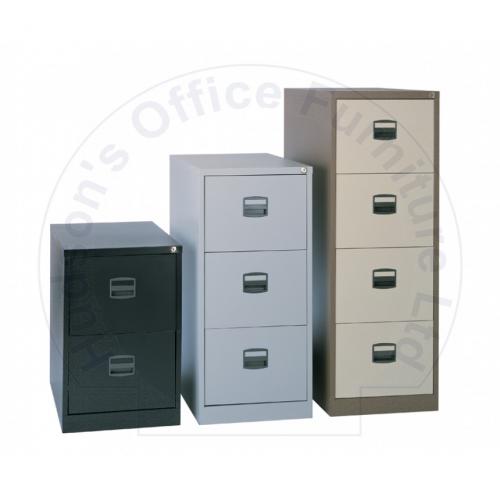
There is no such thing as a tidy office to promote concentration. The design of this work space must therefore be given special care. Here are some tips and tricks for convenient and efficient office storage.
1. The Choice of Furniture
When designing an office area in the living room or bedroom, begin by assessing the space you have and the space you would ideally need.
Consider the following:
• The work surface you need (a simple table converted into an office, a real piece of office furniture, a large board cut to size, etc)
• The area occupied by your computer hardware (CPU, printer, screen and enclosure) and the layout of the various elements.
Depending on your needs and your skills as a handyman, you can either recycle your furniture (for example by cutting off a table from its original function), either to offer you knew equipment or to customize your work plan and your storage spaces. For more efficient office storage, it is recommended to combine open storage (shelves, lockers), closed storage (drawers) and office filing cabinets. Office filing cabinets online offer varieties of choices to furnish the spaces.
2. Number of Storage Spaces
The choice and amount of storage will depend on how you use your office. If your office is a real workplace, equip yourself accordingly so that you can classify all your files and office filing cabinets online is the solution to your dilemma.
Provide multiple shelves and fixed to the wall in front of your desk or on the side; they are the key to everyday office storage. By aligning your books and folders, you will make them easily accessible and work more efficiently. For a small office area, two shelves complete with two or three drawers may be enough to keep everything you need at your fingertips.
3. Different types of Storage
Here is a short summary of useful elements to organize your office storage:
• At least one to two shelves to store books, binders, catalogs, directories.
• Two drawers for storing folders in progress and supplies that should not pile up on the desk: notebooks, notepads, white sheets, scotch, stapler.
• Binders or filing boxes: provide a binder or a box by theme for administrative papers (invoices, pay slips, social security, taxes, bank, insurance)
• Closed boxes for loose objects: photos and postcards or, for children, drawing materials (colored pencils, pastels and gouache tubes).
You will have a tidy work area where you can find your papers, files and supplies in no time.
1. The Choice of Furniture
When designing an office area in the living room or bedroom, begin by assessing the space you have and the space you would ideally need.
Consider the following:
• The work surface you need (a simple table converted into an office, a real piece of office furniture, a large board cut to size, etc)
• The area occupied by your computer hardware (CPU, printer, screen and enclosure) and the layout of the various elements.
Depending on your needs and your skills as a handyman, you can either recycle your furniture (for example by cutting off a table from its original function), either to offer you knew equipment or to customize your work plan and your storage spaces. For more efficient office storage, it is recommended to combine open storage (shelves, lockers), closed storage (drawers) and office filing cabinets. Office filing cabinets online offer varieties of choices to furnish the spaces.
2. Number of Storage Spaces
The choice and amount of storage will depend on how you use your office. If your office is a real workplace, equip yourself accordingly so that you can classify all your files and office filing cabinets online is the solution to your dilemma.
Provide multiple shelves and fixed to the wall in front of your desk or on the side; they are the key to everyday office storage. By aligning your books and folders, you will make them easily accessible and work more efficiently. For a small office area, two shelves complete with two or three drawers may be enough to keep everything you need at your fingertips.
3. Different types of Storage
Here is a short summary of useful elements to organize your office storage:
• At least one to two shelves to store books, binders, catalogs, directories.
• Two drawers for storing folders in progress and supplies that should not pile up on the desk: notebooks, notepads, white sheets, scotch, stapler.
• Binders or filing boxes: provide a binder or a box by theme for administrative papers (invoices, pay slips, social security, taxes, bank, insurance)
• Closed boxes for loose objects: photos and postcards or, for children, drawing materials (colored pencils, pastels and gouache tubes).
You will have a tidy work area where you can find your papers, files and supplies in no time.
Advertise on APSense
This advertising space is available.
Post Your Ad Here
Post Your Ad Here
Comments