The Role of Creativity behind Films
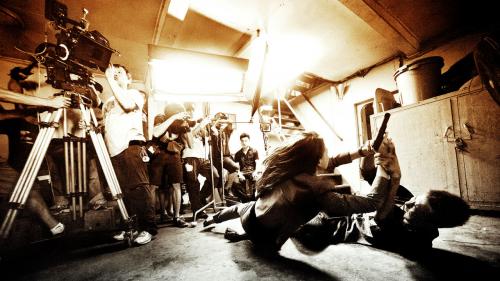 There is an amazing amount of pressure to put on the creative minds behind the films we love, and as more and more “meaning” is injected into films that were once escapes from our tangible lives outside of the theatre, the function of movies has changed. How much of an escape can a movie be when it attempts to somehow engage with and relate to every person in the audience’s life? Furthermore, isn’t it a bit presumptuous for a director or an actor to preempt the beautiful courting between a film and a viewer with their own concrete intentions?
Movies, just like books, music, and art, should be both an aesthetic experience and a blank canvas, where the words, images, and sounds combine with the unique perspectives and beliefs of a viewer, resulting in individual meaning and significance. Art allows people to create relationships with beauty, and it seems pointless to remove that essential element of artistic engagement by forcing preconceived meaning down the throat of every film projected onto the silver screen.
While some industry professionals and audiences may refute that sentiment, Joel and Ethan Coen certainly agree. For the past three decades, this fraternal team has risen into illustrious ranks, working with some of the biggest names in the business and earning the respect of their peers, critics, and audiences across the world. Most moviemaking teams that enjoy such consistent success inevitably get pigeonholed into a certain genre, or are characterized by ticks or tropes that define their films. Many people would even say that ongoing success eventually requires some form of “selling out,” or caving in to the demands for summer blockbusters and star- studded casts. The glamour-hungry crowds of moviegoers rarely remain loyal to a directing team so fervently, and yet the Coen brothers’ movies have achieved an almost cult classic status, while still remaining very much in the mainstream, in terms of ticket sales and prestigious awards.

Most people remember the first Coen brothers’ film they saw. Perhaps it was Raising Arizona, a bit of a screwball comedy starring Nicholas Cage and Holly Hunter that is rife with loaded dialogue, hilarious twists, flamboyant characters, and a plot that seems too bizarre for words. Others may remember their first viewing of The Big Lebowski, arguably the biggest cult classic in their oeuvre, depicting the unlikely adventure of a peace-loving burnout as he is slowly dragged into a world of crime, greed, and deceit that he can hardly understand, let alone survive. No Country for Old Men is the gritty, Best Picture Oscar winner that raised the stock of the Coen brothers to new heights, and that brutally violent and emotionally gripping story is not one that many people are likely to forget.
The list goes on and on; the creative partnership has churned out 20 films over the past three decades, and with the exception of a few forgettable or critically panned films, each one has left a mark on either the cultural canon or the philosophy of filmmakers. The Coen brothers have swung the artistic pendulum away from movies packed with meaning, symbolism, and forced intention. Although the subject matter and storylines are often surreal or bizarre, they approach people in an honest and uncompromising way. The stories do not create characters that would never be found anywhere in the world, as long as you were willing to look hard enough. People love their films, not because they are an escape, but because they are a twisted and tragic mirror of life.

Their take on reality is decidedly skewed, and while their critics often call their films heartless or unnecessarily dark, they consider themselves to be pure aesthetes. The films that they produce are often gripping, painful, hilarious, frightening, and unforgettable, but the brothers themselves would be the first to deny subtle symbolism and underlying messages, which modern viewers are quick to assign to any movie that receives critical acclaim. Their films are so difficult to classify, leading to the creation of an adjective “Coenesque,” which means a film with “bizarre and involved plots, use of irony and black humor, and allusions to film classics.” Most audiences understand what they’re getting into when they sit down in a theatre.
A horror movie will be frightening, a comedy will be light-hearted, and a period piece will be nostalgic and beautifully shot. When a viewer sits down before a Coen brothers’ film, there is no telling what sort of emotional roller coaster they have just strapped in for, and while the movies are often visceral and engaging, they are not necessarily cathartic. You often leave a Coen brothers film feeling unsettled, uncertain of what you just saw. These mixed feelings remain, and it might take an hour or so before you can discuss the finer points of the film with anyone else. You may even immediately decide that you’ll see it again, although you aren’t quite sure why.
Know more about the role of creativity behind films only at the University Canada West.
Advertise on APSense
This advertising space is available.
Post Your Ad Here
Post Your Ad Here
Comments