The First Time We Heard Black Holes and Other Future Tech
We want to dedicate today’s article to the revolutionary
time we heard black holes for the first time, along with other future
technology news.
The First Time We
Heard Black Holes
It’s not the first time Einstein was proved right. However,
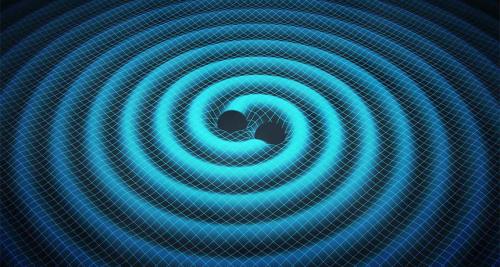
on February 11 2016, we did hear the first black holes collide - proving right
all social media rumors outlined in a feature on how
we may have discovered gravitational waves.
The collision between two black holes, one 29x the mass of
the sun and the other nearly 36x, nearly a billion light years away was
detected by LIGO - an interferometer used by nearly 1000 scientists around the
world in 14 countries. LIGO has detectors in Livingston, Louisiana and Hanford,
Washington.
“It’s the first time the universe has spoken to us with
gravitational waves. And, surprisingly, the source of the waves is a system of
two black holes in orbit around each other that spiral inward and smash
together. The scientific community will now work towards strengthening the
instrumentation to make it capable of detecting gravitational waves produced by
all accelerating masses,” said David Reitze, Physicist at the California
Institute of Technology.
Use Your Arm as a Touchscreen
with this Device
In an attempt to help solve the ‘fat finger problem’ of not
ever hitting the right point on a touchscreen, the Future Interfaces Group
(FIG) at Carnegie Mellon University have come up with a smart device that
allows a user to employ use of the arm as a touchscreen interface.
Called SkinTrack, the device requires the user to wear a
ring that sends a low-energy, high-frequency signal when the finger touches the
surface of the skin.
“A major problem with smartwatches and other digital jewelry
is that their screens are so tiny. Not only is the interaction area small, but
your finger actually blocks much of the screen when you’re using it. Input
tends to be pretty basic, confined to a few buttons or some directional swipes.
SkinTrack makes it possible to move interactions from the screen onto the arm,
providing much larger interface,” the researchers said.
Biosensor that Detects
Parkinson’s, Cancer, Alzheimer’s
Researchers at the National Nanotechnology Laboratory (NNL)
in Brazil have developed a biosensor that is capable of diagnosing neurodegenerative
disorders such as Parkinson’s disease, Alzheimer’s disease and Cancer.
“The device can detect such molecules even when they’re
present at very low levels in the examined material, thanks to its nanometric
sensitivity. Platforms like this can be deployed to diagnose complex diseases
quickly, safely and relatively cheaply using nanometer-scale systems to
identify molecules of interest in the material analyzed,” says Carlos Cesar Bof
Bufon, a researcher at NNL.
Read more at www.bit.ly/q3newsblog. Q3 Technologies also provides mobile
application development in Gurgaon, including technology consulting,
application migration and modernization, end-to-end support & maintenance
services.
Post Your Ad Here
Comments