Ten Finest Parks in London
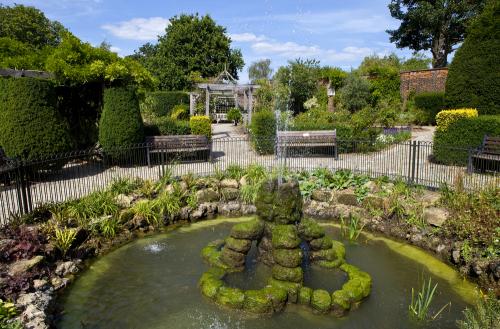
From sunbathing and picnics in the summer, to brisk, refreshing walks in the winter, there's always a reason to visit one of London's parks. As well as being perfect for relaxing, London's parks have plenty of activities to enjoy: sports events; open-air theatre; live music concerts and adventure playgrounds for children, not to mention some breathtaking views.
You can choose your stay according to your many trips to the city’s beautiful spaces. Best Western PLUS Park Grand London Heathrow Gateway is contemporary hotel is an 11-minute walk from Hounslow East tube station, 3.9 miles from London Heathrow Airport and 7 miles from Hampton Court Palace. You can also try hotels in Hounslow east for more variety and reasonable rates.
We look at some of the most breathtaking parks in London:
Green Park: The green, triangle-shaped expanse of leafy land just beyond the Ritz is Green Park. Penned in at two corners by St James's Park and Hyde Park, it was enclosed by Charles II in 1668 as a hunting ground before opening to the public in 1826. Today, the mini park plays host to lunching commuters and tourists in almost equal measure; the latter often found to be lounging on Green Park's alluring stripy deckchairs before being stung with a small fee by the roaming ticket man.
Hyde Park: At 1.5 miles long and about a mile wide, Hyde Park is one of the largest of London's Royal Parks. The land was appropriated in 1536 from the monks of Westminster Abbey by Henry VIII for hunting deer and, despite opening to the public in the early 1600s, was only frequented by the upper echelons of society. London's oldest boating lake, The Serpentine, is at the bottom of Hyde Park. It's not especially beautiful but is home to ducks, coots, swans and tufty-headed grebes, and is also of great historic interest.
St James's Park: St James's Park was founded as a deer park for the royal occupants of St James's Palace, and remodelled by John Nash on the orders of George IV. The central lake is home to numerous species of wildfowl, including pelicans that have been kept here since the 17th century. The pelicans are fed between 2.30pm and 3pm daily, though they have been known to supplement their diet at other times of the day with the occasional pigeon. The bridge over the lake offers very snappable views of Buckingham Palace (head that way and you'll see Green Park, the beginning of a relaxing stroll that will take you under trees as far as Hyde Park Corner).
Hampstead Heath: Wild and undulating, the grassy sprawl of Hampstead Heath makes a wonderfully untamed contrast to the manicured lawns and flowerbeds found elsewhere in the capital – and it will feel even more delightfully rural if the City of London Corporation's 'aspiration' to graze sheep on the heath as a flock of organic lawnmowers comes to fruition. The heath stretches across 791 acres of woodland, playing fields, swimming ponds and meadows of tall grass in north London from Hampstead to Highgate, and has provided the inspiration for countless films, books and poems.
Regent's Park: Regent's Park is one of London's most popular open spaces, covering 410 acres in north-west London. Attractions run from the animal odours and noises of London Zoo to the enchanting Open Air Theatre. Various food and music festivals pitch up here over the summer and rowing boat hire, bandstands, beautiful rose gardens, tennis courts, ice-cream stands and eateries complete the picture. Regent’s Park has several playgrounds, but the most interesting is at Hanover Gate where, in 2010, a timber treehouse area for older kids was built within a large sandpit next to the boating lake and existing playground.
Clapham Common: Clapham Common provides an oasis of peace amid the busy traffic of south west London, with Holy Trinity Church, which dates from 1776, at its perimeter. A number of cafés, sporting facilities, two playgrounds and a skate park make the common a lively recreational facility for locals. Originally built in 1890, Clapham Common’s bandstand is the largest in London. After falling into disrepair in the 1960s, the bandstand was restored and reopened and now hosts a variety of open-air concerts during the summer months.
Greenwich Park: Greenwich Park boasts the honour of being the oldest enclosed Royal Park. Formerly a hunting ground for Henry VIII, the park still maintains a 13-acre grassland enclosure, which provides an urban sanctuary for deer, foxes and over 70 species of bird. One of the largest green spaces in south east London, Greenwich Park offers a wide range of facilities and points of interest, including a child-friendly boating lake, six tennis courts and the National Maritime Museum just on the perimeter. The Royal Observatory in Greenwich Park is home to the Greenwich Meridian Line which represents the prime meridian, relative to which world time is calculated and the distance to every place on Earth is measured. The views from the top of the hill across to Canary Wharf and beyond are spectacular, and well worth the trek.
Victoria Park: Victoria Park sprang to life as a Royal Park but became municipal in 1887; it's rougher around the edges than its western counterparts and thus a great expanse to kick back and let nature revitalise you. Vicky Park is wonderful for youngsters too: the V&A Playground is equipped with swings etc, and the fantastically designed Pools Playground encourages creative play. Wildlife includes a deer enclosure, moorhens, grey and Canada geese and squirrels, while, by the lake, you'll find The Pavilion Café serves tasty, locally sourced food from breakfast to tea-time. In recent years the park has hosted Winterville and Field Day, and every November park-goers in their thousands are treated to a wildly ambitious theatrical fireworks display which is laid on by Tower Hamlets Council.
Post Your Ad Here
Comments