SpaceX Wants to Land on Mars in 2018 and Other Science Tech
Since our science and technology posts are well received as
compared to our other single posts, we decided to go ahead with another one.
Here’s the latest science and future tech for today.
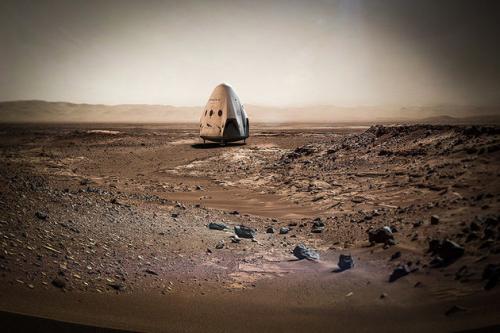
SpaceX Wants to Land
on Mars in 2018
Elon Musk’s SpaceX has made a surprising announcement on
Twitter – a plan to land a SpaceX vehicle on the Red Planet by 2018, and humans
by mid-2020. Here are the series of tweets by the company that successfully
landed a rocket on a drone ship just recently:
“Planning to send Dragon to Mars as soon as 2018. Red
Dragons will inform overall Mars architecture, details to come.” | “Dragon 2 is
designed to be able to land anywhere in the solar system. Red Dragon Mars
mission is the first test flight.” | “But wouldn't recommend transporting
astronauts beyond Earth-moon region. Wouldn't be fun for longer journeys.
Internal volume ~size of SUV.”
NASA is going to assist SpaceX in their endeavor. However,
there will not be any exchange of funds in the assistance offered.
"In exchange for Martian entry, descent, and landing
data from SpaceX, NASA will offer technical support for the firm’s plan to
attempt to land an uncrewed Dragon 2 spacecraft on Mars," says Dava Newman,
NASA Deputy Administrator.
Dubai to be 25%
Driverless by 2030
To reduce costs, pollution and waste caused by today’s cars,
the Dubai Future Foundation has found a partner in the Roads and Transport
Authority of Dubai to replace 25% of transport by driverless vehicles,
ultimately leading to people saving more than 396 million hours of road-travel
time.
”By 2030, 25 percent of all transportation trips in Dubai
will be smart and driverless. The strategy is projected to generate economic
revenues and savings of up to Dh22 billion a year,” said His Highness Sheikh
Mohammed, Vice-President and Prime Minister of the UAE and Emir of Dubai.
Using Brainprints
Instead of Fingerprints with 100% Accuracy
Researchers from Binghamton University have shown that
instead of fingerprints, a person’s ‘brainprint’ is unique from
person-to-person, and can be identified with 100% accuracy.
This was found out through a study in which a set of
volunteers were shown a series of different images. After studying the results,
they found that each person’s brain reacts to each image differently.
“If someone’s fingerprint is stolen, that person can’t just
grow a new finger to replace the compromised fingerprint—the fingerprint for
that person is compromised forever. Fingerprints are ‘non-cancellable.’
Brainprints, on the other hand, are potentially cancellable. So, in the
unlikely event that attackers were actually able to steal a brainprint from an
authorized user, the authorized user could then ‘reset’ their brainprint,” said
Sarah Laszlo, Assistant Professor of Psychology at Binghamton University.
Read more at www.bit.ly/q3newsblog.
Q3 Technologies is a large diversified technology company which develops custom software products
for the healthcare industry including cloud applications, enterprise
applications across all platforms and Rich Internet Applications (RIA).
Post Your Ad Here
Comments