Signs of Getting Old in a Cat
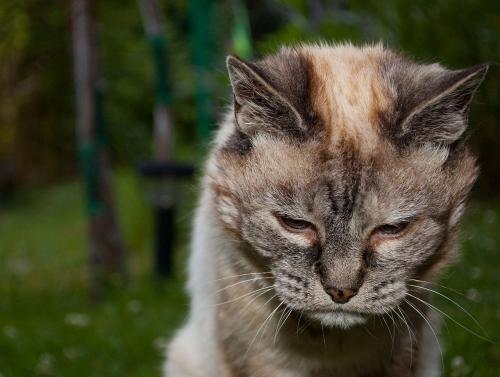
Like many animals, cats instinctively know to hide when they
are ill or are suffering from an injury.
As they get older, this instinct covers the changes that happen in their
bodies with age. After the age of seven,
cats are classified as senior and may begin to see signs of aging. So what can we owners do to help?
Changes in the body
Much as with humans, as cats get older their body undergoes
certain changes. Some of these may
simply be due to their age, such as the development of arthritis while others
may be partially due to an underlying health condition such as diabetes. Any changes in their body is a sign that
something may not be right.
Weight changes is one of the biggest indicators and even as
little as a 10% change in weight can make a massive difference for a small
animal. Losing weight can be an
indicator of a number of conditions including diabetes, cancer, kidney problems
or hyperthyroidism but can also be a sign they are having trouble with their
teeth and cannot eat their food.
Eye issues
Cats rely wholly on their senses, particularly smell,
hearing and sight. When they get older,
sight problems can occur as a condition or as a secondary problem from another
illness. Cancer and glaucoma are the
most common causes of eye issues in cats while trauma or injury also account
for a high percentage. Problems with the
eyes can also indicate conditions such as hypertension or high blood
pressure. Should the eye have an
engorged retinal blood vessel showing, this can be a sign of a detached retina
or other issues that should be seen by a vet immediately as could result in a
partial or total loss of vision.
Symptoms that should lead to a vet’s visiting include when
the cat is pawing at their eyes or blinking excessively. Any signs of blood in their eye should also
mean they need to see a vet, as would their pupils not reacting correctly to
changing light levels. If there is cloudiness
in the eye or if they walk into furniture because they can’t see properly, seek
out the vet urgently.
Other conditions
Kidney problems are near the top of the list of problems
experienced by older cats. This can result
in an increase in drinking and urination as the kidneys fail to work
properly. This can also lead to appetite
loss and corresponding loss of weight as well as toxins building up in the
blood. Kidney failure can’t be reversed
but can be managed if it is caught early so at the first sign of problems, seek
out your vet. These can also include a
lack of urination, which is an emergency condition.
Osteoarthritis is a condition many people know unfortunately
well and are similar in cats. Cats generally
retain a fuller measure of movement than dogs with the condition but one of the
big changes is a reluctance to jump. They
may find getting in and out of high sides litter boxes difficult and may find
stretching around to groom their extremities awkward. They can also be lethargic and not eat
well. Vets can prescribe painkillers
that will help them manage the condition but never use human medication as this
will likely be fatal to a cat.
Post Your Ad Here
Comments