Power of Hydropower in Australia: Ken Research
Ken research
announced recent publication on, "Hydropower in Australia, Market Outlook to 2030,
Update 2016-Capacity, Generation, Levelized Cost of Energy (LCOE), Investment
Trends, Regulations and Company Profiles”, the industry analysis
specialists that offer comprehensive information and understanding of the
hydropower market in Australia. The report provides in depth analysis on global
renewable power market and global hydropower market with forecasts up to 2030.
The report analyses the power market scenario in Australia (includes
conventional thermal, nuclear, large hydro and renewable energy sources) and
provides comprehensive viewpoint. The research details renewable power market
outlook in the country (includes hydro, small hydro, biopower and solar PV).
The report highlights installed capacity and power generation trends from 2006
to 2030, time. A detailed coverage of renewable energy policy framework
governing the market with specific policies pertaining to hydropower is
provided in the report. The research also provides company snapshots of some of
the major market participants.
The report is built using data and information sourced from
proprietary databases, secondary research and in-house analysis of industry
experts. A brief introduction on global carbon emissions and global primary
energy consumption is given. Detailed overview of the global hydropower market
with installed capacity and generation trends, installed capacity split by
major hydropower countries in 2015 and key owners' information of various
regions is provided. An overview on global renewable power market, highlighting
installed capacity trends, generation trends and installed capacity split by
various renewable power sources and the information is covered for the
historical period 2006-2015 and forecast period 2015-2030. Position yourself to
gain the maximum advantage of the industry's growth potential. It can be used
to develop strategies based on the latest regulatory events and to identify key
partners and business development avenues. It’s the key solution to understand
and respond to your competitors' business structure, strategy and prospects.
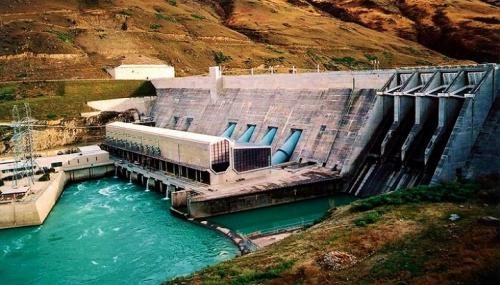
Hydro uses flowing water to spin a turbine connected to a
generator that produces electricity. The amount of electricity generated
depends on the volume of water and the height of the water above the turbine.
Hydropower is the most advanced and mature renewable energy technology and
provides some level of electricity generation in more than 160 countries
worldwide. Hydro is a renewable energy source and has the advantages of low
greenhouse gas emissions, low operating costs, and a high ramp rate (quick
response to electricity demand), enabling it to be used for either base or peak
load electricity generation, or both.
Loy Yang in Victoria is the largest Power Station in Australia by
capacity. Large hydroelectric power stations need dams to store the water
required to produce electricity. These dams are often built to hold irrigation
or drinking water, and the power station is included in the project to ensure
maximum value is extracted from the water. Renewable power sources include wind
(both onshore and offshore), solar photovoltaic (PV), concentrated solar power
(CSP), small hydropower (SHP), biomass, biogas and geothermal. Hydropower
currently accounts for about 40 per cent of the renewable electricity produced
in Australia. Tasmania's hydroelectric plants and the Snowy River Hydro Scheme
in New South Wales generate the majority of this energy.
Australia is the driest inhabited continent on earth, with over 80
per cent of its landmass receiving an annual average rainfall of less than 600
mm per year and 50 per cent less than 300 mm per year. There is also high
variability in rainfall, evaporation rates and temperatures between years,
resulting in Australia having very limited and variable surface water
resources. Much of Australia's economically feasible hydro energy resource has
already been harnessed. The amount of hydro power generated in 2015 was lower
than 2014 due to low rainfall in key hydro catchments. Hydro Tasmania’s network
endured the driest period on record between September and November, and
storages dropped to a quarter of capacity (25.7 per cent). The majority of
Australia's suitable hydro sites have already been developed, so the sector's
opportunity for growth is limited. In coming years, most of the activity in the
sector will be in developing mini hydro power plants or upgrading and
refurbishing existing power stations
Australia has more than 100 operating hydroelectric power stations
with total installed capacity of about 7800 megawatts (MW). These are located
in the areas of highest rainfall and elevation and are mostly in New South
Wales (55 per cent) and Tasmania (29 per cent). The Snowy Mountains
Hydro-electric Scheme, with a capacity of 3800MW, is Australia's largest hydro
scheme and is one of the most complex integrated water and hydroelectricity
schemes in the world. The Scheme collects and stores the water that would
normally flow east to the coast and diverts it through trans-mountain tunnels
and power stations. The water is then released into the Murray and Murrumbidgee
Rivers for irrigation. The Snowy Mountains Scheme comprises sixteen major dams,
seven power stations (two of which are underground), a pumping station, 145km
of inter-connected trans-mountain tunnels and 80km of aqueducts. The Snowy
Mountains Hydro-electric Scheme accounts for around half of Australia's total
hydroelectricity generation capacity and provides base load and peak load power
to the eastern mainland grid of Australia.
Hydro energy is particularly important in Tasmania where it
provides much of the state's electricity. The Tasmanian integrated hydropower
scheme harnesses hydro energy from six major water catchments and involves 50
major dams, numerous lakes and 29 power stations with a total capacity of over
2600MW. The scheme provides base and peak load power to the National
Electricity Market, firstly to Tasmania and then to the Australian network
through Basslink, the undersea interconnector which runs under Bass Strait.
There are also hydroelectricity schemes in north-east Victoria, Queensland,
Western Australia, and a mini-hydroelectricity project in South Australia.
The levelised cost of electricity (LCOE) is a measure of a power
source which attempts to compare different methods of electricity generation on
a consistent basis. It is an economic assessment of the average total cost to
build and operate a power-generating asset over its lifetime divided by the
total energy output of the asset over that lifetime. Shrinking rivers have already reduced or even
shut down power generation in existing dams when their reservoirs dropped below
critical levels. As a result, drought-stricken countries like Kenya, the
Philippines, and Venezuela have suffered periodic blackouts and electricity
rationing in recent years. The Australian hydro power industry has already
attracted over one billion dollars of investment to further develop Australian
hydro power projects. Opportunities for further growth in the hydro power
industry are principally in developing mini hydro plants or refurbishing,
upgrading and modernising Australia’s current fleet
Companies Covered
Snowy Hydro Limited, Origin Energy Limited, CS Energy Ltd, AGL
Energy Limited
Key Factors Considered in the
Report
Australia Hydropower Market
Hydropower Market Future Outlook Australia
Hydropower Generation Capacity Australia
Australia Energy Consumption
Global Renewable Power Installations
Thermal Power Market Australia
Global Carbon Emission
Australia Hydropower Market Investment Trends
Australia Renewable Energy Regulations
Australia Renewable Energy Installed Capacity
For more
coverage click on the link below:
Related links:
Contact
Us:
Ken Research
Ankur Gupta, Head Marketing & Communications
Ankur@kenresearch.com
+91-9015378249
Post Your Ad Here
Comments