PCBA: What is Through-Hole Assembly & Surface Mount Assembly!
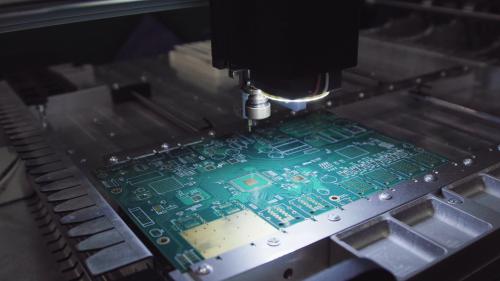
Printed circuit boards or PCBs provide the
foundation for a significant amount of the technology that we use every day. From
computers and smartphones to appliances and vehicles, PCBs enable complex
electronic circuits and components to be compact and reliably connected. The
process of assembling the components onto the PCBs during manufacturing is
known as PCB assembly or PCBA.
There are several key steps and processes
involved in assembling a PCB. First, the PCB is designed and fabricated,
consisting of conductive copper traces and pads on an insulating base
substrate. Components must then be precisely placed and mounted onto the PCB.
This is accomplished through two main techniques: through-hole assembly or
surface mount assembly. Additional processes like soldering, cleaning,
inspection, and testing ensure the quality and reliability of the final
assembled PCB.
What are the common PCBA processes used in the market?
Through-Hole Assembly
Through-hole assembly, also known as
through-hole technology (THT), is a method of mechanically assembling
electronic components into printed circuit boards (PCBs). In through-hole
assembly, component leads are inserted into holes drilled in the PCB and
soldered to pads on the opposite side to create both mechanical and electrical
connections.
The through-hole assembly process
typically involves the following steps:
- PCB Fabrication - The PCB is designed and fabricated with plated through-holes at
locations where components will be placed. The holes are plated with a
conductive material to enable soldering.
- Component Insertion - Components are inserted into their corresponding holes on the PCB.
Discrete components like resistors and capacitors are often inserted by
automated machines, while integrated circuits are inserted manually.
- Soldering - The component leads protruding through the PCB are soldered,
usually by wave soldering. Molten solder in the wave bonds with the plating in
the holes and component leads to form solid solder joints.
- Cleaning -
Any residual flux or other contaminants are cleaned from the soldered board
using methods like spraying or immersion.
- Inspection - The solder joints and component placement are visually inspected
and often x-rayed to validate quality and identify any defects.
Through-hole assembly can accommodate both
leaded and leadless components. It allows reliable mechanical and electrical
connections, though takes up more space on the PCB compared to surface mount
assembly.
Surface Mount Assembly
Surface mount technology (SMT) is an
advanced assembly process where electronic components are mounted directly onto
the surface of a printed circuit board (PCB). Unlike through-hole components
which use holes drilled in the PCB, SMT components have solder pads or
terminations on the bottom that sit directly on the board's surface.
There are several advantages of SMT over
through-hole assembly:
- Components can be smaller with tighter
tolerances and finer pitch. This allows for greater component density on the
PCB.
- Components can be placed on both sides of
the PCB. This doubles the usable area compared to single-sided through-hole
boards.
- Assembly can be highly automated using
pick-and-place machines, reflow ovens, and other equipment. This increases
speed and reduces labor costs.
- Improved performance from smaller lead
lengths between components. Components are soldered in place instead of
inserted through holes.
- Easier to create double-sided or
multilayer boards since holes are not required to interconnect both sides.
Post Your Ad Here
Comments