Mobsters in America - Stephanie St Clair - The Queen of the Harlem Numbers Rackets
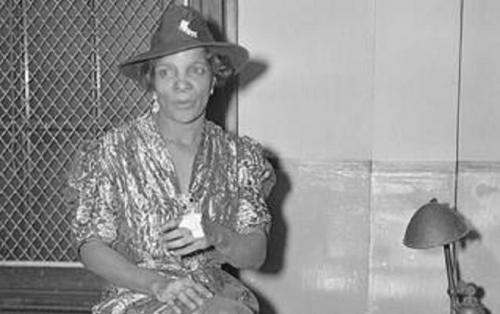
She was pursued out of the Harlem numbers rackets by Dutch Schultz, however when Schultz lay kicking the bucket from a shot injury, Stephanie St. Clair had the last snicker.
Stephanie St. Clair was conceived in 1886, in Marseilles, an island in the East Caribbean. At 26 years old she moved to New York City and settled in Harlem. Very quickly, she snared with the Forty Thieves, a white pack who were in presence since the 1850's. Celebrity mugshots, There is no record of what St. Clair accomplished for the following ten years, yet it's protected to say, thinking of her as binds to the Forty Thieves, an infamous shake-down group, what she did was definitely not lawful.
In 1922, St. Clair utilized $10,000 of her own cash and began Harlem's first numbers rackets. St. Clair was known for having a brutal temper and regularly reviled her subordinates out in a few dialects. At the point when individuals scrutinized her about her legacy, she snapped that she was conceived in "European France," and that she talked faultless French, not at all like the French-talking riffraff from the Caribbean. In Harlem they called her Madame St. Clair, yet in whatever is left of the city, she was known as out and out "Queenie."
In the mid 1920's, known peddler and stone executioner Dutch Schultz chose he needed to assume control over all the approach rackets in Harlem. Schultz did not request that Queenie step back too pleasantly, bringing about the passings of many Queenie's numbers runners. Queenie enrolled the assistance of Bumpy Johnson, an ex-con with a hair-trigger temper, to deal with the Schultz circumstance. Johnson went downtown and went by Italian crowd supervisor Lucky Luciano. He requested that Luciano talk some sense into Schultz. Be that as it may, there was very little Luciano could do, subsequent to at the time, he was one of Schultz' accomplices. Luciano proposed that Queenie and Johnson toss in with Schultz, making them, as a result, a sub-division of Schultz's numbers business. This did not sit too well with Queenie, and despite the fact that Johnson attempted to persuade her this was the savvy move, she turned down Luciano's offer.
At that point all of a sudden, Queenie started experiencing difficulty with the police, whom she was paying off to look the other way. This was the work of Schultz, who through his associations with Tammany Hall, had a few lawmakers in his back pocket, too a large portion of the police power in New York City. While Schultz' number runners worked the lanes of Harlem with exemption, Queenie's runners, when they were not being murdered by Schultz' men, were being captured by the police.
Queenie chose to battle back with the force of the press. In December 1930, Queenie took a few promotions in Harlem daily papers, blaming the police for joining, squeezes and defilement. That did not run over too well with the nearby fluff, and they promptly captured Queenie for illicit gambling.Queenie was indicted and sentenced to eight months hard work on Welfare Island. Upon her discharge, she showed up before the Seabury Committee, which was researching unite in the Bronx and Manhattan Magistrates Courts. Queenie affirmed that from 1923-1926, she had paid the police in Harlem $6000 to shield her runners from capture, and that the police had taken her cash and captured her number runners in any case. Schultz more likely than not had a decent chuckle over that one, since $6000 was short of what he paid month to month to keep the cops cheerful in New York City.
Nothing originated from her confirmation before the Seabury Committee, so Queenie chose to argue her case to New York City Mayor Jimmy Walker, who was just about as slanted as Schultz. Queenie told Walker that Schultz was influencing her to join his posse, or the consequences will be severe. Walker, who was being explored by the Seabury Committee himself, addressed Queenie by leaving his place of employment as Mayor and moving to Europe for the following couple of years.
Queenie then begged the other dark arrangement number brokers in Harlem to unite with her in a fight against Schultz. Realizing that Schultz had an excessive amount of juice in the legislature, and an excess of shooters in his pack, they turned her down level.
Uneven Johnson soon discovered that Schultz had put the word out in the city that Queenie was to be shot without hesitation. Queenie then sought refuge, declining to try and go outside to see the light of day. On one event, Johnson needed to conceal Queenie in a coal container, under a hill of coal, to spare her from Schultz' men. That was the last bit of excess that will be tolerated for Queenie. She sent word to Schultz that she would consent to his requests. Schultz sent word back to her that she could stay alive, the length of she gave Schultz a lion's share offer in her numbers rackets. Queenie reluctantly concurred.
Schultz had his own particular keep running of misfortune, when he requested that Luciano and his buddies consent to the slaughtering of Special Prosecutor Thomas E. Dewey, who was breathing down Schultz's neck. Schultz' suggestion was turned down, and when he said he would execute Dewey himself, he was shot in the stomach in the washroom of a New Jersey eatery. Schultz waited in a dazed state in a clinic for a couple of days before he kicked the bucket. As he was laying there muttering inanities, a telegram arrived saying, "As ye sow, so might you harvest."
The telegram was sent by the Queen of Harlem - Stephanie St. Clair.
Queenie in the long run turned over her rackets to Bumpy Johnson. She blurred into lack of clarity and passed on in her rest in 1969.
In the 1997 motion picture "Hooligan," Lawrence Fishburne played Bumpy Johnson, Tim Roth played Dutch Schultz, Andy Garcia played Lucky Luciano and Cicely Tyson played Stephanie "Queenie" St. Clair.
Advertise on APSense
This advertising space is available.
Post Your Ad Here
Post Your Ad Here
Comments