Managed Print Services (MPS) Industry Analysis by 2024
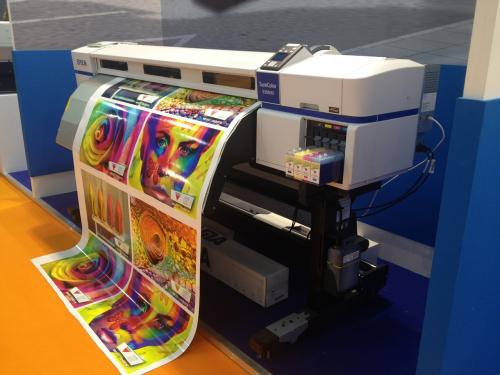
Managed print services (MPS) help organizations manage their complex
printing infrastructure, which consists of a large number of multifunctional
printers. MPS vendors take care of the entire printing fleet in an organization
by maintaining the printers and thus reducing the downtime. MPS vendors monitor
and control the printing activities, reducing the paper wastage. Moreover, MPS
allow organizations to gain insights on their printing expenses and thus assist
them in devising and allocating future printing budgets. Technological
developments and continuous innovation by lead MPS vendors and printer/copier
manufacturers have allowed organizations to protect their vital printing data
by developing enhanced authentication systems to access the printing documents.
The global MPS market was valued at US$ 26.18 Bn in 2015 and is forecast to
expand at a CAGR of 14.8% from 2016 to 2024, reaching a value of US$ 94.97 Bn
by 2024.
Organizations have turned to MPS for the efficient management of their printing
activities and optimization of their printing budget. The major companies
operating in MPS market include Xerox Corporation, ARC Document Solutions,
Inc., Ricoh Company Ltd., Lexmark Corporation, Canon, Inc., Konica Minolta,
Inc., KYOCERA Corporation, Toshiba Corporation, HP Development, L.P., and Print
Audit.
The global MPS market has been segmented on the basis of channel, enterprise
size, deployment, end-use, and geography. On the basis of channel, the market
is segmented into printer/copier manufacturers and channel partner/core MPS
providers. The deployment types of MPS include on-premise, hybrid, and
cloud-based. Cloud-based deployment has gained high popularity in the recent
years, owing to benefits such as providing virtual storage place and eliminating
the requirement of a dedicated IT team. The trend of preference for cloud-based
deployment is expected to drive the MPS market during the forecast period,
considering the cost-effective solutions being offered by cloud MPS vendors.
Furthermore, depending on enterprise size the MPS market is categorized into
SMEs and large enterprises. The large enterprises segment has been dominating
the MPS market, considering complexity in managing their IT infrastructure.
However, the SMEs segment of the MPS market is expected to grow faster than the
large enterprises during the forecast period, owing to the rising awareness
regarding the benefits of MPS.
The end-use segments of the MPS market include banking, financial services,
and insurance (BFSI); telecom and IT; government and public; health care;
education; legal; construction; manufacturing, and others. The government and
public end-use segment was the largest in 2015. Government and public sector
work involves intensive paperwork and there have been significant investments
in MPS in this sector with a view to reducing the cost of printing.
Furthermore, the growth in demand for MPS from the sector is influenced by the
need to reduce carbon emissions. MPS optimizes the use of large printer fleets
and thus reduces the energy consumption.
North America is likely to dominate the global MPS market during the
forecast period from 2016 to 2024. The MPS market in the region is primarily
influenced by widespread knowledge of MPS benefits among the large enterprises as
well as SMEs. Furthermore, the presence of lead printer/copier manufacturers
and core MPS providers in the region has encouraged the spread of MPS. Latin
America and Asia Pacific are anticipated to experience favorable growth in the
MPS market in the coming years, driven by economic growth and a rise in
industrialization.
Post Your Ad Here
Comments