Jama Masjid: Its history and more
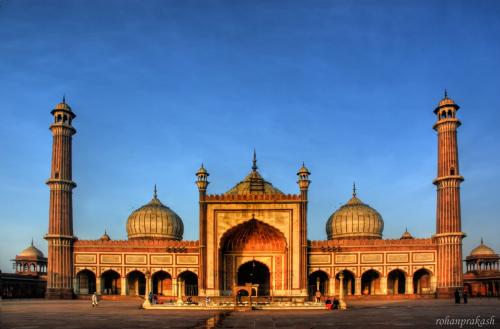
Delhi is known for its architectural wonders. The capital city houses many places of historical interest and that is the primary reason why many people who are visiting India, make Delhi their area of prime focus. If Mughal art and architecture are your areas of interest then, Delhi would be the ideal place to visit. Of the many architectural marvels that this city has, one of the most prominent ones is Jama Masjid. This regal structure is bound to captivate any onlooker. Do you know what the word Jama Masjid means? Do you know when it was built? Every structure has its own story to tell. This article will try and elaborate and underline the story of this fine sample of architecture- Jama Masjid in Delhi.
The story of Jama Masjid
It was back in the year 1656, that under the then Mughal emperor, Shah Jahan’s orders, the construction of the Jama Masjid was completed. It took around 5000 workers to complete this huge structure and it cost the Mughal treasury a whooping amount of 1 million (in those days)! This palatial structure for prayer, can accommodate at least 25000 people at one go. This is the place where all the followers of Muslim gather on a Friday to offer their prayers. The full name of the mosque is “Masjid-i-Jahan Numa”, the abbreviated and the more popular form of which is Jama Masjid. A literal translation of this phrase would mean the mosque which has the power to overlook upon the entire world.
Architecture: A symbol of Hindu-Muslim unity
Right since the time of Akbar, credited to be the consolidator of the Mughal Empire, it has been known that the policies adopted by him were meant for the peaceful cohabitation of both Muslims and Hindus. It was a tradition followed by the next two consecutive emperors as well, only to be broken during Aurangazeb’s time. Most of the famous Mughal architectures were commissioned during the time of either Shah Jahan or Jahangir, mostly the former. The Mughal treasury was at its peak and being a great admirer of the arts and crafts, Shah Jahan commissioned the construction of one piece of architectural brilliance after another. Jama Masjid was one of them. But thanks to the policy adopted by the Mughal emperors, an amalgamation of both Hindu and Muslim styles were noticed in architectures of that time. Jama Masjid is a testimony to that amalgamation.
White marble and red stones are the chief materials that were used. You have minarets as high as 40 mts, that are built with such material. The Masjid complex supports four towers and there are three gates that lead to the complex. The mosque was built to draw some attention and hence it was built on a ground which was a bit higher than the surrounding areas and hence this mosque is visible from quite a few kilometres away. Arching curves, huge domes and excellent craftsmanship makes this mosque an architectural wonder and the tranquillity within the premises makes it a place ideal for meditation.
If you are in Delhi and want to know the heritage of this place, then do not forget to visit the Jama Masjid.
Post Your Ad Here
Comments