How Transparent Wood Looks Like and Other Future Tech
Well, we’ve had an exciting week in the tech industry of
late. With so much going on, let’s get straight to our first whacky article.
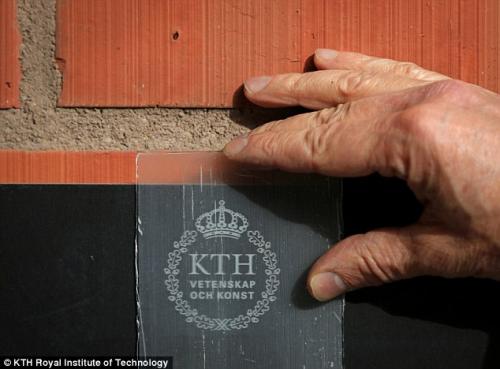
How Transparent Wood
Looks Like
Wood is a major reason why humans were able to survive the harsh
cold winters of this planet. But, have you ever heard about transparent wood?
Probably not. At the University of Maryland, researchers have created that is
see-through, is more biodegradable than plastic, and is stronger than glass.
“Advanced functional structures have been made by taking
advantage of the unique microstructure in wood. Wood–polymer hybrids,
wood–mineral hybrids (such as magnetic wood), and bioinspired structures have
been demonstrated. Wood can be made transparent through chemical bleaching
fol-lowed by polymer inclusion,” the study states.
As for the applications for the see-through wood,
researchers are very optimistic. “Transparent wood could be used for a wide
range of applications from everyday uses such as wood furniture to more
advanced applications such as structural materials in automobiles and
optoelectronics.”
Portable Cardio-Health
Monitor That Sends Real-Time Data
LifeWatch AG, a company that offers health monitoring
solutions, has come up with a device that can send data in real-time to the
company’s data center and doctors, if needed. The best part? It is unobtrusive
as it is worn as a pendant.
“With its high-performance 3-channel ECG capability, the
Mobile Cardiac Telemetry service offers broad functionality in one easy-to-use
system. Offering up to 30-days of real-time arrhythmia monitoring, the
LifeWatch MCT monitor is the only 3-channel Mobile Cardiac Telemetry device on
the market, which provides additional views of the heart,” the website reads.
IBM Achieves Memory
Storage 50 Times Faster than Flash
In a remarkable achievement, scientists and researchers at
IBM Research have managed to store 3 bits of data per cell in a type of memory
known as phase-change memory (PCM). PCM was used in CDs and DVDs but, due to
its capacity of storing only 1 bit per cell, was discarded as having further
potential of advancement as DRAM (Dynamic Random Access Memory) took the world
by storm.
"Phase change memory is the first instantiation of a
universal memory with properties of both DRAM and flash, thus answering one of
the grand challenges of our industry," said Dr. Haris Pozidis, an author of
the paper and Manager of Non-Volatile Memory Research at IBM Research, Zurich.
"Reaching 3 bits per cell is a significant milestone because at this
density the cost of PCM will be significantly less than DRAM and closer to
flash."
PCM storage can clock upto 10 million write cycles, whereas
traditional USB flash storage clocks only about 3 million write cycles.
Post Your Ad Here
Comments