How do Community Art Projects induce strength in the Fraternity?
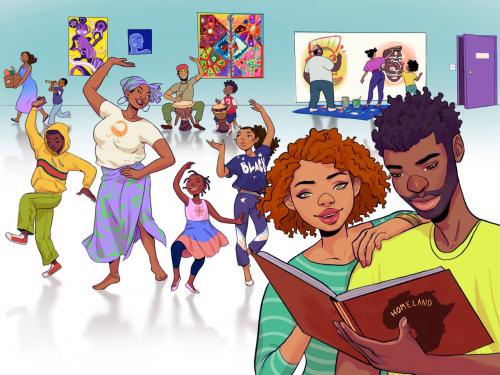
Civic institutions, like museums, public galleries, and community art organizations, performing art institutions, arts councils and public arts organizations have a rare opportunity to steer significant change by engaging specific groups to help devise and carry out creative and neighborhood building Community Art Projects and programs. But it needn't always be the institution that takes action. There are many stories that offer inspiring examples of how individual artists can also make a difference.
Artists can illuminate truth, offer transcendent experience in a far too literal world, challenge us to feel, and connect us to our common humanity.
From income inequality and unemployment to poverty, education and healthcare, communities around the world are facing critical challenges that require creative ideas and solutions. Any of these challenges could use an artist’s mind, a creative question or a critical thinker to help us find our way to a more healthy and just future.
Communities need better tools to assist them find and collaborate with artists, while artists need not just a call for participation but a charge to interact with their communities.
Strong social connections are necessary ingredients of economic success. The links between the economic health of a community and the quality of its social bonds are becoming increasingly clear with recent extensive studies on the subject. These studies also show that These communities developed their social capital by cooperating, sharing, and seeking and finding shared goals, and by developing ties on a cultural level. These connections serve these communities well in their other endeavors--from economic development to civic participation to healthy living.
Here are points demonstrating the potential of artists to assist in creating communities as per Community Art Projects.
- Promote Interaction in Public Space- The art of promoting constructive interaction among people in public spaces has been nearly forgotten in many communities. Public space provides opportunities for people to meet and be exposed to a variety of neighbors. These meetings often happen by chance, but they also could also come through active organizing. Studies have asserted that crowded, pedestrian-friendly, active spaces are safer, more economically productive, and more conducive to healthy civic communities. Through such community art projects we can create a constructive community.
- Increase Civic Participation Through Celebrations- Creating the kind of connections between people that lead to collective civic action is an essential ingredient in a democratic society. The processes used to plan and carry out these events are at least as important as the events themselves.
- Engage Youth in the Community- Including young people of a community as meaningful contributors within the social and economic aspects of community building must not be overlooked and cannot be left to schools and colleges alone. Engaging youth has a dual benefit: it brings more adults into the picture. Research indicates that the factor most likely to get people more involved in community affairs is helping to improve conditions for youth. Issues related to children, including mentoring and coaching, and education are those most likely to mobilize the untapped reservoir of volunteers.
- Promote the Power and Preservation of Place- The residents' feelings of respect and responsibility for the place bonds them thereto that place and to every other. When people become get entangled in the design, creation, and maintenance of places, they develop a vested interest in using and maintaining these spaces. When they have a real sense of connection to the places they frequent, the community becomes a far better place to live, work, and visit. People should be encouraged to remain involved throughout the improvement effort so that they become owners or stewards of the place because it evolves.
- Broaden Participation in the Civic Agenda- It has been argued that social capital--the volunteer organizations and efforts that provide the glue in any community--has eroded steadily over the past two generations, as seen by the drops in participation in social and civic groups. The tools may have lost effectiveness because the population diversifies.
This trend of exuding the ordinary citizens has severed the practice and experience of the arts from day-to-day life. Participation in cultural activities (as against to spectatorship) connects people to each other and to their community institutions, providing pathways to other sorts of participation. Thus, arts and culture can create opportunities for political expression, community dialogue, shared cultural experiences, and civic work.
Conclusion
This demonstrates how it's the responsibility of artists and also of citizens to look for the open doors where change is possible. There is an emerging need for us to step up and to build the bridges between disparate groups that are necessary for communities and cultures to move forward. To do this artists need access to skills, resources and systems of investment and engagement. If we could create these mechanisms, they would reward us by changing our neighborhoods and cities in ways both practical and transformational.
Advertise on APSense
This advertising space is available.
Post Your Ad Here
Post Your Ad Here
Comments