How Can You Preserve and Disinfect Surgical Instruments?
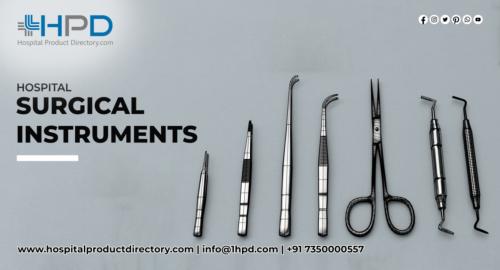
Surgical instruments
must be kept spotless and disinfected by all members of the surgical team to
stop the spread of contagion and avoid contamination. This is safeguarded by
proper research/handling of disinfected items and purification of surgical
instruments. Here’s a summary of how to uphold sterility:
Preparation
of tools for the operating room
The setting up of
the table background and preparation of instruments bought from surgical instrument dealers must
be done in a disinfected preparation room that has a laminar down-flow
ventilation scheme that guides ambient air away from the site, carrying
contaminant dust particles along. A back table and Mayo stand are used to set
up the germ-free field upon which the sterile tools and materials can be
positioned. In a state where there is no devoted sterile preparation, the
germ-free field can be set up in the Operating room with OR fixtures (back
table, Mayo stand, and Operating room trolley) but must be far away from the
door to stop infection. Table setting equipment and apparatus must be
positioned, at least 1m from the walls and the person passing resources from
the unsterile area to the germ-free field must stand 50cm away from it.
All germ-free
items/instrument sets obligatory are safeguarded to be in the OR. The content
and scope of these packs depend on the process and local protocol for carrying
out the procedure. The local procedure will decree that the chemical indicator,
wrapping material, and expiration date must all be checked.
Disinfecting
surgical instruments
Surgical instruments
supplied by Surgical Instrument Dealers must
be upheld and disinfected to stop the spread of infection. To safeguard that
the instruments are clean, used tools must be gutted and disinfected. The use
of throwaway instruments like gauze swabs and seams is very effective in
stopping the spread of infection. Some surgical instruments have an integral
sterilization feature or may be bought with a sterilization system.
A very significant
item to note is that metal instruments must never be immersed in ethylene oxide
(ETO) as they are completed from stainless steel, which can reason pitting or
rusting of the metal. Another technique of purification is by using autoclaving.
The substances are positioned in a water bath and subject to vapor for 5
minutes at around 121°C. The autoclave is then switched off, and the water bath
is detached. The substances are then left for a further 5 minutes at room
temperature in an atmosphere that will not encourage compression on the surface
of the items.
What
are the shared difficulties related to the use of surgical instruments?
Without a proper
understanding of instrument treatment and upkeep of sterility, there are several
shared problems related to the use of these surgical instruments. One of the
most shared problems is infection. Infection can happen when the instruments
are not properly gutted and disinfected before use.
Another common
difficulty is impairment to surrounding
tissues. This can happen when the instruments bought from Surgical Instrument Dealers are
not properly used or when they are not correctly sterilized. The kind of
instruments used and the kind of procedure done will also affect the rate
of problems. For instance, the use of scalpels is related to more severe
problems than the use of forceps and other kinds of cutting instruments.
CONCLUSION
Doctors and other
surgical team members must have a clear understanding of how to appropriately
handle basic operating room tools to enhance their usage during surgery. By
using precise methods, surgeons can minimalize the danger of injury to
themselves and their patients. Indecorous treatment of surgical instruments can
lead to several glitches, including accidental perforation wounds, cuts, and
infection.

Post Your Ad Here
Comments