Hidden Fingerprint Sensor Under Smartphone Displays and Other Future Tech
Its #FantasticFriday! A lot of future technology research is
under way, and we’re here to report it. Let’s get started.
Hidden Fingerprint
Sensor Under Smartphone Displays
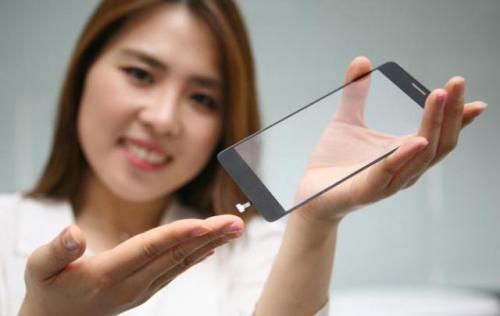
Why not have a smartphone with a fingerprint sensor embedded
in the entire screen, allowing specific users to unlock and use the phone? LG
Innotek, LG’s electronic component subsidiary, has come up with a new fingerprint
sensor module that can be embedded under the screen.
The fingerprint sensor is embedded under a space of 0.3mm
under the screen, and can withstand an impact of 130gm dropped from 8 inches.
With an error rate of only 0.002%, the company feels very
optimistic about the technology in future times. “LG Innotek expects that
demand for fingerprint recognition technology will dramatically increase due to
the expansion of the mobile payment market, has a plan to secure the new
customer. Market research firm, IHS, reports approximately 499 million
fingerprint sensors have been sold globally in 2015 and expects that number
will increase to 1600 million units in 2020,” reads LG Innotek’s press release.
Robot Surgeons of the
Future Outperform Humans
Researchers from the US have developed the Smart Tissue
Autonomous Robot (STAR) system, a completely autonomous robot that can stitch
(suture) tissues better than human surgeons. Testing on pig specimens for about
35 minutes, the robots demonstrated consistent stitching with lower mistakes.
Human surgeons, on the contrary, took around 10 minutes to complete the
procedure.
“The current paradigm of robot-assisted surgeries depends
entirely on an individual surgeon’s manual capability. Autonomous robotic
surgery, [or] removing the surgeon’s hands, promises enhanced efficacy, safety,
and improved access to optimized surgical techniques” Researchers stated.
Would you trust your future surgery to be performed by a completely
autonomous robot? Researchers claim it would never be completely autonomous. “In
a situation in which something critical is going on, the surgeon would be
closely monitoring the robot. I’m sure that they wouldn’t feel comfortable
having it run and go take a coffee break. If something goes wrong, it’s just a
finger press away from stopping the robot and taking it out of the surgery and
proceeding as you would normally, in a normal surgery.”
Testing Lung Function
with a Phone Call
Researchers at the University of Washington have devised a new
tool to test lung function over a simple phone call. Called SpiroCall, the
device senses sound and pressure from exhaled air and sends the data to a
remote server to analyze the results.
“We wanted to be able to measure lung function on any type
of phone you might encounter around the world — smartphones, dumb phones,
landlines, pay phones. With SpiroCall, you can call a 1-800 number, blow into
the phone and use the telephone network to test your lung function,” said
Shwetak Patel, Professor of Computer Science & Engineering and Electrical
Engineering at the University.
Post Your Ad Here
Comments