Google Car Hits Bus in a Fender Bender and Other News
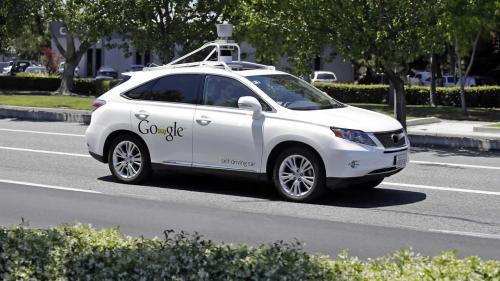
From the world’s first self-driving car accident to robots
giving wrong directions during a fatal emergency, today’s tech news is all
about the future. Look out!
Google Car Hits Bus
in a Fender Bender
Claiming that a self-driving car has never caused an
accident, it appears Google has finally encountered a first-of-a-kind
situation. Apparently, on Valentine’s Day, a Google car hit a bus at very low
speed in Mountain View, California. And, the company admits that the car was
also at fault.
Google’s car was at a red light trying to make a right turn.
After giving a signal for a right-hand turn, the car entered that lane,
however, there were still other cars in the lane waiting to make the turn. Plus,
sandbags on the side of the road blocked the way for the Google car to pass.
After the red light turned green, cars in the middle lane began to pass. After
trying to get around the sandbags, the Google car hit a bus trying to pass on the
middle lane at a speed of merely 2mph, with the bus at 15mph.
Although a test driver always remains in a self-driving
vehicle to monitor the car’s every move, the driver claims he thought that the
bus would yield since the car had already begun to make the turn. Google claims
to modify the car’s software to incorporate the lessons learnt from this
accident.
“This type of misunderstanding happens between human drivers
on the road every day…We've now reviewed this incident (and thousands of
variations on it) in our simulator in detail and made refinements to our
software. From now on, our cars will more deeply understand that buses (and
other large vehicles) are less likely to yield to us than other types of
vehicles, and we hope to handle situations like this more gracefully in the
future,” Google said.
People Believe Robots
in Dangerous Situations
A recent study by Georgia Tech researchers claimed that
human nature will always force us to believe robots in dangerous situations. By
simulating a fire through smoke and fire alarms, the researchers told
participants to follow a ‘rescue robot’ (controlled by the researchers). The
results were surprising, to say the least!
“People seem to believe that these robotic systems know more
about the world than they really do, and that they would never make mistakes or
have any kind of fault. In our studies, test subjects followed the robot’s
directions even to the point where it might have put them in danger had this
been a real emergency,” says Alan Wagner, co-author of the research.
The research was presented at the 2016 ACM/IEEE
International Conference.
Microsoft Releases
HoloLens Developer Edition for $3000
Microsoft announced the release of the much-awaited HoloLens
Developer Edition for $3000. The kit will include the HoloLens headset and
developer SDK, carrying case, nose pads, overhead strap, charger and cable, and
a Bluetooth clicker.
The development kit also includes HoloStudio, a SDK
environment for creating the VR environment through the headset, a version of
Skype to allow communication, Microsoft’s HoloTour (a holographic travel app)
and three VR games.
Post Your Ad Here
Comments