Getting Closer to a Real Life Invisibility Cloak and Other Future Tech
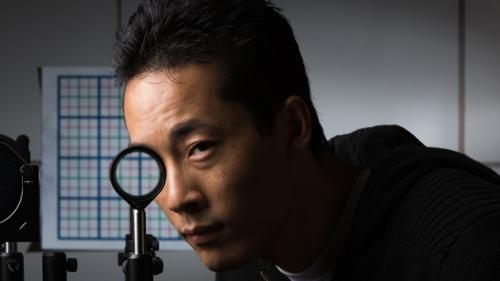
It’s #FunFriday! And we’re back with the latest science and
technology news for the day. A lot has been going on in the tech industry
today, so let’s get started.
Getting Closer to a Real
Life Invisibility Cloak
After successfully making a working prototype of an
invisibility cloak using lenses (Rochester Cloak), researchers at the
University of Rochester have improved their design by using cameras and flat
display screens to increase the range of angles that can be cloaked from view.
“There’ve been many high tech approaches to cloaking and the
basic idea behind these is to take light and have it pass around something as
if it isn’t there, often using high-tech or exotic materials,” the researchers
said, “This is the first device that we know of that can do three-dimensional,
continuously multidirectional cloaking, which works for transmitting rays in
the visible spectrum.”
In the future, they hope to add real-time background display
without the few minutes of processing time needed for this type of system.
Quantum Security
System is Practically Impossible to Breach
University of Waterloo UG students have shortened the
process of storing passwords in a quantum system from months to a matter of
seconds using computer software. Called Quantum Key Distribution (QKD), the process
allows two users to share random secret keys with each other, and then encrypt
or decrypt them for the information.
“The act of measuring a quantum system disturbs the system.
Thus, an eavesdropper trying to intercept a quantum exchange will inevitably
leave detectable traces. The legitimate exchanging parties can decide either to
discard the corrupted information, or reduce the information available to the
eavesdropper to [zero] by distilling a shorter key,” according to Cloud
Security Alliance.
Robot to Evaluate
Tokyo 2020 Olympics
Japan is all geared up for Tokyo’s 2020 Olympics, and has
even spent $8.1
million for an artificial meteor shower to add a little spice to the event.
Partnering with the Japan Gymnastics Association, Fujitsu is in process of
developing an advanced robotic judge equipped with 3D laser sensors to make
measurements. It can record 76,800 points of motion at 30fps.
“The companies will consolidate their respective knowledge
and work to validate technologies that support judges in their scoring. Fujitsu
Laboratories will use its proprietary 3D laser sensor and 3D data processing
technology to obtain gymnastics data from athletes registered with the Japan
Gymnastics Association, which in turn provides expertise in gymnastics
technique recognition and scoring knowledge, as well as a field-trial
environment,” Fujitsu said in a statement.
Post Your Ad Here
Comments