Discover the Great Fire of London
The Great Fire of London is one of the most well known historical events in the city, and one which is still taught in schools today making it of particular interest to children. If you are planning a family visit to London, perhaps because you know your child or children have studied this momentous event or perhaps because you know that they will, there are a number of attractions which help to tell the story of the Great Fire and which will enhance and encourage your children in their learning.
Museum of London
This is a great place to start your tour of attractions which feature the Great Fire of London. Originally the Museum of London had a dedicated ‘London’s Burning’ exhibition and although this has now closed, many of the artefacts and objects which were displayed in the specialist exhibition can now be found in the ‘War, Plague and Fire’ gallery. This permanent gallery follows the story of the Great Fire in 1666 and contains documents and items which can help to bring the story to life and demonstrate the impact had on the city at the time. Objects of interest include the likes of a fireman’s helmet from the 1600s. The Museum of London is centrally located and very easy to access via public transport being just a short walk from St Paul’s tube station. It is also close to St Paul’s Cathedral which could form the next part of your exploratory journey around the city.
St Paul’s Cathedral
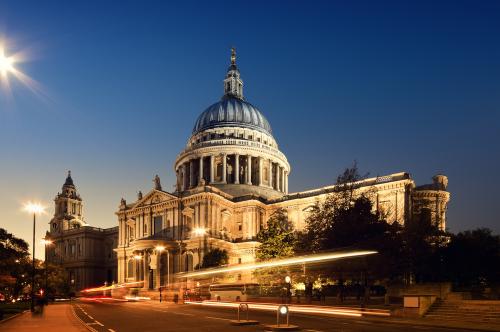
Once you’ve visited the Museum of London your next stop should undoubtedly be the nearby St Paul’s Cathedral. Although it can be costly to enter, there are some benefits to heading inside, the stunning view across the city being one of them. The previous cathedral which stood on this same spot and is known as ‘Old St Paul’s’ was one of the big casualties in the fire. If you do go inside then head down to the Crypt; during the fire many people had placed their belongings into the Crypt believing that they would be safe but of course, that wasn’t the case. The existing cathedral was designed by Sir Christopher Wren once it became apparent that Old St Paul’s was unable to be restored. There are also some artefacts here which survived the fire, Sir Christopher Wren’s tomb and a model of the Old St Paul’s as well.
The Monument to the Great Fire
Just 10 minutes walk from St Paul’s Cathedral is the Monument to the Great Fire of London which was also designed by Sir Christopher Wren and his colleague Dr Hooke to commemorate the fire and celebrate the reconstruction of the city of London. It was erected near to the site where the fire originally broke out and stands at over 60 metres high. If you feel up to climbing the stairs, then the cost is fairly cheap, around £4 for an adult and £2 for children. If you are after a good view over the city but stuck on a budget then this is certainly a better option than paying to enter St Paul’s Cathedral unless you have a particular interest in the items housed within of course. From the Monument you would be just a short tube ride to many of London’s other great attractions and hotels, such as The Piccadilly London West End or you could continue on your journey to the place where the Great Fire originally broke out.
Pudding Lane
Literally steps away from the Monument to the Great Fire of London is Pudding Lane which many people know to the location where the fire broke out in a small bakery. Nowadays there is little to identify the street as the centre of one of the city’s most devastating events other than a small plaque but children will certainly enjoy spotting and recognising the name of the street.
All Hallows by the Tower
After you have spotted the sign at Pudding Lane then a further 15 minutes of walking will bring you to All Hallows by the Tower; the oldest church in London and the place where Samuel Pepys reportedly climbed the tower to witness the spreading of the fire. It survived the fire after surrounding buildings were destroyed to prevent any further spreading of the flames but unfortunately did receive quite a lot of damage during the Second World War and there is evidence of the damage received if you choose to visit.
The National Portrait Gallery
If you still have energy to burn then you could head to the National Portrait Gallery which is home to the portrait of Sir Christopher Wren as well as a number of other famous and infamous faces. Although younger children may not have the stamina to explore the entirety of the Gallery it’s always fun to visit and take a look at some of the more well known faces to be found here.
The London Fire Brigade Museum
Finally, you could round off your day spent discovering the Great Fire of London with a visit to the London Fire Brigade Museum. The Museum is currently in the process of moving location and is currently closed to the public but steps are being taken to find a temporary way to showcase the objects and artefacts owned by the Museum to the public so it is worth a visit to their website to check if this is operational ahead of your visit.
Whilst this is a great self-guided tour of the various landmarks which were affected by the tour you might also prefer to book onto one of the existing London walking tours which cover the Great Fire of London. These tours are taking by specialists who will have lots of fun and interactive ways to bring these landmarks alive for children of all ages.
Advertise on APSense
This advertising space is available.
Post Your Ad Here
Post Your Ad Here
Comments