Creating Real Bones Using 3D Printing and Other Future Tech
It’s Friday the 13th (#FunFriday)! And we’re back
with the latest science and technology news for the day. Enjoy today’s digest.
Creating Real Bones
Using 3D Printing
Bone and joint implant surgeries, although one of the most
successful in the world in terms of patient recovery, is not a permanent
solution. Normal implants have a life of 10-20 years at the most. Plus, we
didn’t include the physical pain and post-surgery trauma experienced by a
patient because the impact is not tailored to fit the patient’s body type.
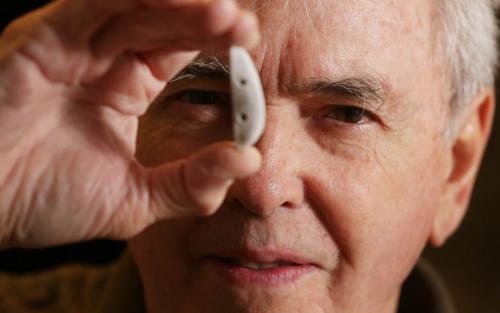
A team from the University of Toronto has created a 3D
printer that prints bone-like structures using the same mineral found in real
bones (70% of it!) - Calcium polyphosphate. The surface of the implant will
allow tissues & muscles to grow into it, eventually, being replace by real
tissue from the patient’s body.
“It’s a little short of Star Trek where you zap a person,
and they’re fixed, but it’s along the same lines. It is nice to think of
replacing joints and getting rid of all these metals. But in the short term, we
are looking at substituting small regions of bone. If we’re successful, you can
imagine trying to re-generate a larger region of a joint,” says Robert Pillar, Professor
Emeritus at Institute of Biomaterials & Biomedical Engineering at the
University, who is an expert in the field of additive manufacturing.
Manipulating and Deleting
Memories Using Science
Everyone has painful memories we’d rather erase – the time
your crush turns down a date or the embarrassing facebook post that should have
never happened. Wouldn’t it be awesome to erase them out of our memories for
good?
Well, researchers from the Stony Brook University in New
York have found a way to manipulate and even erase memories by making changes
in cholinergic neurons in the brain.
“We essentially created fearless mice by manipulating
acetylcholine circuits in the brain. The findings provide the basis for
research examining novel approaches to reverse post-traumatic stress disorder,”
says Dr. Lorna Role, Professor & Chairman of the Department of Neurobiology
and Behavior, “The long-term goal of our research is that we would like to find
ways – potentially independent of drug administration – to enhance or diminish
the strength of specific memories, the good ones, and diminish the bad ones.”
Germany Actually Paid
People to Use Electricity
We recently reported that Germany ran on 95% renewable
energy for a day. Now, it is learnt that the country paid to sell power to the
country’s power grid for a few hours.
“The system is still too rigid for power suppliers and
consumers to respond quickly to price signals. Though gas power plants were
taken offline, nuclear and coal plants can’t be quickly shut down, so they went
on running and had to pay to sell power into the grid for several hours, while
industrial customers such as refineries and foundries earned money by consuming
electricity.”
Read more at www.bit.ly/q3newsblog. Q3 Technologies is a large diversified
technology company which develops custom software products
for the healthcare industry including cloud applications, enterprise
applications across all platforms and Rich Internet Applications (RIA).

Post Your Ad Here
Comments