China Unveils Bendable Graphene Smartphone and Other Science Tech
It’s Friday, and we’ve got some high-tech news in the
science & technology world. Read and be amazed!
China Unveils
Bendable Graphene Smartphone
At the Nanping International Conventional Center Trade Show
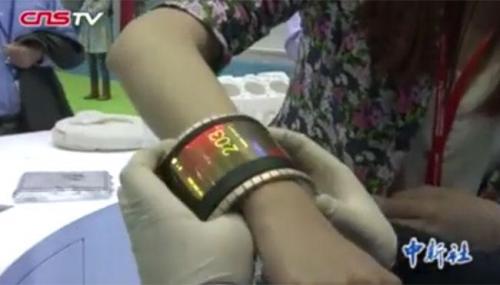
in Chongqing, a Chinese company unveiled a flexible smartphone like never
before. The smartphone features a bendable graphene display and weighs around
200g. It utilizes an electric field to produce images by rearranging the
particles in a solution.
Graphene is a wonder material for scientists – it’s the
thinnest, lightest, most conductive and transparent material known till date. Research
on flexible graphene displays had started as early as 2012, with researchers in
Canada having developed the ‘ReFlex’ phone based on flexible OLED display
technology.
Microsoft to Store
1,000,000,000 TB in 1 Gram of DNA
Data storage is a huge problem. From CDs to USBs, the
technology industry is constantly looking for ways to safely and efficiently
store data for future generations. Making progress towards to achieve this
goal, Microsoft has purchased 10,000,000 strands (oligonucleotides) of DNA from
Twist Bioscience (a biology startup) in an initiative to store 1,000,000,000 TB
in 1 Gram of DNA.
“Today, the vast majority of digital data is stored on media
that has a finite shelf life and periodically needs to be re-encoded. DNA is a
promising storage media, as it has a known shelf life of several thousand
years, offers a permanent storage format and can be read for continuously
decreasing costs,” says Emily Leproust, CEO of Twist Bioscience.
When asked about how it’s like to work with one of biggest
tech giants in the world, Leproust is very eager to start. “Our silicon-based
DNA synthesis platform offers unmatched scale and product quality that vastly
accelerates the ability to write DNA at a cost enabling data storage. We are thrilled to work with Microsoft, and
University of Washington researchers, to address the growing challenge of
digital data storage.”
Humanoid Diver Robot
Recovers Treasure from Wrecked Ship
You might be a little surprised if a diver recovered a lost
ancient artifact. But what about a humanoid robot diver? A Stanford professor
has made a 5 feet long AI-powered haptic-feedback humanoid robot to perform
ocean dives while the human counterpart remains at the surface.
“OceanOne is aimed at bringing a new capability for
underwater exploration. The intent here is to have a diver, diving virtually,
creating a robot that can be the physical representation of the human. It has
two hands. It has stereo vision. And the most amazing thing about it, is that
you can feel what the robot is doing, while [you are] sitting up on the boat,”
says Oussama Khatib, Professor of Computer Science at Stanford.
Read more at www.bit.ly/q3newsblog.
Q3 Technologies is a large diversified technology company which develops custom
products for the IT industry including cloud applications, enterprise
applications across all platforms and Rich Internet Applications (RIA).

Post Your Ad Here
Comments