Becoming A Baker: Quips And Easy Tip For Baking
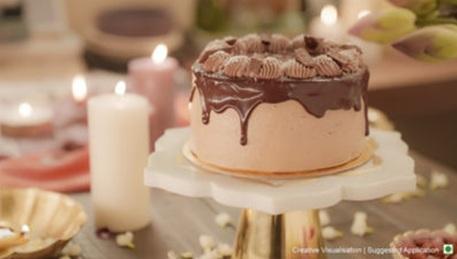
Do not even worry; baking may be as simple as it appears if you remember the below baking techniques and advice:
1) BE AWARE OF THE INGREDIENTS
Consequently, the initial baking suggestion for everyone is to learn about the products you're using and baking science! Let's take the case of baking powder and bicarbonate of soda, for example. Baking powder contains both baking soda and an acid, therefore it reacts on its own. Sodium bicarbonate, on the other hand, is alkaline and requires an acidic element in the recipe to react. Therefore, just utilize baking soda in recipes that include an acid; else, you'll get that awful soapy flavour. You may include it in your Diwali Pataka Choco Cake, chocolate cake, or any other dish that contains citrus.
When it comes to sugar, granulated sugar is not recommended for baking since the pieces are too large and don't usually dissolve in the microwave, providing cakes with an undesirable crunch.
2) INGREDIENTS IN THEIR ORIGINAL TEMPERATURE
Keep in mind all of your components, particularly those that are kept in the fridge, such as eggs, butter, and dairy, are at ambient temperature. Put your eggs in a basin and cover them with water at ambient temperature if they aren't at ambient temperature. They'll be prepared to be used in five to six minutes if you let them sit for five to six minutes. Whenever it comes to cooking, the temperature of butter is the most difficult to control, and the texture you want is softened. The reason you shouldn't use butter directly from the refrigerator is that it's too hard and cold to incorporate, making it nearly impossible. For pies, crumbling, and crispy, nevertheless, cold butter is recommended. You shouldn't be using melted butter in your cakes unless the recipe specifically asks for it since it lacks structure. As a result, constantly choose butter that isn't too firm or too mushy!
3) EXTREMELY ACCURATE MEASUREMENTS
You can't dispute that you must be quite precise when measuring your components. The most exact approach to measure your ingredients is to use a weighing scale, but we all know that not everyone has one. As a result, it's a good idea to invest in a nice set of measuring cups and spoons. Utilize a spoon to put your item into the measuring cup and then flatten it with the back of the spoon if you are utilizing a measurement cup to check your items. Never cram flour together into a measuring cup whenever you are measuring flour since you'll wind up with more than you require for your recipe.
4) MAKE SURE YOU PREPARE YOUR PAN PROPERLY.
Nothing could be more frustrating than a cake that is caught in the pan and refuses to come out, so be sure your pan is well prepared! Brush your pan thoroughly with butter or ghee using a pastry brush or your fingertips. When it comes to baking pan preparation, parchment is your closest buddy. Fold it in half, then in half again, and then diagonally twice more. Remove the surplus by measuring it from the pan's middle. Unfold the parchment and you'll have a perfect fit for your pan!
It's also crucial to know the distinction between parchment and butter sheets. Since butter sheet may not always be heatproof and does not retain their form in the microwave, always utilize baking parchment to cover your cookware.
1) BE AWARE OF THE INGREDIENTS
Consequently, the initial baking suggestion for everyone is to learn about the products you're using and baking science! Let's take the case of baking powder and bicarbonate of soda, for example. Baking powder contains both baking soda and an acid, therefore it reacts on its own. Sodium bicarbonate, on the other hand, is alkaline and requires an acidic element in the recipe to react. Therefore, just utilize baking soda in recipes that include an acid; else, you'll get that awful soapy flavour. You may include it in your Diwali Pataka Choco Cake, chocolate cake, or any other dish that contains citrus.
When it comes to sugar, granulated sugar is not recommended for baking since the pieces are too large and don't usually dissolve in the microwave, providing cakes with an undesirable crunch.
2) INGREDIENTS IN THEIR ORIGINAL TEMPERATURE
Keep in mind all of your components, particularly those that are kept in the fridge, such as eggs, butter, and dairy, are at ambient temperature. Put your eggs in a basin and cover them with water at ambient temperature if they aren't at ambient temperature. They'll be prepared to be used in five to six minutes if you let them sit for five to six minutes. Whenever it comes to cooking, the temperature of butter is the most difficult to control, and the texture you want is softened. The reason you shouldn't use butter directly from the refrigerator is that it's too hard and cold to incorporate, making it nearly impossible. For pies, crumbling, and crispy, nevertheless, cold butter is recommended. You shouldn't be using melted butter in your cakes unless the recipe specifically asks for it since it lacks structure. As a result, constantly choose butter that isn't too firm or too mushy!
3) EXTREMELY ACCURATE MEASUREMENTS
You can't dispute that you must be quite precise when measuring your components. The most exact approach to measure your ingredients is to use a weighing scale, but we all know that not everyone has one. As a result, it's a good idea to invest in a nice set of measuring cups and spoons. Utilize a spoon to put your item into the measuring cup and then flatten it with the back of the spoon if you are utilizing a measurement cup to check your items. Never cram flour together into a measuring cup whenever you are measuring flour since you'll wind up with more than you require for your recipe.
4) MAKE SURE YOU PREPARE YOUR PAN PROPERLY.
Nothing could be more frustrating than a cake that is caught in the pan and refuses to come out, so be sure your pan is well prepared! Brush your pan thoroughly with butter or ghee using a pastry brush or your fingertips. When it comes to baking pan preparation, parchment is your closest buddy. Fold it in half, then in half again, and then diagonally twice more. Remove the surplus by measuring it from the pan's middle. Unfold the parchment and you'll have a perfect fit for your pan!
It's also crucial to know the distinction between parchment and butter sheets. Since butter sheet may not always be heatproof and does not retain their form in the microwave, always utilize baking parchment to cover your cookware.
Advertise on APSense
This advertising space is available.
Post Your Ad Here
Post Your Ad Here
Comments