Application and Prospect of Laser Rapid Prototyping in Industrial Design
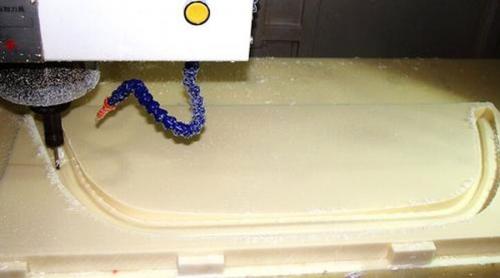
Rapid prototyping technology emerged in the late 1980s. It is a general term for advanced manufacturing technology that uses layered technology and stacked molding as its foundation and directly uses CAD models to rapidly produce parts or prototypes. Compared with traditional processing technology, it emphasizes "additiveness", which is not comparable to traditional forced molding, assembling, and removing molding in terms of raw material utilization. Laser rapid prototyping technology is a rapid prototyping technology that uses laser as the manufacturing energy source. It makes full use of materials science, laser technology, numerical control technology and CAD technology. It is an important part of rapid prototyping technology. It can be used without tools and abrasives. To realize the simulation and manufacturing of products with complex shapes, this article studies the basic principles, development status of laser rapid prototyping technology and its application status in modern industrial design, and points out laser rapid prototyping technology. It has a wide range of applications in modern industrial design.
1.Basic characteristics and principles of laser rapid prototyping technology
The most fundamental principle of laser rapid prototyping technology is to layer the three-dimensional solid model constructed by CAD into multiple binary sections, and then use the relevant data to drive and control the laser beam to scan the sheet material, powder or liquid to produce the required Layer of products in the shape of a shape, and then accumulate complex products in a certain order. This is very different from the traditional stamping technology, casting technology and other manufacturing processes that use molds, as well as removing manufacturing processes such as planing, grinding, drilling, milling and turning. It emphasizes a layered cnc machining, superposition The forming production process, the prototypes and models produced by it can help the first-order enterprises in the market to make decisions, help engineering analysis, verify product functions, and verify the design effect of new products, so as to improve product development efficiency. Reduce costs and ultimately improve the viability and overall competitiveness of the enterprise. The technologies such as rapid metal powder sintering technology, rapid precision casting technology, and rapid tooling manufacturing technology formed on this basis can well solve the problem of rapid production of parts. The technology has the following basic characteristics:
(1) Technologies such as rapid metal powder sintering technology, rapid precision casting technology, and rapid tooling manufacturing technology based on laser rapid prototyping technology can quickly manufacture molds, quickly complete the casting process and other processes, and produce parts and new products in single rooms. It has great advantages in development.
(2) Laser rapid prototyping technology does not require molds and other processing tools during processing, so there is no production vibration, processing noise and residual stress, which protects the surrounding environment well.
(3) This technology also has the characteristics of short production time, small dependence on tools such as molds, high material utilization, cost savings, and fast manufacturing speed.
2.Analysis of the main process methods of laser rapid prototyping technology
Laser rapid prototyping technology mainly has the following process methods:
(1) Laser cladding
The laser cladding forming technology mainly uses a table numerical control to scan and cladding the powder, and finally synthesize the required shape parts. A large number of cnc machining practices have shown that the strength and accuracy of parts processed in this way are mainly affected by the size of the powder particles, the amount of powder fed, the powder feeding device, scanning method, scanning interval, scanning speed, light intensity distribution, spot size, laser output The influence of power, laser cladding layer thickness, part slicing method and other factors. This technology has great advantages in the manufacture of dense metal parts and has great application value in industrial design. It is used by some enterprises for the processing of high-strength metals.
(2) Selective laser sintering
Selective laser sintering technology first uses CAD to create a three-dimensional solid model, and then uses related software and methods to layer the model, and then uses two-dimensional data to drive and control the laser beam, and sinters the powdered material to process the product in the required shape. Thin layers, and finally the processed thin layers are accumulated into a solid model, and the unsintered loose powder is removed to obtain a prototype. This method can process a variety of materials, and can also directly manufacture metal parts. It has a wide application prospect, but its high energy consumption limits the application and promotion of this technology.
(3) Laser near-shape manufacturing
Laser near-shape manufacturing technology is a combination of laser cladding forming technology and selective laser sintering technology, and has the advantages of both technologies. There are three main forms of metal powder that can be used in manufacturing: metal plus organic binder, metal plus low melting point metal binder, and single metal. When sintering powders, the characteristics of the powder determine that the sintered metal has low strength, porosity, and low density. Therefore, it is necessary to take necessary hot isostatic pressing treatment and impregnate low-melting metals and resins. And other measures.
(4) Laminate manufacturing
The laminated manufacturing technology first uses a laser control device to perform plane motion layer by layer to process a layer of foil on the workbench into the planar profile of the bottommost slice, and use a hot pressing roller to roll the newly laid layer of foil. Make it firmly adhere to the formed foil, and then use laser to cut, and then cut out the second plane contour, and then cycle back and forth until the entire part is manufactured. The parts manufactured by this technology have high precision and good strength, and the price of required materials and equipment is low.
3.Application of laser rapid prototyping technology in industrial design
Analysis of current status and prospects Up to now, laser rapid prototyping technology has been widely used in many fields and industries such as mechanical manufacturing and industrial modeling. Specifically, the application of laser rapid prototyping technology is mainly reflected in the following aspects:
(1) The use of rapid prototyping technology to generate models is a key step in shortening the cycle of modern molds for rapid tool manufacturing and rapid mold manufacturing, and then combining electrode grinding and precision casting to produce various functional abrasives, which can effectively reduce production time. , Reduce production costs, which is also an important application direction of laser rapid prototyping technology.
(2) The use of laser rapid prototyping technology can transform the design concept into a solid model through functional testing and conceptual model manufacturing, which can well verify and demonstrate the various characteristics of the designed product, and the parts produced have a very high hardness. Good protection.
(3) In the product design and research and development of the home appliance industry, laser rapid prototyping technology has played a great role. Many home appliance companies use laser rapid prototyping technology to develop and manufacture new products. For example, Haier in Qingdao, Little Swan and Chunlan in Jiangsu, Kelon, Huabao, and Midea in Guangdong are typical representatives of the development of new products using laser rapid prototyping technology.
(4) In the application of aircraft parts machining technology, the aerodynamic ground simulation experiment is an essential and important link for the design of an advanced space shuttle system. The model used in this experiment has streamlined characteristics, high accuracy requirements and complex shapes. Only the use of laser rapid prototyping technology can ensure the production and accuracy requirements of such complex shaped parts. Therefore, laser rapid prototyping technology has a wide application prospect in the aerospace field.
(5) The application of laser rapid prototyping technology in the field of culture and art is mainly reflected in the fact that laser rapid prototyping manufacturing technology has a good guiding and planning role in digital sculpture, cultural relics reproduction, and artistic creation. Traditional molds have high cost and long production time. Only by applying laser rapid prototyping technology to mold manufacturing can the mold development cycle be greatly shortened. Further improve production efficiency. The application of laser rapid prototyping technology in mold manufacturing can be divided into indirect molding and direct molding. Indirect molding is to copy the final product mold through the manufactured parts; direct molding refers to the direct stack production using laser rapid prototyping technology. The required molds are processed. The emergence of laser rapid prototyping technology has attracted worldwide attention, especially its integrated design and layered manufacturing ideas have prompted a large number of experts and scholars to analyze the application of this technology. The earliest laser rapid prototyping technology was applied to prototypes. Production and processing are now mainly in the direction of fast tools and fast parts. At the same time, laser rapid prototyping technology has a large space for development and application prospects in the commercialization of rapid prototyping materials, the manufacture of high-strength high-melting-point metal parts, and the improvement and development of forming processes and equipment.
Advertise on APSense
This advertising space is available.
Post Your Ad Here
Post Your Ad Here
Comments