Africa Mobile Infrastructure and Mobile Broadband: Ken Research
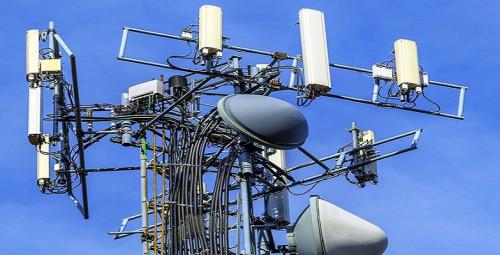
Improved mobile network capability
in Africa stimulating smartphone adoption
Within Africa there is
considerable diversity in the availability and capability of mobile telecom
infrastructure. Vast tracks of the continent, particularly in the northern
desert regions, are sparsely populated with little in the way of network
coverage. However, intense investment programs undertaken by several
pan-regional operators in recent years has meant that population coverage in
most countries is excellent.
Much of the phenomenal growth in
the take-up of mobile voice and data services has stemmed from the lack of
fixed-line alternatives. Fixed-line networks provide limited reach,
particularly so in rural areas but also in many urban areas. Before market
liberalisation efforts started some two decades ago most incumbent telcos were
government-owned enterprises. There was little commercial incentive to invest
in infrastructure, and combined with a lack of regulatory oversight, poor
management and government neglect, fixed-line penetration remained very low by
global standards. In many countries, such as in the DRC, Sudan, Mozambique,
South Sudan and Libya, war and civil conflict largely destroyed what little
infrastructure there was in place.
Mobile voice and data services
were able to fill this void very effectively. As a result, in many countries in
the region the use of telecoms services is morphing from being predominantly
mobile to being solely mobile. Investment in fixed-line infrastructure is being
side-lined in favour of mobile infrastructure. Operators are predominantly
investing in spectrum, particularly in the 700MHz band as this is being
released into 2017 and 2018 following the switch from analogue to digital
broadcasts. They are also strengthening the robustness of their networks by
migrating from 3G to LTE-based services. This in turn is being supported by
increased international connectivity from a number of new submarine and
terrestrial cables. These cables are providing the required backbone
infrastructure to support the growing flow of data. Prominent projects include
the SACS cable running between Angola and Brazil, with onwards connectivity to
Miami, as well as the Liquid Sea cable being built by the pan-regional
infrastructure provider Liquid Telecom along the continent’s east coast.
Smartphones are increasingly
becoming the principal mobile device used among consumers. The adoption of
smartphones is being encouraged by a plethora of cheaper units manufactured
locally. The growing take-up of such devices is in turn supporting a tremendous
growth in m-commerce, m-money and m-banking services. With the majority of
Africans being unbanked, m-payment systems are thriving in most markets where
they have been deployed. This has been helped by operators facilitating money
transfers between their cross-border networks, as also by co-operation among
different players and by a wider number of banks hosting such services. M-money
is particularly popular in markets such as Kenya, though the more sophisticated
banking sector in South Africa was a contributing factor in the Vodacom’s
M-Pesa service being withdrawn from that market in mid-2016.
More than three quarters of mobile
subscribers on the continent are expected to subscribe to broadband services by
2020, compared to about a fifth in early 2016. With more than a billion mobile
subscribers in the region this presents a vast market for vendors and
application providers. Although the relatively low purchasing power in the
region will not translate into a similarly rapid growth in revenue,
considerable potential remains.
MOBILE INFRASTRUCTURE
High-Speed Packet Access (HSPA)
The regulator launched an
international tender in mid-2010 to build and operate a third generation (3G)
mobile network. It took until October 2011 to award the licence to Bharti
Airtel (Airtel Gabon). To facilitate the development of 3G services a deal was
brokered with Gabon Telecom in the following December allowing Bharti Airtel
access to the SAT-3/WASC/SAFE submarine cable. An additional connection with
the Africa Coast to Europe (ACE) cable was made in December 2012. In June 2013 ©
Copyright Paul Budde Communication Pty Ltd, 2016. The
operator’s parent company announced plans to invest an additional $ million in
its mobile operations in Gabon.
However,
the Council of Ministers did not pass the decree authorising the 3G licence,
extended to the use of 3.5G and 4G/LTE technologies, until January 2014, and
Airtel Gabon did not secure its licence until the following March, having paid
$ billion ($ million) for the year license.
In April
2014 Airtel Gabon launched a commercial W-CDMA/HSPA+ service in Libreville. The
operator planned to cover the entire with the network, with a third phase
expected in late 2014 to cover the second largest city, Port Gentil, and a
fourth phase, to be completed by the end of 2014, reaching all provincial
capitals. Bintel’s licence also includes a concession to offer 3G services.
However, the company still offers only 2G and 2.5G services.
Long-term Evolution (LTE)
In March 2014 the government announced
that Gabon Telecom was to be allocated additional licenses to enable it to
offer 3G and 4G services. The deal was part of a number of strategic agreements
signed between Morocco and the Gabonese government which cover areas including
agriculture, health, housing, finance and banking, technologies, transport and
tourism.
Mobile satellite services
The satellite service provider Thuraya
in April 2014 signed an agreement with Bharti Airtel to provide mobile
satellite services to customers across the operator's footprint, including
Gabon. The project is aimed at providing satellite voice and data services to
subscribers in remote and rural areas in 17 countries across the region.
Mobile payments
In early 2013 Gabon Telecom partnered
with the mobile financial solutions provider Mahindra Comviva to develop its
Mobi Cash mobile money services and ‘mobiquity’ mobile financial applications
via its Libertis mobile division. These enable customers to make remittances,
receive salary payments, pay bills and make purchases at retailers. For many
Gabonese without bank accounts mobiquity provides a cost-effective banking
alternative.
Mobile broadband
Internet access via General Packet
Radio Service (GPRS) has been available in Kenya since 2004 from Safaricom,
followed by Bharti Airtel in 2006. ISPs started to feel increased competitive
pressure after 3G services were introduced by Safaricom in 2008.
For
more information on the market research report please refer to the below link:
Contact:
Ken Research
Ankur Gupta, Head Marketing & Communications
query@kenresearch.com
+91-124-4230204
Post Your Ad Here
Comments