A Guide to SAP ERP
A Guide to SAP ERP
ERP is defined as the integrated management of business processes such as inventory, order management, and customer relationship management. ERP is associated with integrating all these business processes and streamlining the relevant information to all the subsets of an organization. The ERP database is also important for employees as it is used for synchronized reporting and automation within an organization.
What is SAP ERP?
In the midst of the variety of ERP software available in the market, SAP (Systems, applications, and products in data processing) runs as the market leader. The SAP ERP is used to carry certain modules that help company’s process functional areas by gathering, storing, maintaining and interpreting the data. It contains modules like financial and accounting, sales and distribution, manufacturing and material management, business intelligence, supply chain management, and many others.
How SAP ERP is beneficial?
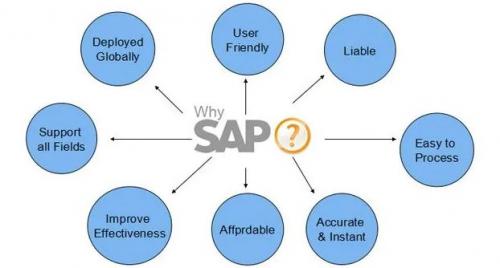
When implemented and integrated with business processes, SAP ERP offers the following benefits to the organization:
It helps in saving time and money.
It gives access to real-time information.
It’s reporting tools helps in making smart and fast business decisions.
It focuses on data consistency and sharing information across all business units.
It keeps a track record of all the transactions right from the beginning to the end.
How SAP ERP is beneficial for 3PLs?
SAP ERP works much better when specific business suits are integrated, such as SAP PLM (Product Life Cycle Management), SAP APO (Advanced Planning and Optimization) and SAP SCM (Supply Chain Management). SAP ERP can process supply chain management, but when third party logistics providers (3PLs) are attached, the responses generated are more efficient and cost-effective as compared to the solo performance of SAP ERP. When SAP SCM is processed, i.e., SAP is worked over the supply chain management, it results in integrated business planning.
SAP supply chain management integrated business planning software helps the organizations through different ways. It benefits 3PLs as the software works towards streamlining the processes and visibility into tactical, strategic, operational and external data. In short, when the SAP ERP software collaborates with 3PLs, it offers the following benefits.
Inventory is optimized. Profits are raised despite of the sudden spike in demand with the help of strategic inventory targets.
Material flow is improved and supply chain variability is reduced using the MRP (Material requirements planning) techniques.
Supply management is optimized using the production capacity based plans and by applying the constraints, allocations and by prioritizing demands.
A company wide sales and operation plan is used to balance the profitability, service levels and inventory.
Short, mid and long term demand forecasting is applied using demand sensing and machine learning algorithms.
What is the role of SAP ERP integrations?
SAP ERP can do most things for an organization, but not everything. There is a need for third-party applications to perform the things that are not meant for SAP ERP. If you want to take out the full value of your software investment, you need to integrate SAP ERP software with other business systems. However, SAP is the software with some complex features, thus integration will not be that easy.
Best Institute for SAP Training
SSDN Technologies offer the best SAP Course in Gurgaon with an expert trainer. Take SAP training from those and make your career.
Post Your Ad Here
Comments