How Long Does It Take for a Stone Crusher Plant Investment to Pay Off?
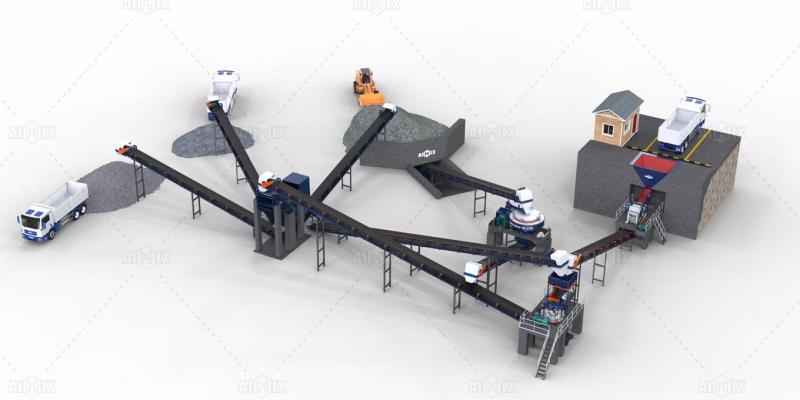
Embarking on the journey of investing in a stone crusher plant is a significant decision that carries both considerable potential and inherent financial consideration. For business owners and project managers, the central question that often arises is one of financial prudence: precisely how long will it take for this substantial investment to recoup its initial outlay and begin generating pure profit? The answer, while seemingly straightforward, is nuanced and multifaceted. The payback period is not dictated by a single factor but is instead the culmination of a complex interplay between operational efficiency, market dynamics, and strategic foresight. Understanding these variables is the first step toward making an investment that yields sustainable returns for years to come.
The timeline for a stone crusher machine plant to become a profitable asset is influenced by a constellation of factors, each playing a pivotal role in the financial equation. From the initial capital expenditure and the plant's daily production capacity to the ever-fluctuating market value of the final aggregates, every detail contributes to the ultimate calculation. This analysis seeks to demystify this process, offering a clear-eyed perspective on the key determinants that will shape your investment's financial trajectory and help you establish realistic expectations for its performance.
Deconstructing the Initial Investment and Operational Costs
Capital Outlay and Equipment Selection
The foundational element of the payback period calculation is the total initial investment. This encompasses far more than just the purchase price of the primary crusher. A comprehensive cost analysis must include auxiliary equipment such as vibrating screens, conveyors, loaders, and generators. The choice between a stationary plant, which may offer higher output, and a more versatile mobile crusher, which reduces transportation costs, has a direct and immediate impact on the capital required. Furthermore, site preparation, civil works, and the installation of electrical infrastructure contribute significantly to the upfront financial commitment.

Ongoing Operational Expenditures
Once operational, the plant incurs a continuous stream of expenses that must be carefully managed to ensure profitability. These operational expenditures include energy consumption, which is a major cost driver, wear parts replacement like mantles and jaw plates, routine maintenance, and labor costs for skilled operators. The operational efficiency of the plant directly influences these costs; a well-maintained, modern plant will typically consume less power and experience lower wear rates than an older, less efficient model, thereby accelerating the payback timeline.
Key Revenue Drivers and Market Dynamics
Production Capacity and Material Throughput
The plant's ability to generate revenue is fundamentally tied to its production capacity. A plant that can process 200 tonnes per hour will naturally generate income faster than one processing 50 tonnes per hour, assuming similar market conditions. However, capacity alone is insufficient. Consistent material throughput is paramount. This requires a reliable supply of raw feed material and efficient operational scheduling to minimize downtime. Even the most powerful crusher plant for sale cannot generate revenue if it is idle.
The Fluctuating Value of Finished Aggregates
The market price for crushed stone, sand, and gravel is subject to regional supply and demand, transportation costs, and large-scale infrastructure projects. The payback period can shorten considerably when aggregate prices are high due to a construction boom. Conversely, a market slump will extend the time needed to recover the investment. Producing a variety of high-quality, in-spec aggregate sizes can also command premium prices, enhancing revenue streams and improving the overall financial outlook.
Calculating a Realistic Payback Period
A Practical Framework for Estimation
A rudimentary yet effective method for estimating payback time involves a simple formula. First, calculate the estimated annual gross profit by subtracting total annual operational costs from total annual revenue. Then, divide the total initial investment by this annual gross profit figure. For instance, an investment of $500,000 with an estimated annual gross profit of $150,000 suggests a payback period of approximately 3.3 years. It is crucial to note that this is a simplified model.
Incorporating Contingencies and Real-World Variables
A truly realistic calculation must account for unforeseen circumstances. Unplanned maintenance, equipment breakdowns, and fluctuations in fuel or electricity prices can all impact profitability. Savvy investors build a contingency buffer of 10-15% into their financial models. Furthermore, securing long-term contracts for the supply of aggregates can provide revenue stability, substantially de-risking the investment and creating a more predictable and reliable path to profitability.
Strategic Considerations for a Faster Return
Embracing Efficiency and Technology
Investing in modern, energy-efficient equipment from the outset, while perhaps requiring a higher initial outlay, often leads to a quicker payback due to lower operating costs and higher reliability. Technologies like automated control systems optimize production and reduce material waste, contributing directly to the bottom line. A proactive maintenance regimen is not an expense but an investment in long-term operational integrity, preventing costly downtime and ensuring consistent production levels.
The Importance of a Holistic Business Strategy
Ultimately, the speed at which a stone crusher plant pays for itself is not solely a function of the machinery. It is a testament to the overarching business strategy. This includes effective market analysis, strategic pricing, logistical planning to minimize transport costs, and a dedicated focus on product quality. By viewing the rock crusher plant as one component within a broader, well-managed enterprise, owners can create the conditions for a rapid and sustainable return on their investment.
Post Your Ad Here
Comments