What Is a Livescore API and Why It Matters
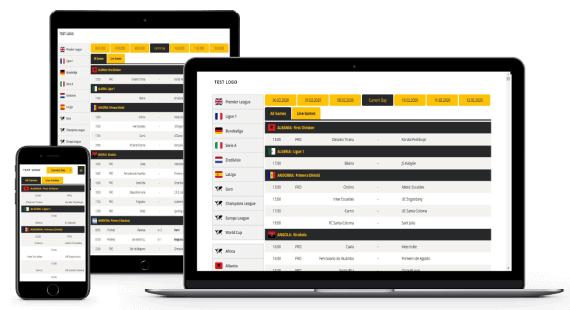
The following article provides an in-depth look at Livescore APIs, their functionality, benefits, and integration challenges.
A livescore API is a data service that delivers real-time and near-real-time information from sporting events—scores, clocks, play-by-play events, player stats, standings, fixtures, lineups, and sometimes betting odds. Product teams use it to power score tickers, match centers, notifications, fantasy dashboards, broadcast graphics, voice assistants, and analytics tools. In a world where attention is scarce and fans demand instant updates, a reliable livescore feed is often the backbone of any sports product.
Core Data the API Provides
At its simplest, a livescore API streams three categories of information. First, event state the start time, current period, clock, status like “live,” “halftime,” or “FT”. Second, incidents or play events (goals, cards, substitutions, timeouts, penalties, shots, drives—depending on sport). Third, contextual data that gives meaning to the numbers: teams, players, venues, competitions, standings, and season metadata. Mature offerings extend into pre-match previews (probable lineups, form, head-to-head), post-match summaries (box scores, shot maps), and derived metrics (xG, possession models, win probability).
How the Data Flows
Under the hood, most providers consolidate three inputs: official league data, accredited scouting networks, and automated vision or data-capture tools. That raw stream is normalized into a consistent schema across sports and regions so your application can treat a “goal” and a “touchdown” as different event types within one coherent model. Delivery happens in two main ways:
Push via WebSockets or webhooks, where the provider sends events the instant they’re captured—ideal for ultra-low latency experiences and live notifications.
Pull via REST endpoints, where your system polls for changes—simpler to implement, easier to cache, and often sufficient for apps that don’t need sub-second updates.
Many teams adopt a hybrid: Livescore Api resources, push channels for in-game events.
Latency, Accuracy, and Coverage
Three qualities separate excellent feeds from frustrating ones:
Latency: The time from on-field event to API delivery. Sub-second latency feels instantaneous; several seconds is acceptable for casual apps; anything slower becomes noticeable during big moments.
Accuracy: Event validation, disambiguation (e.g., own goals, assists), and retrospective corrections. Strong providers publish correction policies and version their event items so downstream caches can reconcile changes.
Coverage: Leagues, cups, and lower divisions across countries and time zones, plus multiple sports in the same contract. Consider depth as well as breadth—do you get player heatmaps for top leagues or only basic score updates?
Typical Endpoint Families (Conceptually)
Even if providers name them differently, you’ll commonly see:
Competitions & seasons: List competitions, current season IDs, stage structures (regular season, playoffs, groups).
Teams & players: Rosters, bios, positions, historical transfers or contracts.
Fixtures & results: Scheduled matches, live matches, final scores, postponements.
Live events: Stream of incidents with timestamps and qualifiers (e.g., card color, goal type).
Standings & tables: League tables with rules for tiebreakers and points deductions.
Stats & analytics: Box scores, per-player metrics, team aggregates, advanced models where available.
Media pointers: Thumbnails, highlight references, or rights-safe assets when included in the contract.
The goal is a stable, predictable structure that you can map to your UI and internal data store.
Integration Considerations
Data modeling: Create immutable IDs for competitions, teams, players, and matches. Use foreign keys consistently so you can rebuild state from raw events. Because many feeds include late corrections, store event version or sequence numbers.
Time and localization: Normalize all timestamps to UTC internally, then render in user time zones. Build locale-aware formats for team names and competition titles, and support right-to-left languages if you have global ambitions.
Caching strategy: Edge cache static or slow-changing content (teams, players, competition info) aggressively. For live matches, adopt short TTLs or event-driven cache invalidation. If using webhooks, invalidate or patch specific cache keys on each incoming incident.
Notifications and fan experiences: Trigger alerts from event types (goal, red card) with guardrails to prevent spam. Debounce duplicate events, and allow users to fine-tune preferences by team, competition, and event importance.
Resilience: Implement retries with exponential backoff for network hiccups. Keep a small in-memory buffer for the last N events so your UI can recover gracefully after reconnecting to a push stream. Log and surface provider status so your support team can respond quickly.
Rate Limits, Quotas, and Fair Use
Soccer Data Api often enforce per-minute and per-day limits. Architect for efficiency: subscribe to the minimum set of resources, prefer delta endpoints if available, and avoid fan-out storms during peak moments by batching reads and writes. For polling, stagger requests across active matches rather than hammering one endpoint every second. For push models, ensure your consumer can keep up; if you fall behind, some providers will drop the connection or start sampling events.
Security and Compliance
Protect credentials with secret managers, use HTTPS everywhere, and rotate keys periodically. If your product includes user accounts, isolate provider keys from client devices and proxy calls through your backend. Respect league rights and geographic restrictions: certain competitions forbid redistributing play-by-play or require attribution. If you show betting data, implement age gates and comply with local regulations.
Measuring Quality
Define SLIs and SLOs for data timeliness and correctness. Track:
End-to-end latency from provider event to UI render.
Event reconciliation rate, i.e., how often and how quickly corrected events replace initial ones.
Coverage gaps, like missing lineups or delayed stats for specific leagues.
Uptime of both provider endpoints and your ingestion layer.
Instrument dashboards and run synthetic tests that simulate match days in high-traffic windows.
Pricing Models and Total Cost of Ownership
Common pricing approaches include tiered plans by coverage (number of sports, leagues, or regions), request volume, concurrent live events, or features (advanced analytics, odds, or historical depth). Beyond subscription fees, factor in infrastructure for caching, stream consumers, monitoring, and storage—especially if you retain historical data for analytics or personalization.
Selecting a Provider
When evaluating options, run a trial during a busy weekend across multiple time zones. Compare latency on pivotal events (goals, red cards, timeouts), examine data richness (assist qualifiers, shot locations), and test the quality of their documentation and developer support. Look for transparent changelogs, sandbox environments, and clear migration guides for version updates. A provider with strong tooling—sample payload explorers, schema diffs, and incident history—will reduce your integration time and ongoing maintenance.
The Road Ahead
Api Sports continue to expand from text-based events into richer, structured insights and synchronized media. Expect deeper computer-vision-derived statistics, predictive analytics that update at every possession, and standardized schemas that make multi-sport products simpler to build. As coverage and latency improve, the differentiator won’t be “who is faster” but “who turns raw moments into meaningful fan experiences.” Choosing the right feed—and integrating it thoughtfully—sets the stage for that transformation.
Post Your Ad Here
Comments