Most heart attacks happen after these 7 daily habits
Heart attacks don't always happen by accident; many habits
contribute to them. If you think about why heart health deteriorates or why the
heart tries to stop, you'll realize there are numerous habits and lifestyle
factors behind it.
We do many things every day, and their effects can lead to
a heart attack. Many habits, whether direct or indirect, slow or rapid, impact
heart health and gradually damage it. People often don’t realize how these
habits reduce their lifespan. Some effects are visible, while others are silent
destroyers. Today, young people are becoming victims of heart attacks because
of harmful habits in their daily routines. It’s essential to identify these
habits and quit them to prevent a heart attack.
A healthy lifestyle is vital for overall well-being. Quitting and reducing these habits can prevent a heart attack. In this article, we discuss these common habits you might not be aware of that can lead to cardiac failure.
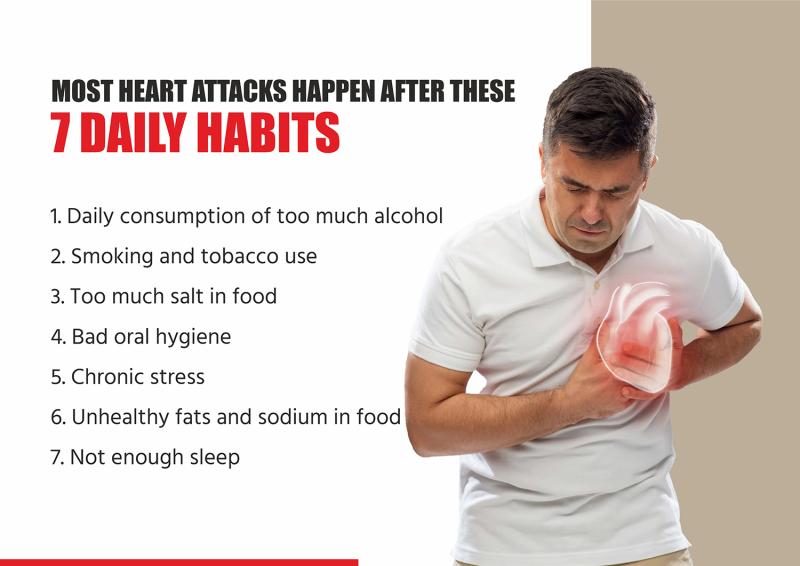
Most heart attacks happen after these 7 daily habits
1. Daily consumption of excessive alcohol: Natural juice is a healthier alternative that people can choose instead of alcohol. However, alcohol is popular among youngsters; they often don’t realize how it affects their overall bodily functions. Alcohol can cause high blood pressure, damage to the cardiac muscle, irregular beating, elevated triglycerides, and various diseases. To prevent a heart attack, you need to stop this drinking habit immediately. Otherwise, daily alcohol intake can weaken your heart over time.
Excessive drinking can lead to
unhealthy weight gain because it is high in empty calories. This condition can
be called “alcohol cardiomyopathy” when alcohol causes cardiac failure.
Drinking large amounts can destroy the structure and function of the heart and
other parts of the body, leading to damage.
2. Smoking and tobacco use: The
new generation smokes more than previous generations. Many don’t realize how
severely it damages our blood, lungs, and cardiovascular health. Importantly,
smoking and tobacco use increase the risk of myocardial infarction and
cardiovascular diseases by promoting blood clotting, damaging blood vessels,
and contributing to obesity and high blood pressure. "Tobacco causes
cancer" is a common warning on cigarette packs.
Smokers have three times the risk of a myocardial infarction compared to non-smokers. Even if you don’t smoke, secondhand smoke can also raise your risk of a Myocardial infarction. Stay away from smokers; it’s better for your health if you don’t smoke.
3. Excessive salt intake:
Salt, or sodium, contributes to high blood pressure, which can lead to cardiac
failure. High sodium levels cause the body to retain water, increase blood
volume, and put pressure on artery walls. Over time, this can reduce blood
circulation and increase the risk of cardiac failure. Nowadays, ultra-processed
foods contain high amounts of salt, and young people often consume them without
considering the health impacts. To lower your risk, reduce adding extra salt to
your meals.
4. Poor oral hygiene:
Some people believe it’s unrelated, but in fact, poor oral health can affect
cardiovascular health. Bacteria in the mouth can enter the bloodstream through
oral infections, causing inflammation and increasing the risk of cardiac
problems. Good oral hygiene is essential for cardiac health; it’s connected.
Not only can poor oral health
lead to a Myocardial infarction, but it can also cause infections of the heart
lining, stroke, and atherosclerosis. To stay healthier, make sure to clean and
brush your teeth regularly.
5. Chronic stress:
Today’s life is complex due to work, family, relationships, and careers. In
such circumstances, people are more prone to cardiac issues. Chronic stress
raises blood pressure and cholesterol levels and causes inflammation, which are
leading factors in heart attacks among young people. Increased blood pressure
and inflammation also raise the risk of cardiac failure.
Many factors negatively affect
the heart, and stress is a significant one. Social isolation and loneliness are
common causes of myocardial infarction and can increase the risk of stroke.
It’s better to worry less and focus on making yourself healthier.
6. Unhealthy fats and
excessive sodium in foods: Modern diets are often filled with ingredients,
chemicals, and flavors that can cause cardiac problems. Food high in trans fats
and unhealthy fats, particularly in ultra-processed foods, dairy products, and
meats, poses significant risks. Likewise, foods high in sodium, like snacks,
bacon, takeout meals, and fried foods, are common.
The oils and unhygienic
ingredients in these foods have a direct impact on cardiac health and overall
well-being. Avoid soy sauce, fish sauce, and salt when cooking for overall
wellness.
7. Insufficient sleep:
Many people have poor habits of irregular or late sleeping, often unaware of
their negative effects. Late sleep schedules can lead to high blood pressure,
inflammation, obesity, weight gain, and diabetes. Historically, people used to
sleep earlier and wake up early, maintaining a strict schedule.
Proper sleep is crucial for
blood circulation, toxin removal, immune system strength, and overall bodily
functions. Good cardiac
health is vital for overall wellness.
If you find this article helpful and want to raise awareness among your siblings, friends, and family, share it now. This article is helpful for awareness of cardiac health among young people who are continuously facing cardiac weakness and are unable to quit these bad habits. Heart disorders' symptoms include erectile dysfunction and premature ejaculation.
Sunrise Remedies Pvt. Ltd
Summary
A heart attack is often the reason for drinking alcohol,
smoking, irregular sleeping, etc. Significant lifestyle changes can improve
heart condition and reduce the risk of heart attack in earlier stages or at a young
age. Emphasizing the importance of an approach to lifestyle choices for
well-being.

Post Your Ad Here
Comments