The Complete Guide to Commercial CNC Machining for 2025
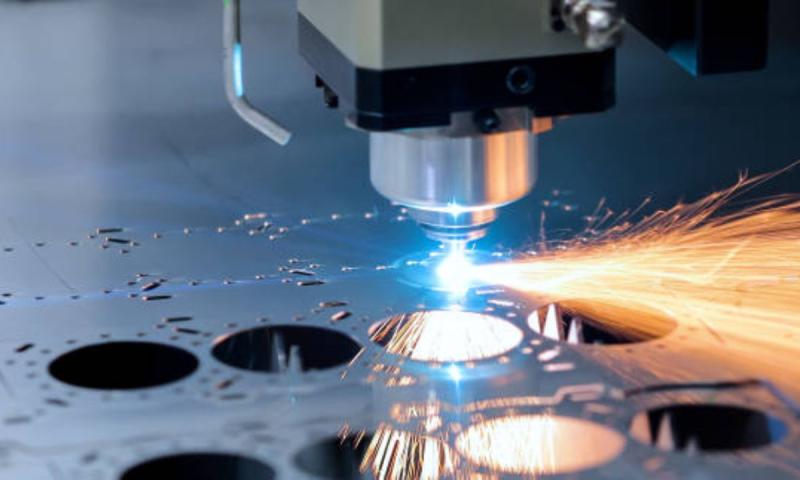
The world of manufacturing is in a constant state of evolution, and at the heart of this transformation lies CNC (Computer Numerical Control) machining. As we move further into 2025, CNC technology is more sophisticated, accessible, and integral to a wide range of industries than ever before. This guide will walk you through the latest trends in CNC machining and explore its applications in signmaking, carpentry, shopfitting, and engineering.
The Future of CNC Machining - Trends in 2025
The CNC machining landscape in 2025 is defined by a push towards greater automation, intelligence, and efficiency. Here are the key trends shaping the industry:
AI and Machine Learning Integration
Artificial intelligence and machine learning are revolutionizing CNC machining. AI algorithms can optimize toolpaths, predict maintenance needs, and monitor quality in real-time, leading to more efficient and reliable production.
Advancements in Multi-Axis Machining
While 3-axis CNC machines remain a staple for many applications, 5-axis machines are becoming increasingly common. These advanced machines can move on five axes simultaneously, allowing for the creation of complex and intricate geometries in a single setup. This is particularly beneficial for industries like aerospace and high-end engineering.
Focus on Sustainability and Energy Efficiency
There's a growing emphasis on "green" manufacturing. Modern CNC machines are being designed to be more energy-efficient, and the subtractive nature of CNC machining itself helps to reduce material waste.
Increased Automation and Robotics
Automation is key to streamlining manufacturing processes. From robotic arms for loading and unloading materials to fully automated production lines, robotics is helping to increase throughput and reduce labor costs.
Real-Time Monitoring and IoT Connectivity
The Internet of Things (IoT) is enabling real-time monitoring of CNC machines. Sensors provide continuous data on machine performance, tool wear, and part quality, allowing for predictive maintenance and remote monitoring.
Improved Software and Simulation Capabilities
CAD (Computer-Aided Design) and CAM (Computer-Aided Manufacturing) software are becoming more powerful and user-friendly. Advanced simulation tools allow engineers to test and optimize designs before they are sent to the machine, reducing the risk of errors and material waste.
On-Demand Manufacturing and Automatic Quoting
Cloud-based platforms and AI-powered quoting systems are making it easier and faster to get custom parts made. This on-demand manufacturing model is particularly beneficial for small businesses and for prototyping.
Key Features of Modern CNC Routers
When investing in a CNC router, understanding the core components that dictate performance and reliability is crucial. High-quality machines, often from specialized local manufacturers, are built with precision engineering and robust components.
Key Features to Look For:Advanced Control Systems
The controller is the brain of the CNC machine. Look for intuitive, feature-rich control systems, often with user-friendly touchscreen interfaces that provide stable and reliable operation.
Precision Drive Systems
The drive system dictates the machine's accuracy. Recirculating ballscrew drive systems are a hallmark of high-precision machines, ensuring reliable and repeatable accuracy, often to within fractions of a millimeter.
High-Performance Spindles
The spindle holds and spins the cutting tool. Durable, high-performance spindles, often sourced from reputable European manufacturers, are designed for long life, quiet operation, and are capable of reaching high RPMs suitable for various materials.
Automatic Tool Changers
To maximize efficiency and reduce downtime, an automatic tool change system is essential for complex jobs. These systems can hold and automatically switch between multiple tools, streamlining the manufacturing process.
Robust Construction
A heavy-duty, welded steel frame is vital for stability, vibration damping, and long-term durability. A modular design is also beneficial, allowing for easier upgrades and maintenance.
Broad Software Compatibility
The machine should be compatible with a wide range of industry-standard CAD/CAM software packages like ProfileLAB, Fusion 360, Aspire, and EnRoute. Good manufacturers provide post-processors to ensure seamless communication between your design software and the machine.
Machine Configurations
CNC routers are available in various configurations. Some models offer a high gantry clearance, which is essential for working on large items, 3D mould making, and specialized engineering projects that won't fit on a standard machine bed.
Material Capabilities
A versatile CNC router should be capable of cutting a wide array of materials, including:
Wood and MDF
Aluminum and Brass
Plastics (Acrylic, PET, PVC)
Composites
Stone
Foam and Rubber
The Importance of Support and Training
Look for manufacturers who provide comprehensive support and training. A thorough installation and training program covering the machine, its controller, and the accompanying software is invaluable for getting the most out of your investment. Local manufacturers, such as the Australian company Tommotek, often excel in providing this hands-on support.
CNC Machining in Action - Industry Applications
CNC machining is a versatile technology with applications across a wide range of industries. Here's a look at how it's being used in signmaking, carpentry, shopfitting, and engineering.
Signmaking
The signmaking industry has been revolutionized by CNC technology. CNC routers allow for the creation of intricate and eye-catching signs from a variety of materials, including:
Aluminum Composite
MDF
Timber
Acrylic
Foam PVC
Benefits for Signmaking:
Intricate Designs: CNC routers can create complex 2D and 3D designs with a level of precision that would be impossible to achieve by hand.
Productivity: CNC machines can operate at high speeds, allowing for faster production times and increased throughput.
Versatility: With the ability to cut a wide range of materials, CNC routers offer signmakers the versatility to meet diverse client needs.
Modern CNC routers are well-suited for the signmaking industry, offering the precision, speed, and reliability needed to produce high-quality signs.
Carpentry and Woodworking
In the carpentry and woodworking industries, CNC machines are used for everything from cutting and carving to joinery and 3D modeling.
CNC Techniques in Woodworking:
Milling and Routing: For creating flat surfaces, grooves, and intricate patterns.
Carving: For producing detailed 3D designs, sculptures, and decorative elements.
Joinery: For creating precise and repeatable joints, such as mortise and tenon.
Benefits for Carpentry:
Precision: CNC machines can produce parts with incredible accuracy, ensuring a perfect fit every time.
Repeatability: Once a design is programmed, a CNC machine can produce identical parts over and over again.
Efficiency: CNC machining is significantly faster than traditional woodworking methods, especially for complex designs.
With their robust construction and precision drive systems, modern CNC routers are an excellent choice for a wide range of woodworking applications, from furniture making to architectural millwork.
Shopfitting
The shopfitting industry requires the ability to produce high-quality, custom fitouts for a variety of retail and commercial spaces. CNC machining is an essential tool for meeting these demands.
Applications in Shopfitting:
Cabinetry and Shelving: CNC routers can be used to cut and drill components for custom cabinets and display shelving.
Feature Panels: For creating decorative and branded panels for walls and displays.
Custom decorative pieces: for a unique and bespoke fitout.
Benefits for Shopfitting:
Customization: CNC machining makes it possible to create unique and complex designs to meet specific client requirements.
Quality: The precision of CNC machining ensures a high-quality finish on all components.
Efficiency: CNC automation streamlines the production process, allowing for faster turnaround times on projects.
High-performance CNC routers provide the versatility that shopfitters need to deliver high-quality, custom fitouts.
Engineering
In the engineering sector, CNC machining is used for producing high-precision parts and components with tight tolerances.
Applications in Engineering:
Prototyping: CNC machining is an ideal technology for creating functional prototypes for testing and evaluation.
Specialized Parts: For manufacturing custom parts and components for a wide range of engineering applications.
Replacement Parts: CNC machines can be used to produce replacement parts that are no longer available from the original manufacturer.
Benefits for Engineering:
Precision: CNC machining can achieve tolerances that are measured in the thousandths of a millimeter.
Complexity: Multi-axis CNC machines can produce complex parts with intricate geometries.
Material Versatility: CNC machines can work with a wide range of engineering materials, including metals, plastics, and composites.
High-gantry CNC routers are particularly well-suited for engineering applications that require the machining of large or complex parts.
A Driving Force in Manufacturing in 2025
CNC machining will continue to be a driving force in manufacturing in 2025 and beyond. The ongoing advancements in AI, automation, and multi-axis technology are opening up new possibilities for what can be achieved with this powerful technology. High-quality CNC solutions are enabling businesses across all sectors to stay competitive in a rapidly changing world. Whether you're in signmaking, carpentry, shopfitting, or engineering, investing in the right CNC technology can help you to unlock new levels of precision, productivity, and profitability.
Post Your Ad Here
Comments