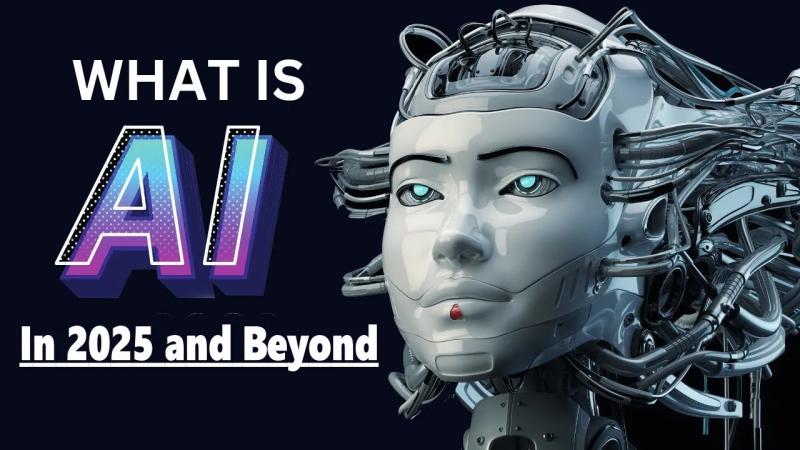
Artificial Intelligence (AI) has undergone a remarkable transformation over the past two decades, becoming an essential tool for businesses across industries. Initially confined to academic and research settings, AI's early commercial applications were limited to basic data analytics and rule-based automation. However, advances in machine learning, natural language processing (NLP), and cloud computing have significantly broadened AI's business utility.
In the 2010s, AI began to gain traction in customer service with the emergence of chatbots and virtual assistants. These tools automated routine inquiries, freeing up human agents for complex issues. At the same time, AI-driven analytics helped companies uncover insights from massive datasets, improving decision-making in marketing, finance, and supply chain management.
The advent of deep learning further accelerated AI’s capabilities. Tools like recommendation engines, facial recognition, and voice assistants became mainstream. Major platforms like Google Cloud AI, Microsoft Azure, and AWS made powerful AI models accessible to businesses of all sizes.
In recent years, the rise of generative AI tools—such as OpenAI’s ChatGPT, DALL·E, and Sora—has marked a new chapter. These tools enable businesses to automate content creation, design, and even video production. AI now powers not just backend analytics, but also front-end creativity and innovation.
Today, AI is embedded in enterprise software, enhancing productivity, streamlining workflows, and driving personalization at scale. From predictive maintenance in manufacturing to fraud detection in finance, AI is transforming operational efficiency.
Looking ahead, AI tools are expected to become more autonomous, interpretable, and ethical. As businesses increasingly rely on AI for competitive advantage, responsible implementation and continuous adaptation will be key.
The evolution of AI in business reflects a broader digital transformation—one where intelligent systems not only assist but also augment human capabilities, reshaping the future of work.
Comments