The Value of Micro OLED in Virtual Reality (VR) and Augmented Reality (AR) Applications
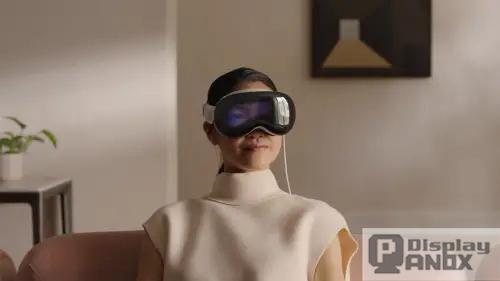
As virtual reality (VR) and augmented reality (AR) technologies rapidly advance, user demands on display devices continue to rise. From clarity, color performance, and response speed to power consumption and compactness, all these factors drive the widespread adoption of a new display technology—Micro OLED (micro organic light-emitting diode). With its outstanding performance, this technology is gradually replacing traditional LCD and conventional OLED, becoming the foundation for next-generation immersive visual experiences.
Micro OLED integrates OLED pixels directly onto a CMOS wafer, offering high pixel density, fast response times, high brightness, and excellent contrast ratios. For AR glasses or VR headsets, where the display is very close to the eyes, ultra-high PPI (pixels per inch) and minimal latency are critical to avoid pixelation and motion blur. The micro OLED screen perfectly meets these stringent requirements. Compared to traditional micro LCD displays, Micro OLED offers a smaller form factor, lower power consumption, and purer blacks, ideal for prolonged wearable use.
Current mainstream AR devices such as Magic Leap 2, Microsoft HoloLens 2, and Apple’s Vision Pro all employ OLED microdisplay technology to varying degrees. These microdisplay OLEDs enable lighter, more compact device designs, improving comfort. Meanwhile, VR headsets benefit from micro OLED microdisplays offering higher resolution, wider viewing angles, and faster refresh rates, effectively reducing the “screen door effect” and delivering sharper, more detailed visuals.
Additionally, the high contrast ratio and wide color gamut of micro OLED displays significantly enhance immersion. Clear light-dark differentiation and vibrant colors greatly improve the sense of realism in virtual environments. In contrast, typical micro LCD displays suffer from inferior contrast and black levels, making it difficult to convey deep visual layers.
With the integration of computational optics, spatial positioning, and AI, VR/AR devices have expanded beyond gaming into fields like remote education, medical training, industrial collaboration, and architectural visualization. Underpinning these applications is the powerful display support provided by microdisplay technology.
Furthermore, micro OLED displays offer excellent scalability and adaptability, allowing manufacturers to customize size and pixel layout to device needs. For example, small AR glasses can achieve 720p+ resolution with sub-0.5-inch micro OLED screens, while high-end VR devices use larger, higher-refresh-rate OLED microdisplays to support panoramic 3D video and real-time interaction.
In summary, as AR and VR products evolve toward lighter, higher-performance designs, the strategic importance of Micro OLED grows. Whether in image quality, power efficiency, or system integration convenience, micro OLED microdisplays possess unmatched advantages. They not only drive the technological revolution in virtual and augmented reality but also reshape how humans interact with the digital world. Looking ahead, micro OLED displays will be indispensable core components of immersive devices, leading the new era in display technology.
Post Your Ad Here
Comments