Why Polyurea Has Quietly Become the Coating of Choice
Every structure that holds, stores, or supports faces a common set of problems. Time, moisture, and pressure press into surfaces from all directions. Steel corrodes. Concrete cracks. Traditional coatings age unevenly and often fail where corners meet or where movement creates stress. In these places, polyurea has begun to stand out—not because it claims to do everything, but because it holds where others don’t.
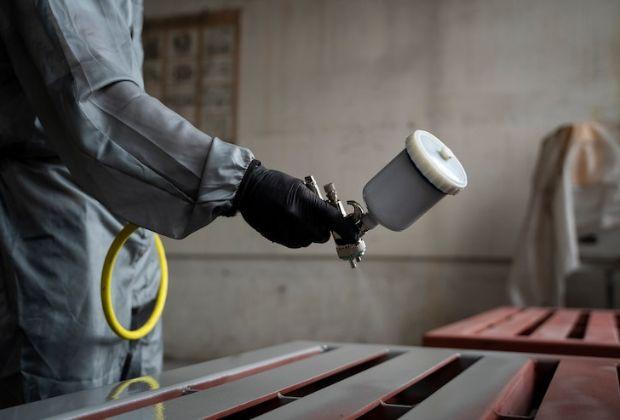
When sprayed onto a surface, polyurea forms a single, seamless membrane. Unlike coatings that cure over hours or days, polyurea sets within seconds. This rapid reaction forms not just a layer, but a bonded skin that moves with the material it covers. If the surface flexes under load or expands with heat, the polyurea doesn’t resist—it follows. That behavior helps explain why polyurea has moved from industrial settings into more common projects like rooftops, vehicle beds, water tanks, and containment systems.
The chemistry that drives this performance begins with isocyanates and amine resins. When the two parts meet, they begin an exothermic reaction that forms a thermoset polymer network. Once this structure locks into place, it resists abrasion, chemicals, temperature swings, and water intrusion. It does so without forming joints, cracks, or breaks. If installed correctly, the coating becomes invisible to time—not as decoration, but as protection.
In older municipal systems, where manholes leak or underground tanks lose their seal, polyurea has provided a longer-term fix. In many cases, workers spray the inside of deteriorated structures while they remain in service. The material adheres to damp concrete, cures even in variable conditions, and stops further intrusion. Reports like this one on manhole protection show how polyurea doesn’t just restore—it helps extend the life of infrastructure once assumed to be beyond repair.
Water storage faces a similar challenge. A polyurea cistern liner offers more than just waterproofing. It protects the vessel from wear, prevents contamination from seeping through cracks, and resists algae buildup. Once applied, the liner doesn’t need retouching or annual maintenance. It holds firm, even when the underlying concrete shifts slightly or when used for both potable and non-potable water.
What drives adoption across so many industries isn’t marketing. It’s a growing awareness that short-term coatings create long-term costs. If a liner fails every five years, the structure must be taken offline, cleaned, recoated, and monitored. Each cycle increases cost and risk. Polyurea, when properly applied, reduces or eliminates these cycles. It cures once and holds for decades, not seasons.
But to get this result, the product demands precision. The mixing ratio must remain exact. The surface must be clean, even if not perfectly dry. The spray system must maintain high pressure and consistent temperature. This need for discipline makes training essential. Companies that use polyurea successfully understand that the margin for error is narrow. Still, those who meet the standard often find the material works far better than expected—and with less product than they imagined.
For those asking what is polyurea made of?, the answer lies more in reaction behavior than ingredients. It’s not about adding more solids or thicker films. It’s about bonding at the molecular level. That bond forms quickly and forms tight. Once cured, the surface becomes both resilient and flexible. It doesn’t chip. It doesn’t tear. And it doesn’t fail at seams—because there aren’t any.
The applications keep growing. In agriculture, polyurea lines fertilizer bins and sprayers. In marine industries, it protects hulls and docks from saltwater erosion. On bridges and walkways, it prevents cracking from vibration and thermal expansion. In vehicle manufacturing, polyurea coatings help create scratch-resistant, chemical-resistant surfaces without adding weight or changing design.
Even aesthetics play a role. When architects shape themed environments, sculptures, or artificial rockwork, polyurea allows form without sacrificing durability. It can coat foam or wood, smooth sharp textures, and follow curves without sagging. Once painted or textured, the surface blends into its environment while retaining structural protection beneath.
The real value, however, shows after the job is done. Months later, after storms, traffic, heat, or chemical exposure, the coating still holds. It doesn’t demand follow-up. It doesn’t peel at the edges. And it doesn’t interrupt the operation it was designed to support.
Polyurea doesn’t sell itself with gloss. It doesn’t sparkle. What it offers is something rarer in coatings: confidence. Not because it looks strong, but because it quietly performs. For builders, owners, and public works managers, that kind of reliability turns into cost savings and fewer failures. A project that holds together frees up time, avoids downtime, and reduces risk.
As more industries face stricter environmental and performance regulations, polyurea continues to provide answers. Not because it’s new, but because it solves problems that never went away. The coating doesn’t just seal—it changes the way we approach maintenance, longevity, and durability.
In a market full of materials that claim to last, polyurea simply proves it. Where others age and fail, this one stays in place. And for professionals tasked with building things that hold their shape under pressure, that quiet strength may be the most important feature of all.
Post Your Ad Here
Comments