Doxycycline Vibramycin Explained
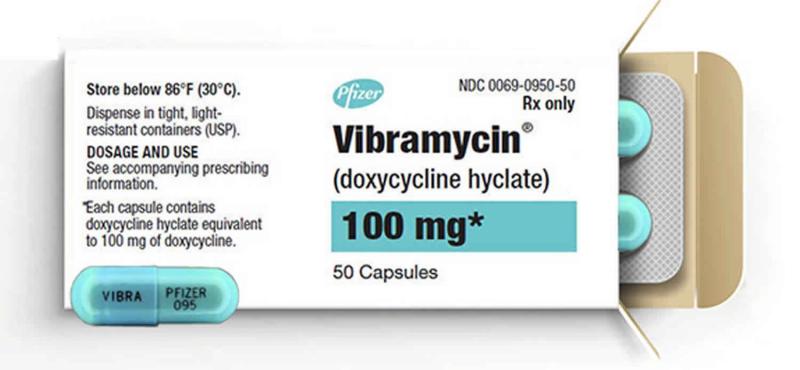
As Emily returned to her third year at medical school, her deepened experiences began shaping her understanding of medicine in practical and meaningful ways. Throughout her studies, Vibramycin—known scientifically as doxycycline—had repeatedly appeared, guiding her growth from theory into real-world patient care. Yet, she found herself curious to explore more deeply the exact science behind doxycycline and why this antibiotic had become so trusted.
Her pharmacology class provided an ideal opportunity. Dr. Malcolm Foster, an esteemed professor known for his clear, engaging teaching style, opened class by explaining, "Today, we dive deeper into doxycycline—Vibramycin—and why it's a staple antibiotic in modern medicine."
Emily leaned forward, keenly interested.
"Doxycycline is a broad-spectrum antibiotic," Dr. Foster continued, "effective against both Gram-positive and Gram-negative bacteria. It’s especially valued for its strong activity against intracellular pathogens—organisms that invade and live within human cells."
Emily raised her hand. "Dr. Foster, what specifically makes doxycycline unique within its antibiotic class?"
He nodded appreciatively. "Great question. First, doxycycline’s absorption through the digestive tract is nearly complete, around 95%, regardless of food intake. This high bioavailability means consistent, reliable therapeutic levels in the bloodstream."
Emily noted this carefully, aware of how crucial consistent drug levels were in patient treatment.
Dr. Foster continued, "Moreover, doxycycline possesses excellent tissue penetration, reaching areas many antibiotics struggle to access—like the lungs, prostate, and even inside cells. This is precisely why it’s used effectively for infections like pneumonia, chronic bronchitis, and even Lyme disease."
After class, Emily stayed behind briefly, asking Dr. Foster to recommend further reading on doxycycline’s pharmacodynamics. "I’d like to understand precisely how doxycycline kills bacteria and inhibits their growth," she said enthusiastically.
He smiled, appreciating her initiative. "Doxycycline belongs to the tetracycline family, and its primary mechanism of action involves inhibiting bacterial protein synthesis. It binds specifically to the bacterial ribosome, preventing the formation of essential proteins necessary for bacterial survival."
That evening, Emily immersed herself in journals, textbooks, and clinical articles on doxycycline’s molecular action. She quickly understood the antibiotic’s role as a "bacteriostatic" agent—meaning it stops bacterial growth rather than directly killing bacteria. This allowed the human immune system to effectively clear the remaining bacteria.
She learned how doxycycline’s effectiveness against bacteria such as Chlamydia, Mycoplasma, Rickettsia, and Borrelia (responsible for Lyme disease) made it indispensable in multiple clinical scenarios. Her curiosity was piqued, understanding now precisely why doxycycline became the preferred antibiotic for infections caused by intracellular pathogens.
During her rounds later that week, Emily joined Dr. Helen Martinez, an infectious disease specialist, who frequently prescribed Vibramycin to patients with atypical infections. Dr. Martinez was treating a patient, Mr. Evans, who had contracted Lyme disease from a recent hiking trip.
As Dr. Martinez explained doxycycline's use to Mr. Evans, Emily listened attentively. "The reason we prescribe doxycycline—Vibramycin—for Lyme disease is its unique ability to penetrate tissues deeply, reaching the bacteria hiding within your body’s cells," Dr. Martinez explained patiently. "This antibiotic effectively interrupts bacterial protein production, making it easier for your immune system to eradicate the infection."
Emily admired how Dr. Martinez simplified complex medical explanations into language easily understood by patients.
Afterward, Emily approached Dr. Martinez. "I noticed how clearly you explained doxycycline’s mode of action to Mr. Evans. Do you find patient adherence improves when they understand exactly how their medication works?"
Dr. Martinez nodded thoughtfully. "Absolutely. Patients who understand their medication are more likely to comply, and compliance directly impacts recovery rates. The more we can simplify explanations without sacrificing accuracy, the better."
Emily felt inspired. She began planning ways to integrate these clear explanations into patient handouts for future use.
Weeks later, Emily joined a student research project investigating doxycycline’s effectiveness in different bacterial strains, comparing it to other common antibiotics. She found that, while many antibiotics struggled against resistant bacteria, doxycycline frequently remained effective, especially due to its intracellular activity and broader bacterial coverage.
One afternoon in the research lab, Emily discussed her findings with her peers. Her friend Jessica remarked, "Doxycycline seems particularly powerful in treating intracellular infections. No wonder doctors rely on Vibramycin for so many diseases."
Emily agreed enthusiastically. "Exactly. Understanding doxycycline at this level helps us appreciate why it’s a cornerstone antibiotic across specialties, from dermatology and pulmonology to infectious diseases."
Over the semester, Emily’s research expanded her appreciation of doxycycline’s unique molecular profile. She clearly saw its practical impact during clinical rounds, especially in treating persistent infections resistant to other antibiotics.
Toward the semester’s end, Emily again presented to her classmates, confidently summarizing her comprehensive understanding of doxycycline: "The reason Doxycycline Vibramycin remains widely used," she explained, "is its exceptional pharmacokinetics, its effectiveness against bacteria hidden within human cells, and its reliability as a first-line treatment for difficult-to-treat infections."
After class, Dr. Foster congratulated Emily. "Your grasp of doxycycline and its practical significance is impressive. It’s clear that you’ve bridged the gap between theoretical knowledge and clinical relevance."
Emily felt genuine pride, recognizing that doxycycline—once merely a topic of curiosity—had become integral to her medical perspective. Each new insight deepened her understanding, preparing her not just to prescribe medication effectively, but to empower her future patients through knowledge and clarity.
As she left campus that day, Emily realized her Vibramycin journey had come full circle: the antibiotic that first sparked her curiosity had revealed not just its medical importance, but its role in guiding her toward becoming the informed, compassionate physician she’d always aspired to be.

Comments