Exploring the Vibramycin Generic Name: Emily Unveils the Science of Doxycycline
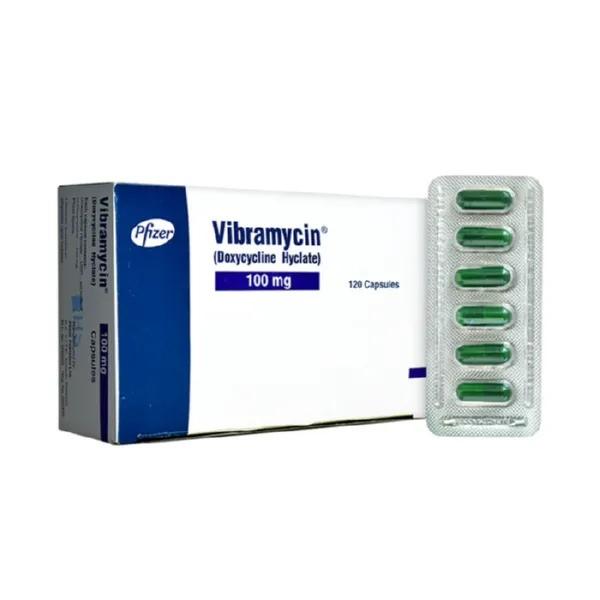
After her first successful presentation about Vibramycin, Emily's confidence soared. She knew, however, that her journey into the world of this intriguing antibiotic had only just begun. The next step would require her to delve deeper into its generic identity: doxycycline.
One afternoon, between lectures, Emily visited the campus library, her favorite spot when exploring new scientific inquiries. She settled at a quiet table, surrounded by towering shelves filled with medical books, journals, and reference materials. Her notebook and laptop were ready, the glow from the screen reflecting softly against her thoughtful face.
Emily began her research with a clear question: "What exactly is the difference between Vibramycin and its generic form, doxycycline?" The answer was deceptively simple, yet carried significant implications for doctors, pharmacists, and patients alike. Vibramycin, she found, was merely the branded version of doxycycline, created by pharmaceutical companies for commercial distribution. Doxycycline itself was the active ingredient responsible for the antibiotic's therapeutic effects.
Intrigued by this discovery, Emily continued reading. She soon learned that generic medications, such as doxycycline, must meet strict FDA guidelines to prove they're bioequivalent to their branded counterparts. This meant the active ingredient, potency, safety, and efficacy had to be identical or nearly identical. However, inactive ingredients—like fillers, colorants, or binding agents—could differ. Emily noted these details carefully, understanding their significance for patient safety and drug interactions.
Later that evening, Emily joined her study group at a nearby café. Among her peers were Sarah, Mark, and Jessica—all passionate and curious medical students like herself. She quickly introduced the topic she'd been researching. "Did you guys realize that Vibramycin is just a branded version of doxycycline?" she asked, stirring her tea thoughtfully.
Mark nodded knowingly. "Yes, that's common practice. Branding is often used to establish market presence, patient recognition, and sometimes trust in a medication. Many patients prefer branded versions, thinking they're somehow superior."
"But is there a real clinical difference?" Jessica asked, genuinely curious.
"Usually, no," Emily answered confidently. "Doxycycline—the generic name—is the active antibiotic component, so the clinical effectiveness should remain consistent, assuming proper manufacturing standards are met."
Sarah leaned in, interested in the conversation. "Then why do some patients insist on Vibramycin instead of just accepting generic doxycycline? Is it purely psychological?"
Emily smiled. "That's a part of it, yes. Trust and brand recognition can play significant roles. But there can be practical differences, too, like inactive ingredients that could cause allergic reactions in rare cases. Some patients might tolerate one form better than another, even if the active drug is identical."
Jessica raised her eyebrows. "That's fascinating. I hadn't thought about it from that angle."
Their discussion quickly shifted toward patient education. Emily realized this was another critical area she'd need to master. She pondered how best to educate patients, reassuring them about the safety and effectiveness of generics, while still validating their personal experiences or concerns.
The following day, Emily discussed the topic further with her pharmacology professor, Dr. Richards, after class. He listened carefully as she summarized her insights and thoughts. "Emily," he said thoughtfully, "you're onto something important. One of our roles as healthcare providers is precisely this: educating patients effectively about their treatment options, including generic versus branded medications."
Dr. Richards continued, "In clinical practice, you'll face patients who hesitate when offered a generic substitution, fearing reduced efficacy or increased side effects. Knowing the science behind generic medications like doxycycline—and how to communicate that clearly—is incredibly valuable."
Feeling motivated, Emily expanded her research. She interviewed pharmacists to gain real-world insights into patient behaviors. One pharmacist, Carol, shared an interesting perspective during a quick interview at the campus health center pharmacy. "Patients usually understand the cost savings of choosing doxycycline over branded Vibramycin," Carol said, adjusting her glasses thoughtfully. "But we occasionally see skepticism or fear because of misinformation online."
Emily took diligent notes, determined to combat misinformation in her future clinical practice. Her passion for patient education grew deeper.
As her knowledge evolved, Emily learned more about doxycycline's role as an antibiotic. Beyond mere branding, doxycycline—whether under the Vibramycin name or as a generic—was a tetracycline-class antibiotic widely used for diverse infections: respiratory illnesses, sexually transmitted diseases, skin infections, and more. Its reliable absorption profile allowed it to become one of the most prescribed antibiotics worldwide.
During one afternoon lab session, Emily took part in preparing educational pamphlets for patients visiting the clinic. She insisted that the section dedicated to antibiotics clearly explain generics and branding. "Patients deserve to understand exactly what's in their medication," she emphasized to her classmates. They agreed wholeheartedly.
Toward the end of the semester, Emily delivered another talk, this time specifically addressing the concept of generic medications. Standing before a room full of medical students, she confidently explained, "Understanding generic names matters because it empowers patients and helps physicians prescribe responsibly. For example, Vibramycin generic name is doxycycline. When we grasp this simple fact, we can alleviate patient fears, reduce healthcare costs, and even improve medication adherence."
Her classmates listened intently, scribbling notes, clearly appreciating Emily's clarity and thoughtful approach.
Afterwards, Dr. Richards approached Emily warmly. "Your grasp on this subject has significantly matured, Emily. Your ability to translate complex scientific information into clear, accessible terms will make you an outstanding physician."
Emily felt a wave of pride and gratitude. "Thank you, Dr. Richards. This topic truly opened my eyes to the importance of patient communication."
That night, while studying alone, Emily reflected deeply. Her journey with Vibramycin and doxycycline had taken her beyond textbook knowledge, teaching her valuable lessons about patient care, education, and responsibility. She had uncovered a powerful truth: medicine wasn't just about prescribing drugs—it was equally about understanding human behavior, preferences, and building trust.
She closed her laptop gently, understanding that her exploration into Vibramycin’s generic name, doxycycline, was not merely academic. It marked another meaningful step toward becoming the compassionate, informed doctor she aspired to be.
Post Your Ad Here
Comments