Class 10 English Previous Year Question Paper - Educart
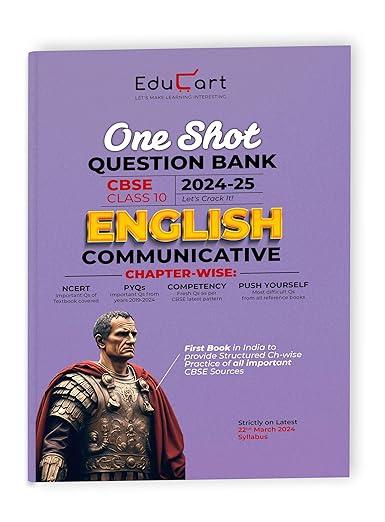
Class 10 board exams are a important tickmark in a student’s academic journey, and excelling in English can actually boost overall scores. While textbooks and sample papers play an important role in preparation, previous year question papers (PYQs) are an underrated yet powerful resource. These papers offer invaluable insights into exam patterns, question trends, and the examiner’s expectations.
In this blog, we will explore the benefits of solving Class 10 English previous year question papers, tips on using them effectively, and how they can elevate your exam preparation.
Why Should You Solve Previous Year Question Papers?
Understand the Exam Pattern - PYQs reflect the structure of the actual exam. They provide a clear picture of -
The division of marks across sections (Reading, Writing & Grammar, Literature).
Types of questions asked, including MCQs, short-answer, and long-answer questions.
Time allocation for each section.
Identify Important Topics - By analyzing PYQs, you can spot frequently repeated topics and themes in the literature section or common grammar questions. This helps prioritize your revision and focus on high-yield areas.
Boost Confidence - Familiarity with the types of questions reduces exam anxiety. Practicing PYQs helps build confidence and makes sure you feel more prepared for the big day.
Improve Time Management - Solving English previous year question papers 2025 under timed conditions teaches you how to manage your time effectively, making sure you can complete the paper within the allotted three hours.
Gauge Your Preparation Level - PYQs serve as an excellent self-assessment tool. They help you:
Identify strengths and weaknesses.
Understand which sections require more practice.
Track your improvement over time.
How to Use Previous Year Question Papers Effectively
Start with Familiarization - Begin by going through a few English PYQ papers to understand the format, types of questions, and how marks are distributed. This will help you plan your preparation strategy.
Solve Papers in Exam Conditions - Dedicate three hours to solve a paper in a quiet space without any interruptions. Mimicking exam conditions trains your brain to focus and perform under pressure.
Analyze Your Answers -
Review your answers critically after completing the paper.
Identify errors in grammar, sentence structure, or missing points in literature answers.
Compare your responses with marking schemes or sample solutions to see how well they align with the expected format.
Focus on Repeated Patterns - Pay attention to recurring themes, such as certain poems, characters, or grammar topics that frequently appear. Use this information to refine your revision plan.
Accept Feedbacks - Share your solved papers with a teacher or mentor for constructive feedback. This helps you understand nuances in framing better answers.
Track Progress - Maintain a record of your scores and the areas where you struggled. This will help you focus on consistent improvement over time.
Benefits of Solving PYQs for Different Sections
Reading Section:
Improves Speed and Comprehension Skills:
Practicing English PYQs 2025 allows you to become quicker at reading passages and understanding their meaning, enabling you to answer within the given time frame.Familiarity with Question Types:
PYQs help you understand the types of questions commonly asked, such as multiple-choice questions (MCQs), short-answer questions, or inference-based ones. This familiarity reduces anxiety during the exam.Enhances Analytical Thinking:
Solving questions from previous years develops your ability to analyze and interpret data, whether it's a graph, a table, or a passage.
Writing and Grammar Section:
Improves Formal Writing Skills:
PYQs provide templates and examples for writing formal letters, essays, or analytical paragraphs. Regular practice ensures clarity, coherence, and the correct tone in your answers.Reinforces Grammar Rules:
Repeatedly solving PYQs strengthens grammar concepts such as tenses, active/passive voice, and reported speech, ensuring accuracy in sentence construction.Boosts Confidence in Structuring Answers:
Familiarity with PYQ formats makes it easier to organize and structure your answers logically, which can earn you better scores.
Literature Section:
Deepens Understanding of Key Themes:
PYQs often revolve around recurring themes and motifs in prose and poetry. By solving these, you gain a deeper understanding of the text and its interpretations.Practice for Detailed Answers:
PYQs help you practice framing well-structured, detailed responses for character analyses, themes, and literary devices in prose and poetry.Identifies Frequently Asked Topics:
Analyzing PYQs reveals patterns in the types of questions asked about specific texts, helping you focus on important chapters, events, or characters.Develops Literary Appreciation:
Understanding the questions from previous years often enhances your ability to appreciate literary elements like symbolism, metaphors, and narrative style.
Class 10 English previous year question papers are a treasure trove of insights and preparation opportunities. By solving them, students can familiarize themselves with the exam format, practice under real conditions, and refine their answers to meet board standards.
Incorporating PYQs into your study routine can significantly enhance your performance, helping you approach the exam with confidence and readiness. So, gather those papers, set your timer, and start preparing to ace your Class 10 English exam!
Post Your Ad Here
Comments