Expert Insights and Market Projections: Nifty 50 Forecast Tomorrow
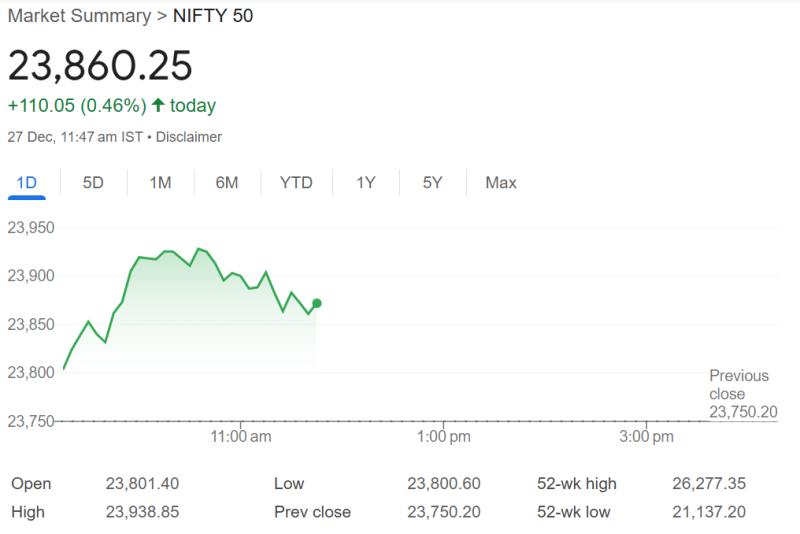
To navigate the Indian stock exchange, you need to be aware
of the movements of the Nifty. Investors and traders alike can benefit
from staying on top of the forecast for tomorrow. It will give them a better
understanding of how the market might behave. We break down in this
article the factors that will shape the Nifty forecast tomorrow, and provide
advanced strategies to manage risk and maximize returns.
Understanding Nifty Fifty: A Vital Market Benchmark
The Nifty50 index is India's most prestigious stock market index, and consists of the 50 best companies listed at the National Stock Exchange. The Nifty 50 index is used to measure the health of India's stock markets. It gives investors a glimpse of economic trends. The Nifty is a market indicator that tracks sectors like banking, IT and energy. It's an important tool to understand India's economic trajectory.
Key Market Drivers Affecting Nifty Tomorrow
Investors should carefully monitor the global and domestic
factors that will affect tomorrow's Nifty. Understanding these key drivers
can help predict potential market behavior.
1.
Global Economic Sentiment: The Nifty
Index doesn't function in a vacuum. Global events and trends have a significant
impact on its direction. The following are the key factors to take into
consideration:
2.
U.S. market movements: India's markets
often correlate with U.S. indexes (such the S&P 500 or Dow Jones), so any
significant changes in U.S. corporate earnings or economic data can have ripple
effects on the Indian market.
3.
Crude Oil Price: India is one of the
largest importers of crude oil. Fluctuations in oil prices around the world can
affect inflation expectations and market sentiment. For example, a rise in
oil costs may lead to increased business costs, which can cause a downturn.
4.
Geopolitical tensions: Any major event or
crisis on the international stage, such as a trade war or regional conflict,
can cause uncertainty and affect investor confidence, leading to volatility of
the Nifty.
Watching Domestic Economic Indicators
Nifty's movement is also affected by the domestic economic
situation. The performance of the Nifty tomorrow will be determined by:
1.
GDP Growth Numbers: A GDP growth figure
that is higher than expected could inspire confidence among investors and push
Nifty higher. Conversely, a weaker GDP growth may cause market corrections.
2.
Inflation data: High inflation numbers
often lead central banks to tighten their monetary policies, putting pressure
on stock markets, including the Nifty. In the opposite direction, lower
inflation can boost bullish sentiment.
Strong corporate earnings, especially from companies in the
banking, IT and energy sectors may boost the index. Inversely,
disappointing results could cause a decline.
Technical Indicators for the Nifty: Advanced Analysis of
Tomorrow
Technical analysis is a powerful tool to predict short-term
market movements. Consider these advanced technical indicators to gain a
better understanding of Nifty’s potential for tomorrow:
Support and resistance zones for Nifty
By identifying key levels of support and resistance, the
price movement of the Nifty 50 can be accurately predicted.
Support Levels - The Nifty's primary support level is at
around 18,500. If the index dips or approaches this level, it may indicate
a short-term bearish trend.
Nifty is facing resistance around the 19,000 marks. A
strong break above this level may signal an upward trend.
Traders look at price action around these levels to see if a
breakout or a breakdown is likely.
Moving Averages: the 50-Day and 200 Day Strategy
The Nifty Index is largely determined by the 50-day MA and
the 200-day MA.
The 50-Day MA is a good indicator of short-term bullishness.
It indicates that the market has entered an uptrend.
200-Day MA: A crossing below the 200-day MA can indicate an
extended downtrend. If the index remains above this level it is seen as
confirmation of a bullish trend.
Relative Strength Index for Overbought/Oversold
conditions
The RSI oscillator measures price changes and speed. A
high RSI above 70 suggests that Nifty may be overbought and could cause a
pullback. An RSI under 30 may indicate that the market is oversold and
could trigger a rally.
Risk Factors for Nifty Tomorrow
Markets are always subject to unforeseeable risks, even with
a good understanding of technical and fundamental factors. There are
several factors that could affect the Nifty forecast for tomorrow:
Global Economic Disruptions
An abrupt, negative change in global economic conditions,
whether it is a stock-market crash, tightening global monetary policy or
political instability, can cause panic on the Indian markets. Stock prices
can fall sharply if global risk-off is prevalent.
Changes in Domestic Policy
The Reserve Bank of India or the Indian Government could
make unexpected policy changes that cause Nifty to fluctuate. If the RBI
raises interest rates unexpectedly to combat inflation, this could have a
negative impact on stock market valuations.
Weaknesses in specific sectors
The Nifty index is made up of various sectors, including IT,
FMCG, banking and energy. The Nifty 50 index could be disproportionately
affected by a downturn in one of these sectors. Poor earnings reports from
major players in these sectors such as Infosys and Reliance could lead to a
drop in the Nifty index.
How to trade Nifty based on tomorrow's forecast
To trade the Nifty index successfully, you need to combine
market knowledge with strategic planning and risk management. Here are
some tips to help you prepare for the Nifty's movements tomorrow:
Scalping and day trading: If you are a day trader,
concentrate on intraday patterns and short-term movements in prices. To
predict price swings, use tools such as the Fibonacci Retracement and
Candlestick Patterns. Make sure your stop-loss order is set tightly to
minimize risk during volatile conditions.
Swing trading: If you are holding positions over a period of
days or weeks, watch for breakouts above key resistance levels and a strong
reversal. The RSI (Moving average convergence divergence) and MACD can
confirm your entry point.
Investors with a long-term view: If you plan to invest in
the Nifty over the long term, pay attention to the economic trends and the
growth of corporate earnings. Even in periods of volatility, your
investment decisions should be guided by strong fundamentals.
Frequently Asked Questions About Nifty Forecast
How does Nifty affect individual stock prices?
Nifty is a broad market index that tracks the performance of
50 major stocks. If the Nifty rises or falls, individual stocks within the
index typically follow a similar pattern, especially those with higher
weightings in the index.
How can I predict Nifty’s movement for tomorrow?
Nifty’s movement can be predicted using a combination of
global market conditions, domestic economic data, and technical indicators like
support/resistance levels, moving averages, and RSI. Monitoring these factors
closely helps form a clearer picture.
What factors can cause Nifty to fall tomorrow?
Potential factors include adverse global events,
disappointing earnings from key companies in the Nifty index, negative economic
reports (like rising inflation), and geopolitical tensions that trigger risk
aversion.
How should I prepare for market volatility in Nifty?
Keep your portfolio diversified and set stop-loss limits to
mitigate risk. Additionally, monitor key technical indicators and adjust your
positions based on market movements. Stay updated on global and domestic news
to anticipate possible market shifts.
Can Nifty be predicted with 100% certainty?
While technical and fundamental analysis can provide
valuable insights, no prediction is guaranteed. Markets are influenced by
countless variables, and unforeseen events can cause sudden shifts in Nifty’s
direction.
Conclusion: Anticipating Tomorrow’s Nifty Movement
In conclusion, tomorrow Nifty forecast hinges on a
delicate balance of global economic trends, domestic data, and technical
factors. Traders and investors should stay informed and employ risk management
strategies to handle the market’s inherent volatility. By monitoring the right
indicators and understanding the market drivers, you can better position
yourself to navigate Nifty’s movements and capitalize on potential
opportunities. Always stay proactive and flexible in your approach.
Post Your Ad Here
Comments (1)
Advenser Technology ...6
Advenser
The article provides a thorough breakdown of key factors influencing the Nifty 50's forecast, offering insights into both global and domestic drivers such as U.S. market movements, crude oil prices, and geopolitical tensions. It emphasizes the importance of technical indicators, such as support/resistance levels and moving averages, while discussing risk factors and strategies for trading. A well-rounded read for anyone looking to stay ahead in the market and manage their investments effectively