Winterizing Dump Trailers for Alaska's Harsh Winters
Holly Berry is a writer for Akomplice, a Marketing Company and Marketing Technology Agency located in Salt Lake City, Utah.
“Winter temperatures in Alaska range from 0°F / -18°C to -30°F / -35°C from November to March,” says Alaska Tours. Alaska’s cold, icy winters can be unforgiving to equipment, and dump trailers are no exception. With heavy snowfalls, freezing temperatures, and extreme conditions, it is important to take extra precautions to make sure that these trailers are ready for the challenges ahead. Every trailer, particularly dump trailers, requires proper winterization to ensure continued performance and prevent costly repairs.
Preparing Dump Trailers for Winter Use
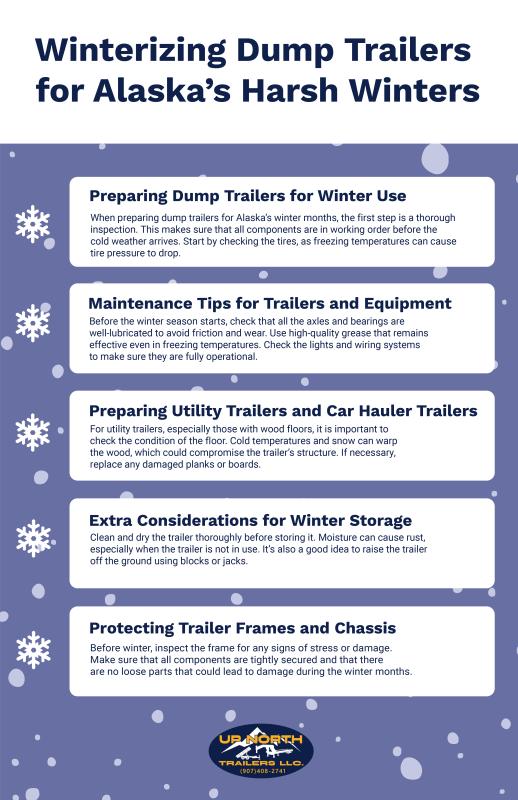
When preparing dump trailers for Alaska’s winter months, the first step is a thorough inspection. This makes sure that all components are in working order before the cold weather arrives. Start by checking the tires, as freezing temperatures can cause tire pressure to drop. Low tire pressure can lead to premature tire wear or blowouts on icy roads. The dump trailers’ hydraulic system is also vulnerable to cold temperatures. It is important to replace the hydraulic fluid with one designed for colder climates to prevent freezing and maintain the trailer’s lifting capabilities.
Additionally, check for any signs of corrosion, especially on the trailer’s undercarriage. Salt and chemicals used on roads during winter can speed up rust, so washing the trailer and applying a protective coating can go a long way in extending its lifespan. Trailer dealers often offer protective covers or tarps that can help shield the dump trailers in Anchorage from the elements, further protecting them from snow and ice accumulation.
Maintenance Tips for Tandem Trailers and Other Equipment
For those who rely on tandem trailers and other heavy-duty equipment during Alaska's winter, regular maintenance is essential. A tandem trailer setup requires extra attention to make sure that the weight is evenly distributed, particularly when hauling heavy materials through snow and ice. Before the winter season starts, check that all the axles and bearings are well-lubricated to avoid friction and wear. Use high-quality grease that remains effective even in freezing temperatures.
Check the lights and wiring systems to make sure they are fully operational. In Alaska, short days and long nights make visibility an important factor for safety. The last thing anyone wants is for their dump trailers or other equipment to lose lights in the middle of a snowstorm. Regularly inspect the wiring to avoid corrosion and make sure that all bulbs are working. For extra visibility, adding reflective tape to the sides and back of the trailer can help make it easier to spot in low light.
Preparing Utility Trailers and Car Hauler Trailers
In addition to trailers for sale, many Alaskan residents and businesses rely on utility trailers and car hauler trailers to transport materials and vehicles during the winter. Just like with dump trailers, these trailers need winter care to ensure they are safe to use in harsh conditions.
For utility trailers, especially those with wood floors, it is important to check the condition of the floor. Cold temperatures and snow can warp the wood, which could compromise the trailer’s structure. If necessary, replace any damaged planks or boards. A utility trailer also needs proper care for its suspension systems. Cold weather can cause metal components to contract, which could result in stress fractures or other damages. Make sure to inspect the suspension for any signs of damage, and if needed, replace any worn parts before the start of winter.
Extra Considerations for Long-Term Winter Storage
If you plan to store your dump trailers or other trailers during Alaska’s winter months, there are a few additional steps to take to ensure they remain in good condition. Clean and dry the trailer thoroughly before storing it. Moisture can cause rust, especially when the trailer is not in use. It’s also a good idea to raise the trailer off the ground using blocks or jacks. This helps prevent moisture from accumulating underneath the trailer and extends the life of the tires.
If possible, store the trailer in a dry, covered area. A storage shed or garage is ideal, but if that’s not an option, consider using a high-quality trailer cover to protect the equipment from snow, ice, and freezing temperatures.
Protecting Trailer Frames and Chassis
For trailers such as dump trailers that often carry heavy loads, protecting the trailer frame and chassis is vital for long-term durability. Before winter, inspect the frame for any signs of stress or damage. Make sure that all components are tightly secured and that there are no loose parts that could lead to damage during the winter months. The constant freezing and thawing cycles during winter can weaken metal components, so making sure everything is secure will help avoid potential problems.
Applying a layer of protective coating on the trailer’s frame can also reduce the risk of corrosion. Many trailer dealers recommend using rust-resistant paints or sprays specifically designed for harsh weather conditions, providing an additional layer of protection.
Stay Prepared with Up North Trailers
By following these winterization steps, you can help protect your dump trailers, tandem trailers, utility trailers, and car hauler trailer from the severe Alaskan winters. Up North Trailers offers a wide selection of trailers built to withstand the toughest conditions. Whether you need a dump trailer for hauling snow or a utility trailer for transporting supplies, Up North Trailers has you covered. For more information on winterizing your trailer or to explore our full line of trailers, visit uupnorthtrailers.com. Feel free to send us a message with any questions or inquiries—we are here to help!
Post Your Ad Here
Comments